Full Article
about Villaherreros
A village on the road to Osorno, known for its church and the chapel of the Virgen de Vallarna; wine-making tradition.
Ocultar artículo Leer artículo completo
The tractor stops at 840 metres above sea level. That's when you realise Villaherreros isn't just another Castilian village—it's a lookout post over an ocean of wheat that stretches clear to the horizon. At this height, the air thins and the silence amplifies. No bars. No restaurants. Just the wind rattling through abandoned adobe houses and the occasional clang of church bells carrying across the plateau.
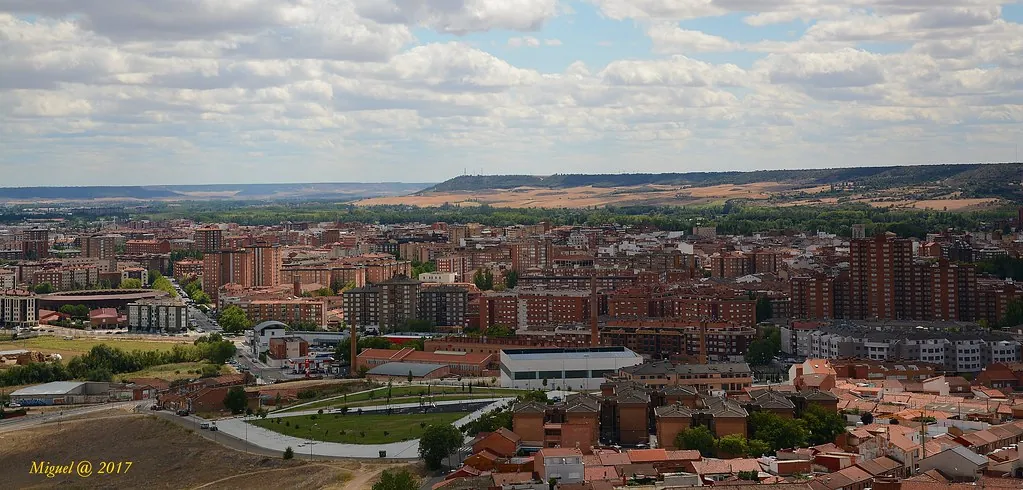
This is Tierra de Campos proper, where Spain grows its daily bread and timekeeping still follows the harvest calendar. The village perches on the last ripple of flatland before the Cordillera Cantábrica rises eighty kilometres north. Stand at the cemetery edge and you'll spot the first hints of mountain blue on clear days, while southwards the terrain surrenders completely to the meseta's vast geometry.
Stone, Adobe and the Spaces Between
Villaherreros won't win beauty contests. That's precisely the point. Its streets retain the organic chaos of medieval sheep tracks, widening and narrowing according to ancient property lines rather than town-planning manuals. Houses built from local ochre stone and sun-baked adobe lean companionably against each other, their wooden doorframes weathered to silver-grey. Some stand empty, roofs collapsed inward like broken eggshells. Others display neat rows of firewood stacked against south-facing walls, proof of continuing occupation.
The 16th-century parish church of San Pedro keeps watch from the highest point. Its square tower serves as landmark for anyone navigating the surrounding grid of farm tracks—walk twenty minutes in any direction and you can still orient yourself by that solid silhouette. Inside, the single nave holds retablos painted in the muddy reds and greens favoured by provincial baroque artists working on tight budgets. Finding the place open requires luck or advance arrangement with the sacristan in neighbouring Villada (six kilometres east). Turn up on a Tuesday morning and you'll likely find doors locked, swallows nesting in the eaves, silence thick with incense and centuries.
Walking Through a Golden Calendar
Spring arrives late at this altitude. By mid-April the surrounding fields flare an almost violent green, poppies splashing scarlet across field margins. Come June the palette shifts to bronze as wheat and barley ripen under 14-hour sun. Harvest begins early July, bringing convoys of combines that thunder through the night beneath floodlights—rural Spain's answer to festival fireworks.
Several footpaths radiate from the village, following traditional drove roads used until the 1960s for moving sheep between summer and winter pastures. The PR-P-20 waymarked loop heads five kilometres south to Mazariegos, skirting irrigation channels where nightingales sing after rain. It's flat, exposed walking: carry water, a hat, and don't expect shade until the 20th-century poplar plantations outside Mazariegos appear like mirages.
Cyclists find the going easier. A tarmac lane—dead-flat, almost car-free—connects Villaherreros to Villada in fifteen minutes of gentle spinning. Continue another half-hour east and you reach Palencia's provincial capital, where cafés suddenly materialise like an oasis of espresso and churros.
Birds, Stars and the Lack of Coffee
Bring binoculars. The surrounding steppe landscape supports birds that have vanished from most of Europe. Little bustards perform their comical neck-inflating displays in April fields; calandra larks deliver endless liquid song from telegraph wires. At dusk, hen harriers quarter the stubble, ghost-grey against a vermilion sky. None of this features on tourist brochures because, frankly, there aren't any tourist brochures.
The same absence of light pollution makes night-time spectacular. Walk ten minutes beyond the last streetlamp and the Milky Way resolves into individual stars. August's Perseid meteor shower turns the sky into a natural planetarium—no ticket charge, no closing time, only the occasional grunt from sleeping pigs in backyard sties.
Just remember: Villaherreros itself offers zero visitor services. The single grocery closed in 2018; the bakery followed suit during the pandemic. Locals drive weekly to Villada for supplies, timing errands for Thursday market day when stallholders sell everything from espadrilles to chorizo. Plan accordingly. Arrive with snacks, a full petrol tank, and low expectations of souvenir shopping.
When the Village Wakes Up
August transforms everything. The fiesta patronal, held around the 15th, draws ex-residents back from Madrid, Barcelona, even Switzerland. Population swells from 200 to 800. A sound system appears in the plaza, competing with grandmothers who gossip at pharmacy-door volume. There's a Saturday evening paella for the entire village—tickets €6, wine included—cooked in pans wide enough to bathe a toddler. Fireworks crackle over wheat stubble at midnight; someone always sets the field margin alight, producing the only emergency services excitement of the year.
The rest of the calendar remains low-key. Holy Week procession numbers twelve people plus a trumpet player who learnt his trade in the village band. May crosses decorated with paper flowers occupy street corners for 48 hours, then disappear before the wind shreds them into colourful litter. These events aren't staged for visitors; turn up and you're a participant, not an audience.
Eating, Sleeping and Getting There
Accommodation options sit firmly in the "make do" category. A handful of village houses rent rooms via word-of-mouth—ask at the ayuntamiento (town hall) when open, usually weekday mornings. Expect €25 per night for a basic double, shared bathroom down the corridor, Wi-Fi that wheezes whenever clouds appear. Otherwise base yourself in Villada's Hostal La Casona (doubles from €45) and day-trip in.
Eating requires similar improvisation. The nearest restaurant, Mesón El Cordero, operates three kilometres towards Palencia in tiny Boada de Campos. They serve lechazo (milk-fed lamb) roasted in wood ovens, plus robust local wines that taste of iron and sun-baked clay. Book ahead—weekend lunches fill with multi-generational families debating harvest yields and football results. Closer options include Villada's Bar El Parque, where €12 buys a three-course menú del día featuring sopa castellana thick enough to stand a spoon in.
Public transport reaches Villaherreros twice daily on schooldays only. The 07:30 bus to Palencia returns at 14:00; miss it and you're hitchhiking. Driving remains sensible: take the A-67 from Santander, exit at Palencia, then follow the CL-613 towards Valladolid for 25 minutes. Turn left at the windmill factory—yes, really—and climb eight kilometres of empty road until stone houses appear like a geological accident.
The Honest Verdict
Villaherreros won't suit everyone. Rain turns streets to mud within minutes; winter winds slice across the plateau with nothing to stop them short of the Bay of Biscay. Summer afternoons hit 36°C and shade costs extra. The village offers no Instagram moments, no artisan gelato, no boutique hotels with exposed brickwork.
What it does provide is a calibration point for modern life. Sit on the church steps at dusk, watch swifts stitch patterns between rooftops, and remember that entire civilisations once organised themselves around wheat cycles and church bells. The place operates on human speed, seasons measured by colour changes in an agricultural palette stretching beyond eyesight. Bring patience, a sense of temporal elasticity, and perhaps a packet of biscuits. Leave the noise behind, along with any expectation of being entertained.