Full Article
about Villamayor de Campos
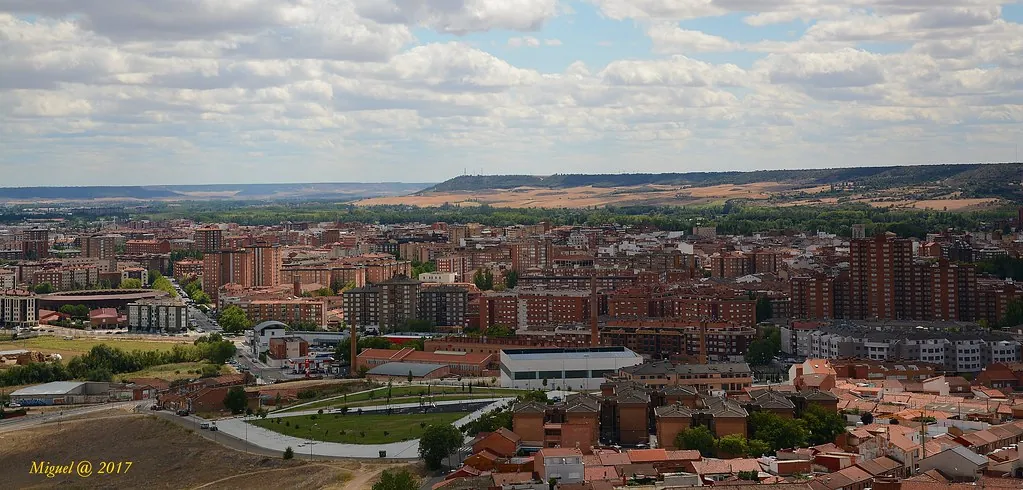
Terracampo village with a church housing an important altarpiece; bird reserve area and steppe landscape.
Ocultar artículo Leer artículo completo
The church bells strike noon, and Villamayor de Campos pauses. Not dramatically—nobody drops tools or freezes mid-sentence—but the village simply breathes differently for thirty seconds while the bronze notes roll across the cereal fields. At 690 metres above sea level, sound travels cleanly here; you can stand beside the closed-down petrol station and still hear the swallows nesting under the parish eaves three streets away. It is that sort of place: small enough for acoustics to matter, large enough in spirit to keep its 300-odd residents from feeling marooned.
Horizon as Architecture
Castilla y León’s Tierra de Campos looks flat until you try walking it. The tarmac road out of Zamora rises and falls in long sine waves, each crest revealing another identical field of wheat or barley stubble. Villamayor sits on one of these gentle swells, which means every lane ends in sky. There are no mountains to frame photographs, no sudden ravines—just the plain meeting a vast lid of blue. British visitors raised on Cornwall’s coves or the Lake District’s drama may need half an hour to recalibrate. Once you do, the emptiness becomes addictive. Colours sharpen: ochre earth, silver olive trunks, the sudden white flash of a barn owl quartering the verge at dusk.
The village fabric is equally muted. Adobe walls the colour of digestive biscuits support terracotta roof tiles fired in nearby Toro. Many houses include a square wooden door about a metre high—access to the underground bodega where families once stored wine made from their own vines. Most are locked now; the wine is drunk, the keys lost. Knock politely and an elderly owner might lift the trapdoor to reveal a descending ladder and the cool breath of earth. There is no admission fee, only the unspoken contract that you will stay for a conversation measured in quarters of an hour, not minutes.
What Passes for Sightseeing
Guidebooks struggle with places like Villamayor because the inventory is short: one parish church, a handful of dove-cotes, a few streets whose names commemorate long-defunct smithies. The church, dedicated to Nuestra Señora de la Asunción, is larger than the current population warrants—a reminder that 500 years ago this was a frontier between Christian kingdoms and the Moorish south. Inside, a 16th-century retablo gilded with American gold glints through candle smoke. The priest visits twice a week; on other days the building stays unlocked, trusting passers-by to close the door against sparrows.
Circular brick dovecotes dot gardens like oversized bee-hives. Some retain the original rotating ladder that allowed farmers to harvest eggs and squab for the table. Photography is straightforward: shoot into the light and the brickwork glows like Staffordshire terracotta. The best specimen belongs to Casa Blanco on Calle San Pedro; ask Don Julián, who will insist you step inside the vegetable patch for a clearer angle. He retired from threshing machines in 1998 and has time.
Beyond the last houses the caminos vecinal stretch away—unpaved farm tracks graded twice a year so grain lorries do not bog down. These make ideal walking routes. A thirty-minute stroll south brings you to an isolated stone cross where medieval cattle drovers once prayed before entering the village. Carry water; shade is provided only by the occasional poplar planted during Franco’s reforestation drive. In May the wheat is knee-high and rustles like rain. By late July the combine harvesters have left neat straw rows that smell of Weetabix and hot dust.
Eating (or Not)
Villamayor has no restaurant. The single bar, Casa Ramón, opens at seven for coffee and closes after the television lottery at ten. A coffee con leche costs €1.20; they stock Branston-flavoured crisps for reasons nobody can explain. For meals you drive ten minutes to Manganeses de la Lampreana where Mesón La Lamprea serves lechazo—milk-fed lamb roasted in a wood oven until the skin shatters like burnt toffee. A quarter portion feeds two and costs €18; order ahead on Sundays or find yourself queueing behind Spanish families celebrating First Communions.
Self-caterers should stock up in Zamora before arriving. The village shop closed in 2019; a mobile grocer in a white van circles on Tuesdays and Fridays, honking like a French fishmonger. Fresh fish arrives frozen from Galicia; locals debate whether the hake is defrosted once or twice. Buy the local sheep’s cheese, cured only three weeks so it still squeaks between the teeth.
Where to Lay Your Head
Accommodation is limited to Casa del Trotamundos, a three-bedroom guesthouse created by a former Madrid journalist who swapped metro strikes for village gossip. Rates start at €70 per night including breakfast—toast rubbed with tomato, local honey, coffee strong enough to stain the cup. The house faces the wheat fields; windows are triple-glazed against the wind that can rake the plain at 50 kph. There is no television, but Wi-Fi reaches 30 Mbps, faster than most Cotswold cottages. Book via Booking.com or phone directly; she answers WhatsApp faster than email.
If full, the nearest hotels lie 25 minutes away in Benavente, a market town on the A-6 motorway. Try the París or the Rey Fernando, both functional rather than charming, around €55 for a double. They serve as bases for motorists but miss the night silence that makes Villamayor worthwhile.
Wind, Winter and Other Honesties
Come between October and April and the Meseta shows its teeth. Night temperatures drop below freezing; the mist, called la baja, pools so thick that driving feels like snorkelling. Roads are gritted, but the caminos turn to gloop. Spring arrives suddenly in late March—one week bare soil, the next a green haze. Summer is fierce: 35 °C by noon, grasshoppers crackling like faulty electrics. August brings fiestas: inflatable castles in the plaza, brass bands that rehearse the same pasodoble for three evenings, and a street dance that finishes at six in the morning with tortilla sandwiches handed out by exhausted mothers. Visitors are welcome but not fussed over; join in or watch from the shadows with a plastic cup of beer costing €1.
Public transport is skeletal. One bus leaves Zamora at 14:30, returns at 06:45 next day—timings designed for pensioners collecting pensions, not tourists. A hire car from Valladolid airport (90 minutes) is essential unless you enjoy cycling into headwinds reminiscent of East Anglia on a bad day. Bring petrol in a jerry-can if staying over a weekend; the local station shuts at Saturday lunchtime and reopens Monday, a rhythm unchanged since the 1970s.
Leaving Without a Souvenir
There is no gift shop. The best memento is a pocketful of wheat picked from the verge—plant a few grains in a British window box and watch them sprout into modest tufts that whisper when the heating comes on. Otherwise simply remember the sound those church bells make at noon, travelling unrestricted across 360 degrees of sky. In Villamayor de Campos the horizon is not a boundary; it is the village’s final wall, and it belongs to anyone willing to look up.