Full Article
about Villanueva de los Caballeros
Municipality on the Sequillo River; noted for its church and riverside setting.
Hide article Read full article
A village that appears on the horizon
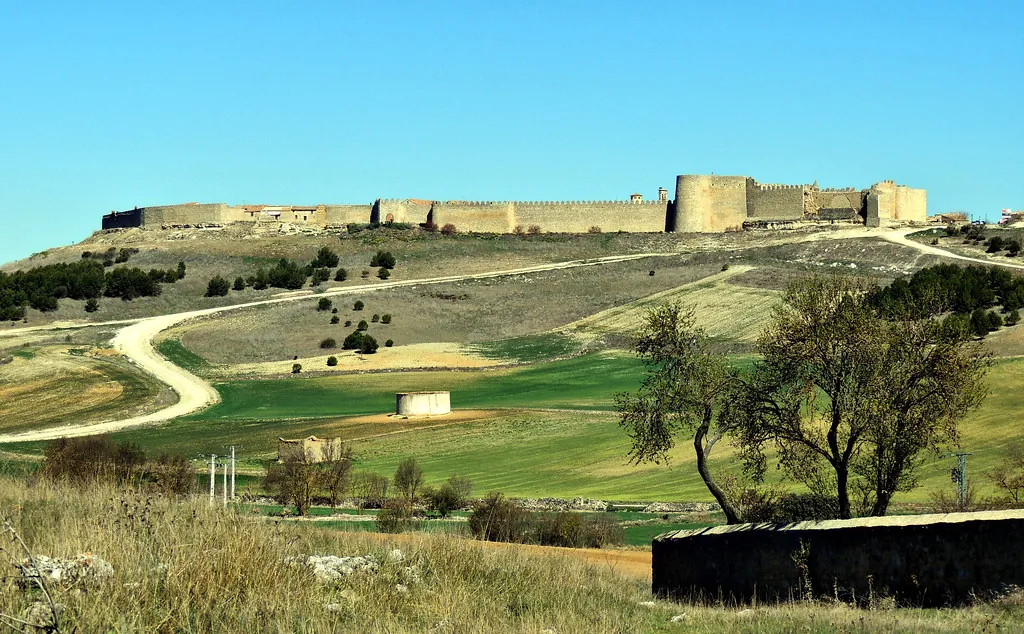
In the middle of the Tierra de Campos plain, Villanueva de los Caballeros comes into view slowly. For kilometres there is little more than cereal fields and straight tracks. The church tower is the first element to break that flat line. In a landscape like this, any vertical structure works almost like a signal of human presence.
Tourism in Villanueva de los Caballeros is largely about understanding that landscape and the way of life it has supported. The village has around 150 inhabitants and sits in an area where agriculture has set the rhythm of the year for centuries. The houses reflect that economy: adobe or rammed earth walls, interior courtyards, and wide gateways designed for carts and tools.
The church tower still plays the role it has held for generations, a reference point visible from the tracks that cross the surrounding countryside. In Tierra de Campos, where views stretch far into the distance, these features help organise the territory.
San Pedro and the shape of the village
The parish church, dedicated to San Pedro, holds much of the local heritage. The building stands on a structure usually dated to the 16th century, with later alterations. Many churches in this part of the region followed a similar pattern, expanding in later centuries to adapt to population changes or new liturgical needs.
The tower is restrained, built in brick and stone, without decorative ambition. Its purpose was practical: bells to mark the hours, announce celebrations or warn of fire or strong storms.
The interior opens only at certain points in the religious calendar. When access is possible, the different construction phases become clear. There is nothing especially monumental, but it is a good example of parish architecture in this part of Valladolid province.
Around the church, the small urban centre takes shape. Streets are straight, blocks compact, and buildings low. Many roof eaves still show exposed wooden beams, a common solution to protect adobe walls from rain.
The wide landscape of Tierra de Campos
The plain surrounding Villanueva de los Caballeros forms part of the extensive cereal-growing landscape of Tierra de Campos. Seasonal change is easy to read here. In spring, the fields turn a uniform green. Summer brings the yellow of ripening grain. After the harvest, stubble remains and the land shifts towards ochre tones.
Scattered among the fields are dovecotes, some still standing, others already in ruins. For centuries they were part of the domestic economy in the region. They are often placed on slight rises or beside agricultural tracks.
Rural paths link the village with nearby settlements. These routes are flat and open. In summer, exposure to the sun is worth keeping in mind. There is very little shade, and distances, even when they seem short, stretch out when walking.
Birds of the open plain
The crops and fallow land of Tierra de Campos remain a habitat for steppe birds. Around the village it is possible to see great bustards, little bustards and Montagu’s harriers, particularly in spring and early in the day.
This is not an area set up for organised birdwatching. It is a matter of looking carefully from the agricultural tracks and avoiding entry into cultivated plots. Binoculars are useful, as many of these birds stay still and blend into the terrain.
Food and everyday life
Local cooking reflects the traditional pantry of inland Castile: lamb, cured meats, pulses and substantial soups designed for agricultural work. In a village of this size, places to eat are not always open regularly. These dishes are more commonly found in family gatherings or during festivals.
Patron saint celebrations usually take place in summer, when residents who live elsewhere return. During those days, the rhythm of the village shifts, with more people in the streets, shared meals and religious events.
For the rest of the year, life is quiet and closely tied to farming. For anyone passing through, the most interesting aspect is that direct relationship between landscape and way of life. In Tierra de Campos, almost everything, the houses, the tracks and the layout of the village, grows out of the same plain that surrounds it.