Full Article
about Villasarracino
A Terracampina village with an interesting church, surrounded by farmland and quiet.
Hide article Read full article
Villasarracino: Lo Que Hay Entre Pueblo y Pueblo
Hay un momento, conduciendo por la carretera comarcal, en el que te das cuenta de que has pasado Villasarracino. No es que sea fácil de perder, es que el pueblo se funde con la tierra hasta casi desaparecer. Un montón de casas de adobe del color del barro seco, un campanario, y alrededor, kilómetros de llanura. Llegar aquí es entender que en Tierra de Campos lo importante suele ocurrir entre un núcleo y el siguiente, en ese mar de cereal.
Con poco más de cien vecinos, la vida aquí tiene el ritmo de las cosechas. No vengas buscando una postal perfecta o una lista de cosas que ver. Vienes a pisar un territorio donde la arquitectura es pura función y el horizonte es plano como la palma de tu mano.
La Iglesia y Las Casas Que Son Naves
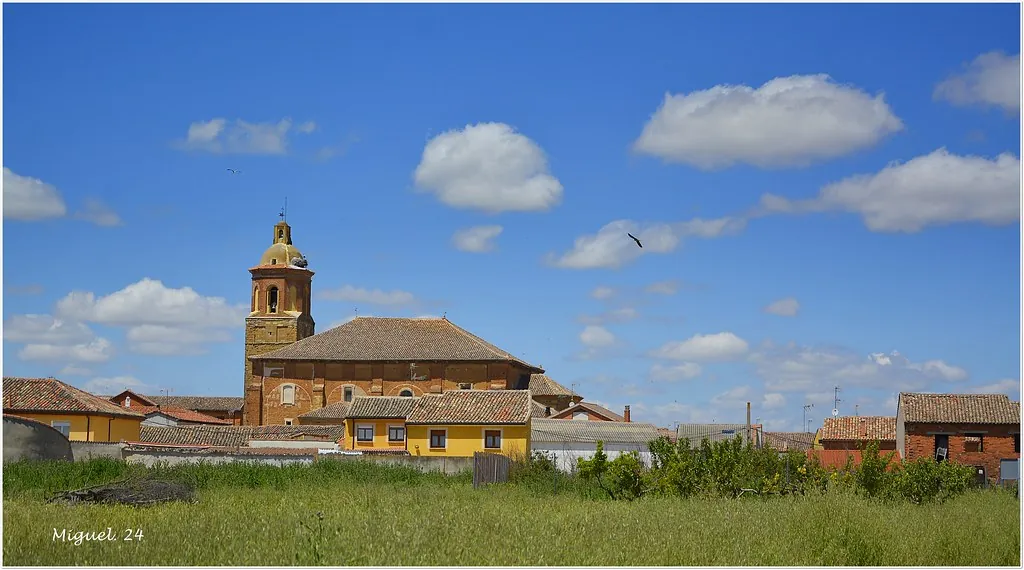
En el centro está la iglesia parroquial, normalmente dedicada a San Miguel. Es grande para el tamaño del pueblo, como pasa en toda esta comarca. No es una catedral, es un edificio sólido que ha ido creciendo a parches según se necesitaba. La torre se ve desde lejos y sirve más como referencia geográfica que como reclamo artístico.
Las casas son lo que realmente explica el sitio. Son largas y bajas, muchas con portones enormes que antes daban paso a los carros. Ahora algunos están cerrados, otros medio caídos. Si caminas sin prisa ves cómo las viviendas se mezclan con los corrales y los pajares; todo está junto porque la vida rural no separaba el trabajo del descanso. El material es casi siempre adobe, ese ladrillo de barro y paja que parece disolverse bajo la lluvia si no se cuida. No hay pretensiones. Es la versión construida del pantalón de trabajo.
Caminar Donde Solo Mandan Los Surcos
La verdadera visita a Villasarracino empieza cuando sales del último callejón. La red de caminos agrícolas es tu museo al aire libre. Son rectos, polvorientos o embarrados según la época, y no llevan a ningún monumento especial. Llevan al campo.
Caminar por aquí es sencillo: eliges una dirección y andas. En primavera el verde es intenso; en verano, todo es un océano dorado que cruje con el viento; después de la cosecha, la tierra desnuda tiene algo áspero y honesto. Verás palomares cilíndricos de ladrillo asomando entre los rastrojos, una estampa clásica de esta zona.
El cielo lo ocupa todo. Los atardeceres no son bonitos, son grandiosos, sin un árbol que corte la línea del horizonte. Y luego está el viento. Siempre está ahí, silbando en los oídos. En invierno corta como un cuchillo; en verano trae un alivio seco. Ven preparado para él.
Comer Como Un Segador (Aunque No Lo Seas)
La cocina por aquí no tiene florituras. Es la comida que se hacía para aguantar jornadas larguísimas en el campo: cosas contundentes y sabrosas. Sopas de ajo bien cargadas, guisos de legumbres y embutidos curados en las bodegas frescas son lo habitual. No esperes cartas elaboradas ni presentaciones vistosas. Es el tipo de plato que comes callado, porque hablar sería quitarle importancia.
Si coincides con las fiestas patronales en verano (pregunta por las fechas exactas), verás al pueblo transformado. Llegan los que se fueron a trabajar fuera, suena música en la plaza hasta tarde y hay una verbena. Es ruidoso, familiar y auténtico. El resto del año vuelve el silencio profundo, ese en el que hasta el crujir de tus propios pasos suena alto.
Una Base Para Entender El Mosaico
Villasarracino funciona bien como campamento base para entender Tierra de Campos. En un radio corto tienes otros pueblos con nombres terminados en '-illo' o '-ero'. Cada uno tiene su iglesia, su plaza con algún banco y su propio carácter, sutil pero distinto. La gracia está en moverte entre ellos por esos caminos rectos, notando las pequeñas diferencias: la forma de una espadaña, el estado del pilón, el tipo de teja. No es coleccionar pueblos, es entender una forma común de vida hecha de variaciones mínimas.
¿Merece un viaje expreso? Si buscas acción o fotos para Instagram, probablemente no. Pero si lo que quieres es parar, respirar hondo y ver un paisaje donde el hombre lleva siglos haciendo equilibrio con la naturaleza más básica, entonces sí. Es ese tipo de sitio donde "no hacer nada" se convierte, curiosamente, en la actividad principal