Full Article
about Alija del Infantado
Historic town with a rich feudal past in the south of the province, known for its age-old Antruejo traditions.
Hide article Read full article
As evening falls, the Pimentel castle casts a long shadow across the streets of Alija del Infantado. The stone shifts in colour as the sun drops, from pale grey to a warm golden tone that blends with the dust of the tracks. Anyone arriving here in search of Alija del Infantado finds a quiet village, surrounded by open farmland where the wind moves the cereal crops like water.
From the road, the adobe and rammed-earth houses appear quickly, many with wooden gates darkened by age. Some still keep their old iron grilles and enclosed courtyards where, in summer, you might hear low conversation or the clatter of plates after a meal. This is not a place of grand monuments lined up one after another. Its history sits in small details: a low arch, a thick wall, a stable that still smells faintly of straw.
Walking along Calle Mayor means following the village’s main axis. By mid-morning there is usually a little more movement: neighbours heading out to shop, a car passing slowly, the echo of a door closing along the street.
Castle and church at the village core
The Pimentel castle stands within the urban centre itself and defines the outline of Alija. Its pale stone walls and rounded towers shape the skyline even from a distance, rising above the surrounding fields. Built in the 15th century and linked to the Pimentel lineage, it has a solid, compact look that reflects its defensive origins.
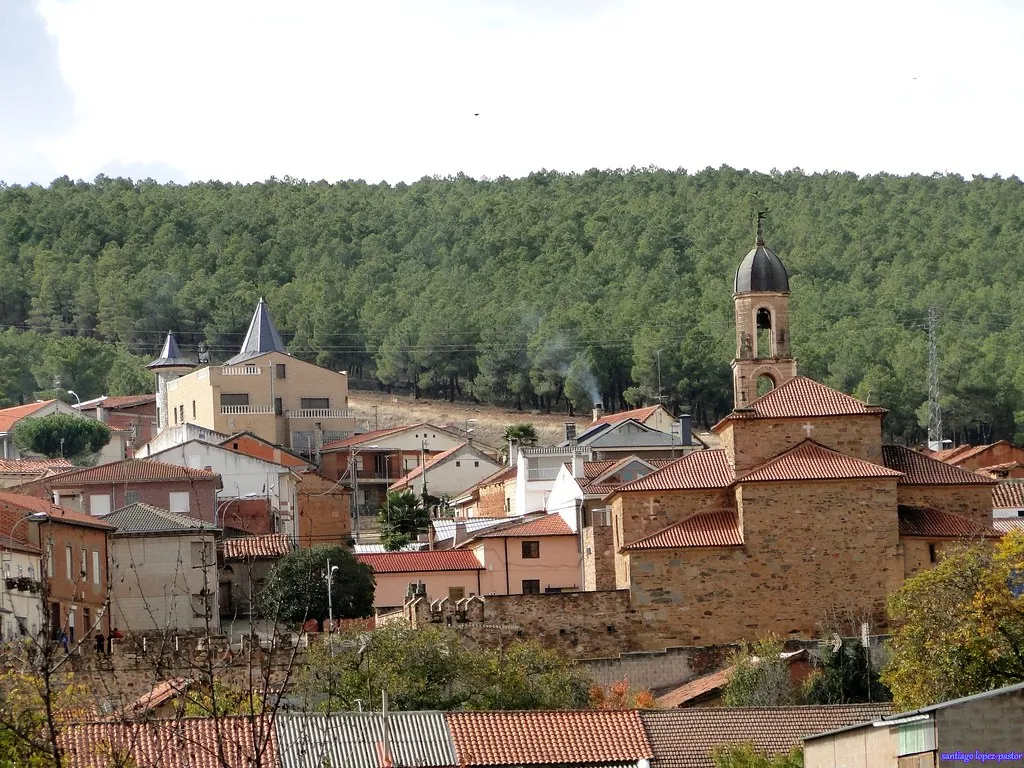
A short distance away is the parish church of San Esteban. Built mainly of brick, with a tower that rises quietly above the rooftops, it forms part of the village’s daily rhythm. During quieter hours, the nearby square is almost silent, broken only by the sound of a bell or the passing of a car.
The streets around this area preserve a good deal of traditional architecture. Thick walls that keep interiors cool in summer, deep entranceways and spaces once used for animals or storing grain. Some houses have been renovated, but the shapes of rural homes typical of this part of León remain easy to recognise.
Open land and nearby riverbanks
Step outside the village and the landscape opens up almost immediately. Plots of cereal fields, farm tracks and lines of poplars that trace streams or wetter ground. In spring the green is intense; by early summer it shifts towards gold, and the air often carries the smell of dry earth and straw.
Near the municipal area run riverbanks connected to the Órbigo river system and smaller streams that irrigate orchards and meadows. There are no marked routes as such, but the agricultural tracks make it possible to walk or cycle without much difficulty. It is worth bringing water and checking conditions beforehand, as after several days of rain some sections can become quite soft underfoot.
Early morning and late afternoon are the best times to enjoy the landscape. At midday the sun is direct and there is very little shade.
Following the tracks beyond the village
Many of the paths leading out from Alija are used daily for farming, so it helps to stay aware and step aside if a tractor comes through. These are flat routes, without major changes in elevation, crossing open fields where the wind can be noticeable at certain times of year.
For those on a bicycle, the secondary roads in the surrounding area allow connections between nearby villages with little traffic. The surface varies, and in some stretches there are bumps or patched sections, something typical of rural roads.
At night, when the sky is clear, the lack of artificial light reveals a wide spread of stars. It only takes a short walk away from the village lamps to see the sky open up over the fields.
What is cooked at home
Cooking here remains closely tied to the agricultural calendar. Garlic soups made with stale bread, embutidos from the annual pig slaughter, and stews that simmer slowly during the colder months are all part of everyday food. In the plots near the river, beans, potatoes and seasonal vegetables grow well.
During winter, some families still carry out the matanza del cerdo, the traditional pig slaughter, though today it tends to be more domestic than it once was. It is one of those moments when the village returns to an older rhythm: smoke rising from chimneys, movement in the yards, and long conversations around the table.
Festivities and the return of those who left
The celebrations most closely tied to the religious calendar revolve around San Esteban, the village’s patron saint, on dates close to Christmas. These are days when many former residents return, and the atmosphere shifts noticeably.
A similar change happens in summer, especially in August. Streets that are quiet for much of the year fill with people in the evenings, with music in the square and activities organised by the residents themselves.

