Full Article
about Regueras de Arriba
Small town near La Bañeza, known for the landmark tree 'El Caño' and its quiet atmosphere.
Ocultar artículo Leer artículo completo
The church bell strikes eleven and the only other sound is a tractor ticking itself cool outside the single grocery. In Regueras de Arriba the working day is already half over; the grain trucks have come and gone, and the village’s 260 inhabitants are either in the fields or behind closed doors, saving energy for the afternoon heat.
High-plateau horizons
Regueras sits 780 m above sea level on the meseta, the raised table-land that covers much of north-west Spain. There is no dramatic gorge or cliff, just an endless roll of cereal fields that changes colour with the hour: silver-green at dawn, biscuit-brown after harvest, and a soft violet just before the sun drops behind the distant sierra. The name translates loosely as “upper irrigation channels”, though the nearest flowing water is a modest canal built in the 1950s to coax wheat and barley from the dry earth. Stand on the tiny Plaza Mayor and you can watch weather arrive ten minutes before it hits; in winter that can mean horizontal sleet, while July brings a shimmering haze that makes the telegraph poles wobble.
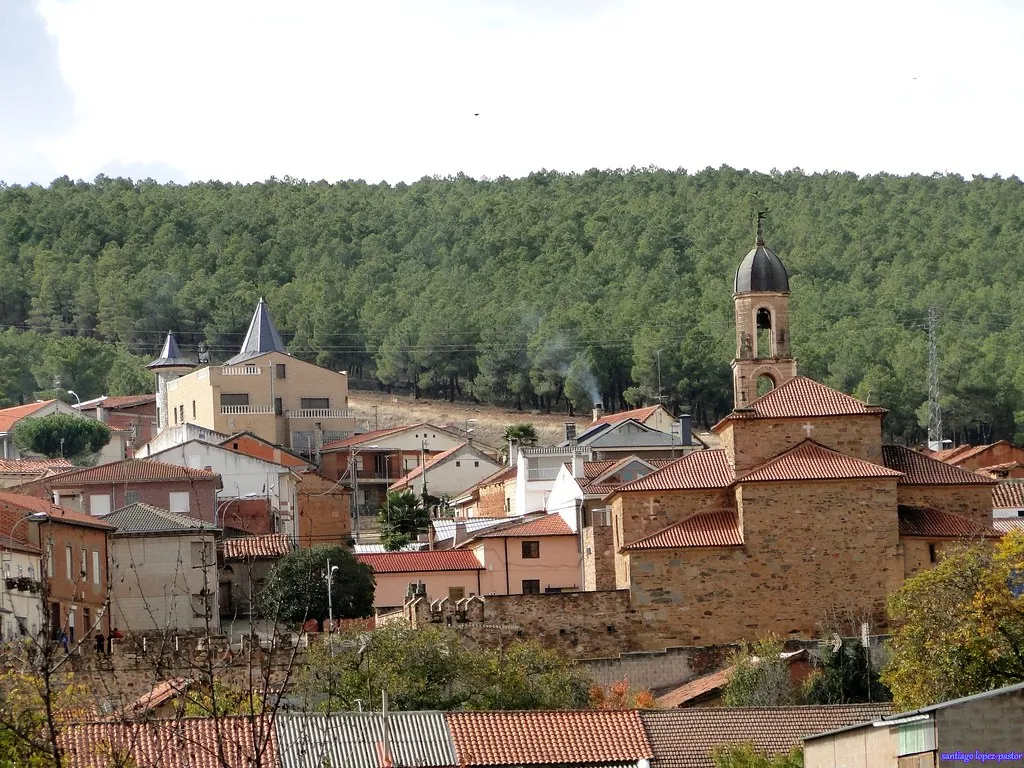
Traditional houses are built from adobe brick—mud, straw and lime—then whitewashed every spring whether they need it or not. Many still have wooden balconies, called corredores, wide enough for a chair but more useful for drying red peppers and maize cobs. New breeze-block bungalows have crept in at the southern edge, proof that younger residents prefer central heating to authenticity, yet the core remains stubbornly low-rise and sun-bleached.
What you will (and won’t) find
There is no souvenir shop, no medieval gateway, no olive-tree-lined boulevard for the perfect photograph. The parish church of San Miguel, locked except for Sunday mass, contains a single 17th-century panel of the Virgin that locals swear was rescued from a Bonapartist bonfire. Ask inside the bakery-cum-general-store and someone’s aunt will fetch the key; she will also tell you, within sixty seconds, which UK city your grandparents emigrated to in 1962. That is the Regueras version of TripAdvisor: accurate, immediate and impossible to replicate.
Instead of sights the village offers rhythm. Grain is loaded at dawn, dogs patrol the shady side of streets at midday, and by 8 pm the air smells of wood smoke and garlic even in August. British visitors sometimes find the silence unnerving; others discover they can finally hear wheat growing when the wind is right.
Walking without way-marks
Two unsurfaced lanes head north from the last street-lamp, both used by farmers rather than hikers. Follow either for 30 minutes and you reach the boundary stone with the next municipality; keep going and you will eventually bump into the pilgrimage route to Santiago that skirts La Bañeza six kilometres away. There are no signposts, so download an offline map or simply remember that the telecommunication mast always lies south-west. Spring brings larks and the occasional Great Bustard—heavy, shy birds that need a still morning and binocular patience. After rain the clay sticks to boots like wet cement; in July the same path turns to talcum powder and you will taste dust for the rest of the day.
Cyclists can loop south-east along the Vía Verde, a disused railway line now paved with fine gravel, flat enough for family riders and shaded by poplars. Allow two hours to reach the ruined Roman villa at Alija del Infantado, and pack water because the only bar en route opens unpredictably.
Eating, or why your Sunday roast is 25 km away
Regueras itself has no restaurant, café or pub. The bakery sells napolitanas—chocolate-filled pastries that taste like a French pain au chocolat having an identity crisis—and there is a morning venta (bar) in the neighbouring hamlet of Puente Paulón, but do not bank on lunch after 2.30 pm. Most visitors base themselves in La Bañeza where Mesón O Parral serves cocido leonés, a chickpea and cabbage stew that arrives in three acts: soup first, then pulses, finally meat. Ask for a media ración unless you are agricultural-strong; portions are calibrated for men who have spent the morning tossing 40 kg sacks. Vegetarians can survive on judiones—giant butter beans stewed with saffron—but will need to specify sin chorizo twice.
If you are self-catering, stock up in León before you arrive. The village shop opens 9 am–1 pm weekdays only, stocks UHT milk, tinned tomatoes and a freezer compartment dedicated to cecina, the local air-dried beef that looks like carpaccio but eats like biltong. Supermarkets in La Bañeza close on Sunday afternoons; forget that emergency packet of custard creams and you will be driving to the 24-hour garage on the A-66.
When to come, and when to stay away
April and late September give you 20 °C afternoons, wheat green enough to photograph, and skies wiped clean by Atlantic fronts. May can be perfect, but farmers spray fertiliser that smells faintly of fish; asthmatics should keep windows closed. July and August hit 35 °C by noon—fine if you enjoy watching paint dry—while January brings hard frost and the possibility of being snowed in for 48 hours. The fiesta week around 15 August triples the population with returning emigrants, loud enough to wake the neighbouring province and justify booking accommodation a year ahead. Conversely, November feels post-apocalyptic: stubble fields, shuttered houses, and a pervading sense that everyone sensible left in 1960.
Getting here without tears
Fly to Valladolid (two hours’ drive) or Madrid, then take the Renfe Alvia train to León in 1 h 40 min. Hire cars queue outside the station; ignore the upgrade pitch for an SUV—Regueras streets are barely wider than a British allotment path. From León follow the A-66 south, exit at La Bañeza, then take the CL-623 for six kilometres. The final right turn is signposted only if you already know where you are going—watch for a stone cross and a discarded refrigerator that has served as landmark for three decades. Mobile signal drops to emergency-only in the last dip, so screenshot your confirmation email before you leave the main road.
There is no bus, no taxi rank, and Uber does not recognise the village name. If you must rely on public transport stay in La Bañeza and borrow the municipal bikes; the ride takes 25 minutes and helmet use is, charmingly, optional.
Last orders
Regueras de Arriba will not change your life. It offers no cathedral, no beach bar, no Instagram moment. What it does provide is a calibration point: a place where time is measured in harvests, strangers are noticed within minutes, and the loudest noise at midnight is a dog barking at its own echo. Come if you are curious about how Spain managed to feed itself before irrigation circles and Ryanair. Bring walking shoes, a phrasebook, and a carrier bag for the village bakery’s napolitanas. Leave before the fiesta if you value sleep, or stay for it if you fancy learning that the British are not the only nation capable of queueing patiently for beer in the street.