Full Article
about Riego de la Vega
Municipality on the Vía de la Plata; known for its farming and roadside services.
Hide article Read full article
A village shaped by its fields
Some places slow you down without asking. Riego de la Vega is one of them. You arrive by car, park more or less wherever suits, and the first thing that stands out is the quiet. It is not an awkward silence, but the everyday calm of a place where life carries on in its own rhythm.
Riego de la Vega sits in the province of León, within the area known as Tierra de La Bañeza. Around 700 people live here, spread across several small settlements. This is not a destination for grand monuments or busy shopping streets. It is a place to see how life works in a real agricultural plain, one that is still actively farmed.
The name says a lot. The vega, the fertile lowland, sets the tone for everything.
The landscape is largely flat, marked by cultivated plots, irrigation channels and dirt tracks that cut across the fields. At roughly 800 metres above sea level, the scenery shifts noticeably with the seasons. Spring brings a fresh green look, summer turns the land drier and golden, and autumn introduces brief but striking ochre tones.
Agriculture has long been the backbone here, with some livestock alongside it. Cereal crops and sugar beet are still common, and small vegetable plots sit close to many houses. Tractors coming and going at the start or end of the day are part of the routine rather than a curiosity.
Quiet streets and adobe houses
The centre of Riego de la Vega is easy to cover on foot. It is not large and does not try to be.
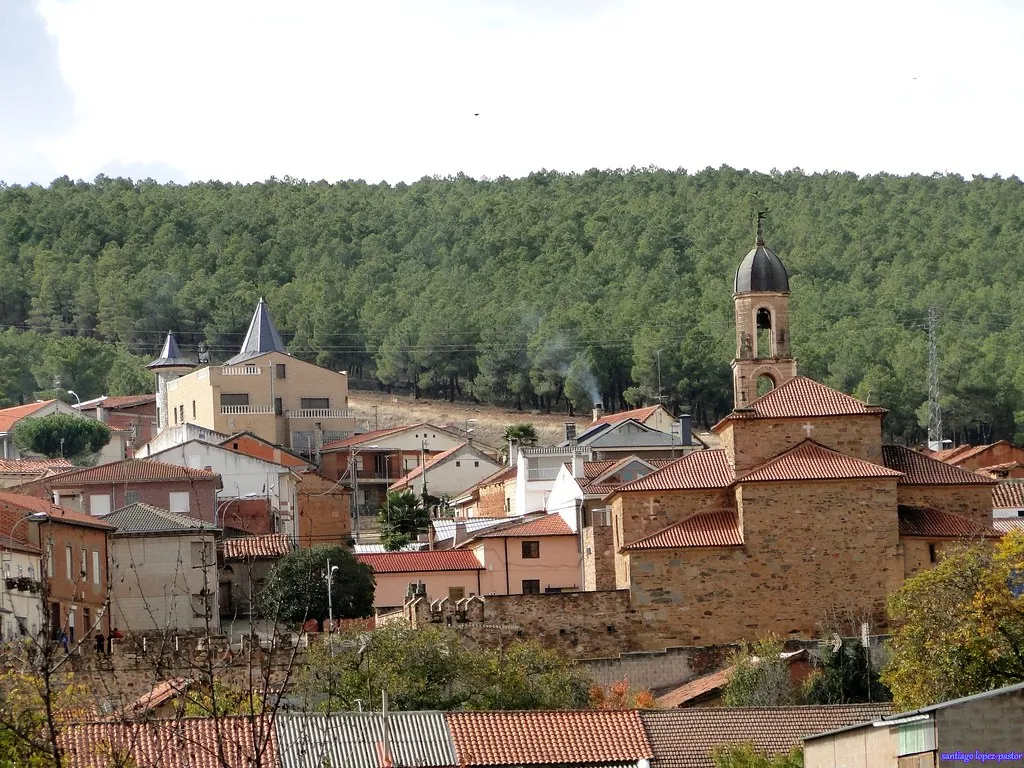
The street layout keeps the irregular pattern typical of farming villages. Stone houses stand next to others built from adobe, a traditional material made from earth. Large gateways once used for carts, now often for cars, open onto properties. Behind low walls, you can sometimes guess the presence of courtyards or animal pens.
Many façades have been updated over time, yet the older structures are still easy to recognise. The village has not been redesigned or polished for visitors. It simply continues to function as it always has.
During the day, the streets can feel almost empty. Later in the afternoon, things shift slightly. Residents begin to appear at their doorways or stroll slowly along the streets. The village becomes a bit more active, though never noisy or hurried.
Church and rural hermitages
The parish church is dedicated to San Esteban Protomártir, Saint Stephen the Protomartyr. The current building appears to date back several centuries, likely from the early modern period. Its simple bell gable rises above the rooftops and can be seen from different points around the village.
In the surrounding area, there are also small rural hermitages such as those of San Roque and Santa Ana. These modest religious buildings are not always open. They tend to be accessible on specific dates or during local celebrations.
Anyone curious to step inside will usually need to ask around. In small villages, there is often someone who holds the key or knows who does. That informal approach is part of how things work here.
Walking without hurry
One of the most rewarding things to do in Riego de la Vega is simply to walk.
Agricultural tracks lead out of the village in several directions. The flat terrain makes walking easy, without steep climbs or technical difficulty. Some paths connect with nearby places such as Villacé or Santa María del Río. Others form short loops through the fields and return to where you started.
There are no extensive signposted routes or frequent information panels. Navigation relies more on checking a map beforehand, using a mobile phone, or asking a local which path leads where. That last option often turns out to be the most reliable.
The open landscape also suits those interested in birdwatching. Birds of prey can often be seen gliding overhead, and with a bit of patience, partridges may appear moving along the edges of fields.
Food rooted in the land
The cooking in this part of León is straightforward and closely tied to local produce. Recipes are simple, with an emphasis on what comes from the surrounding land.
Legumes play a central role, especially white beans from the area. Roast lamb cooked in the oven is another common dish, along with cecina, a type of cured beef typical across the province. Add a loaf of village bread and some local cheese, and the result is a substantial, no-nonsense meal.
This is not elaborate cuisine. It is food meant for sharing at the table, often enjoyed slowly.
Festivities through the year
Local celebrations revolve mainly around San Esteban, the village’s patron saint. Depending on the local calendar, festivities usually take place towards the end of summer or into early autumn.
These days bring a different atmosphere. There is a mass, a procession, and more movement in the streets than usual. Pilgrimages to nearby hermitages are also common, with short walks followed by shared meals outdoors when the weather allows.
Organisation tends to come from the residents themselves rather than external events or tourism initiatives. The result feels informal and rooted in the community.
Riego de la Vega does not set out to impress. It remains an agricultural village in León that continues to function as such. That is precisely what makes it worth a visit. A short detour in the La Bañeza area offers a clearer sense of how daily life unfolds in this part of the province, where routine matters more than spectacle.