Full Article
about Adrados
Village in the pine-forest resin-making belt; traditional wine cellars still in use, surrounded by woodland.
Hide article Read full article
The smell of dry resin drifts through the air early in the morning, when the sun has barely touched the dirt pavements and the pines still cast long shadows across the yards. At that hour, Adrados makes immediate sense: silence, a dog barking somewhere in the distance, and the brief sound of a car passing through on its way to the woods.
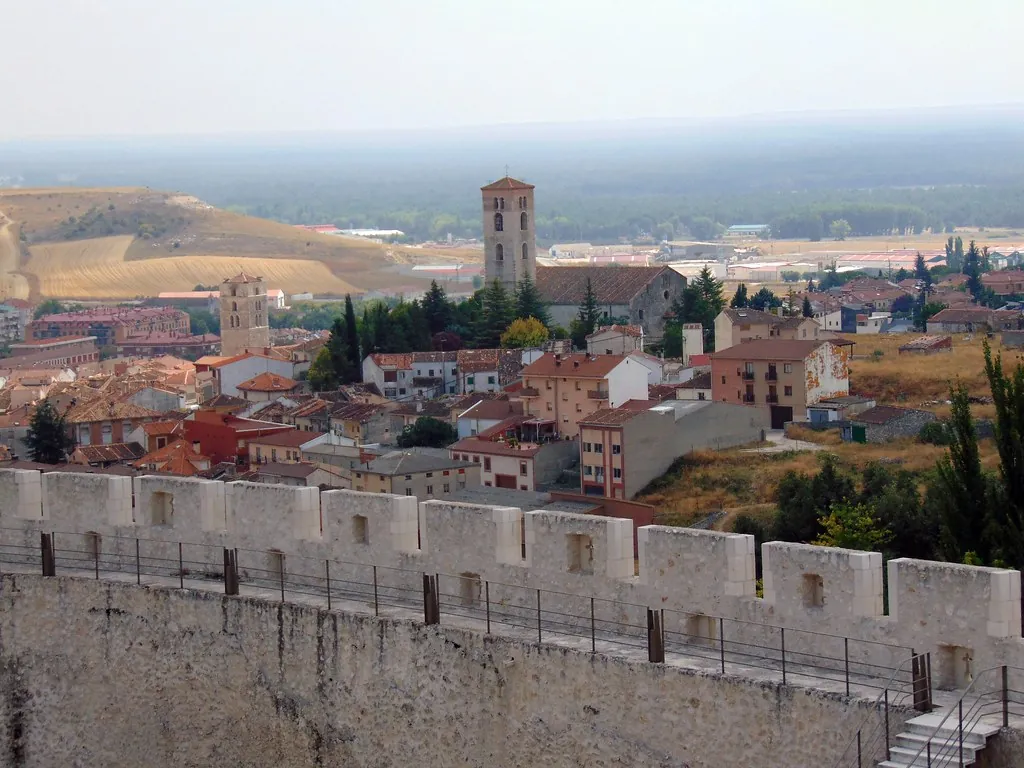
Adrados sits on a low rise in the Tierra de Pinares of Segovia, with barely a hundred residents for much of the year. There is no historic centre laid out for strolling, no streets designed with visitors in mind. This is, above all, a place that continues to function as somewhere people live: plots of land, kitchen gardens, farm buildings and sandy tracks leading out towards the forest.
Low houses and a visible tower
The streets are narrow and slightly uneven, with stretches of bare earth and others already paved. Many houses still have walls of adobe or exposed brick, with wide gates hinting at former animal yards. In summer, some windows open again as families return to homes that have been in the family for generations.
The church of San Juan Bautista stands out straight away thanks to its tower, visible from almost anywhere in the village when looking above the rooftops. The building is simple, built in pale stone, and for years it has been one of the places where neighbours would still gather on Sunday mornings.
A small square acts as a daily meeting point. On some days, tractors can still be seen parked near the fountain while people chat about the harvest or whether there has been enough rain in the pinewoods.
Pine forests all around
Adrados is encircled by resin pine forests. The trunks still carry dark marks from old cuts, traces of an activity that provided work in this part of Segovia for decades. Walking through these woods has a steady, almost repetitive feel: loose sand underfoot, pine needles carpeting the ground, and the constant scent of warm resin when the sun is strong.
Numerous forest tracks begin right at the edge of the village. Some are suitable for walking or cycling and link up with other settlements in the area after several kilometres of uninterrupted woodland. There is no expectation of tourist signage or information panels. The paths are recognised more by use than by signposts.
In summer, carrying water is sensible and the middle of the day is best avoided. The shade from the pines helps, but the heat on the plateau builds quickly from midday onwards.
Autumn and the arrival of mushrooms
With the first autumn rains, the forest floor begins to change. Beneath the dry needles, níscalos appear, a type of wild mushroom common in Spain, and sometimes boletus too. Finding them depends heavily on the year and on how much moisture the ground has retained.
It is common to see local people heading out early with baskets. Mushroom picking is taken seriously here. Specimens are cut carefully and more fragile areas of the forest are respected. For anyone unfamiliar with the different species, leaving them alone is the safest choice. Each season brings warnings about mistakes and confusion.
Wildlife at the edges of the day
At first light, it is not unusual to come across roe deer in clearings between the pines. They move quickly, visible only for a few seconds between the trunks, leaving behind the sharp sound of branches shifting. Wild boar are also present, their tracks often stamped into the sandy paths, and birds of prey are a frequent sight, riding the air currents above the forest.
The calmest moments tend to be early morning and late afternoon, when the heat eases and the woodland regains a sense of movement.
Festivities and everyday life
Celebrations in Adrados are mostly concentrated in summer, when the population grows for a few weeks. The festival dedicated to San Juan Bautista brings together a procession, music and activities organised by residents themselves. During these days, the square fills again and conversations stretch late into the night.
Outside those dates, life slows noticeably. The wind can be heard moving through the pines and, once night falls, the sky appears clear. With no large towns nearby, darkness settles in deeply. As eyes adjust, the Milky Way begins to emerge across the sky.
When to visit
Each season shows a different side of Adrados.
In summer, early starts make a difference if planning to walk through the pinewoods, as the heat becomes intense by midday. Autumn is often the most comfortable time for exploring the tracks, with milder temperatures and subtle changes in colour across the forest. Winter brings a quieter atmosphere still, and some mornings the village appears covered in frost.
Adrados is not a place of big plans or packed itineraries. It is somewhere to walk slowly through pine forests, sit for a while in the square, and listen to how a small village sounds when very little is happening. That, in itself, is reason enough to take it in at an unhurried pace.