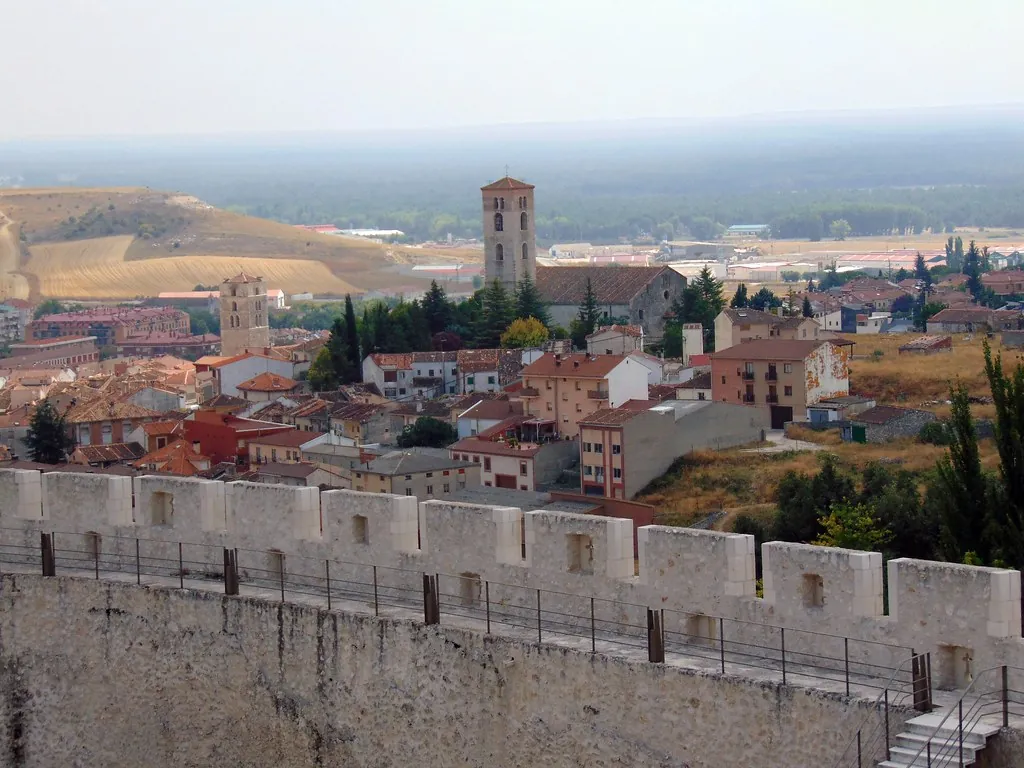
Vista aérea de Aldea de San Miguel
Instituto Geográfico Nacional · CC-BY 4.0 scne.es
Castilla y León · Cradle of Kingdoms

Aldea de San Miguel

The morning resin collectors have already finished their rounds by the time the church bell strikes seven. In Aldea de San Miguel, population 212, ...

212 inhabitants · INE 2025
740m Altitude

Why Visit

Church of San Miguel Arcángel Cycling routes

Best Time to Visit

summer

San Miguel (September) septiembre

Things to See & Do
in Aldea de San Miguel

Heritage

  • Church of San Miguel Arcángel
  • Hermitage of the Virgen de los Remedios

Activities

  • Cycling routes
  • Hiking

Festivals
& & Traditions

Fecha septiembre

San Miguel (septiembre), Virgen de los Remedios (mayo)

Las fiestas locales son el momento perfecto para vivir la autenticidad de Aldea de San Miguel.

Full Article
about Aldea de San Miguel

A small rural settlement near the capital; it keeps the feel of a Castilian village with its parish church and traditional fiestas.

Ocultar artículo Leer artículo completo

The morning resin collectors have already finished their rounds by the time the church bell strikes seven. In Aldea de San Miguel, population 212, this ancient rhythm still dictates the day. The village sits 740 metres above sea level in Castilla y León's Tierra de Pinares, where pine forests stretch so far that locals joke the trees have voting rights.

Adobe walls the colour of wheat absorb the early sun. Low houses with prominent chimneys line streets barely wide enough for a tractor, their doorways revealing glimpses of corrals where chickens peck between worn cobblestones. This is Spain stripped of tourism brochures—no souvenir shops, no tapas trails, just the persistent scent of pine resin and the occasional bark of a dog announcing stranger danger.

The Forest That Built a Village

For centuries, these Scots pine forests financed everything from Sunday mass to schoolbooks. Resin extraction, introduced by the Romans and industrialised under Franco, turned sticky amber into cash. The trade peaked in the 1960s when 400 resin workers tapped 40,000 hectares. Today, three men maintain the tradition, their scarred trees marking time like arboreal tattoos.

Walking the forest tracks reveals their legacy. Wide sandy paths, originally built for ox-carts hauling resin barrels, now serve weekend cyclists and mushroom hunters. The terrain rolls gently—this isn't dramatic mountain country, but the subtle shifts in elevation reward walkers with sweeping views across Valladolid's least-known province. Dawn brings long shadows and copper light; dusk paints everything gold-green.

Spring arrives late at this altitude. April showers arrive as hail, and frost can nip until mid-May. Summer brings relief—temperatures hover around 24°C when Madrid swelters at 36°C. Autumn transforms the forest floor into a mosaic of pine needles and saffron milk caps, though novices should note: local mycologists guard productive spots with military secrecy. Winter bites hard. The 40-minute drive from Valladolid can stretch to two hours when snow drifts across the A-601, and the village's single bar often closes when fuel runs low.

One Church, No Bars, Excellent Lamb

San Miguel Arcángel church dominates the diminutive main square. Built from the same ochre stone as the houses, its modest facade reveals nothing of the 16th-century frescoes discovered during 1998 renovations. The priest arrives from neighbouring Manganeses de la Lampreana every Sunday; weekday visitors must content themselves with peering through wrought-iron gates at baroque altarpieces gilded by resin money.

The village supports one shop, one bakery (open Thursdays only), and zero bars. This causes consternation for British visitors expecting village pub culture. Instead, social life revolves around private kitchens where grandmothers preside over wood-fired ovens. The local cooperative sells lechazo—milk-fed lamb roasted at 200°C until the skin shatters like spun sugar. At €18 per kilo, it's cheaper than supermarket versions and arrives wrapped in butcher paper with cooking instructions scrawled in biro.

Food here follows the agricultural calendar. Spring brings tender white beans and wild asparagus. Summer offers little beyond excellent bread and stronger cheese—vegetables struggle at this altitude. Autumn explodes with game: partridge stewed with bay leaves, wild boar marinated in resin-scented wine. Winter means cocido, the hearty chickpea stew that fuels forest work. The nearest restaurant, Casa Paco in Villalar de los Comuneros, serves traditional fare to tourists retracing Castilian battlefields. Locals recommend packing sandwiches.

When Silence Becomes Loud

The forest delivers what marketing departments call "digital detox" but here happens naturally. Mobile reception dies two kilometres outside the village. The nearest petrol station stands 28 kilometres away in Medina del Campo. Night skies reveal the Milky Way in shocking detail—light pollution remains theoretical when street lighting consists of four bulbs on timers.

This isolation shapes daily life. The school closed in 2007 when pupil numbers dropped to three. Children now catch the 7:15 bus to Villalar, returning at 2:30 to houses where grandparents speak dialect thick as resin. Young adults flee to Valladolid or Madrid, returning only for fiestas. Property prices reflect this exodus: habitable houses start at €35,000, though renovation requires specialist knowledge of adobe construction and patience for materials delivered "mañana" (which means sometime this month).

The village's annual fiesta, honouring the Archangel Michael in late September, temporarily quadruples the population. Three days of processions, brass bands and communal paella culminate in the "quema de rastrojos"—burning of harvest stubble that lights the night sky visible from 50 kilometres away. Visitors are welcomed but not catered for; bring sleeping bags and expectations of 3am fireworks.

Practicalities for the Curious

Getting here requires commitment. Valladolid airport, 90 minutes away, offers limited flights from London Stansted (Tuesday and Saturday only, April to October). Car hire essential—public transport involves two buses and considerable optimism. The final approach via the CL-601 winds through pine plantations where wild boar frequently lose arguments with vehicles. Drive carefully at dusk.

Accommodation options remain limited. The village offers one casa rural, sleeping six, booked through the ayuntamiento website (Spanish only, response times variable). Alternatively, base yourself in Medina del Campo where the Parador occupies a 15th-century castle—doubles from €120 including breakfast. Day-trippers should note: the village shop closes 2-5pm sharp, and Sunday openings happen only when the owner's mother feels well enough to mind the counter.

Walking maps exist only in Spanish, available from the Valladolid tourist office. Routes range from 45-minute loops suitable for children to 15-kilometre circuits reaching abandoned resin factories. Markings consist of painted pine cones on tree trunks—follow these or risk joining the occasional British walker still circling since 2019.

Aldea de San Miguel offers no monuments, no nightlife, no Instagram moments. Instead, it provides something increasingly rare: authentic rural Spain where forest management and village survival intertwine. Come prepared for self-sufficiency, pack decent walking boots, and abandon expectations of entertainment. The pine forests will provide their own soundtrack—whispering rumours of a Spain that tourism forgot, where time moves to the rhythm of resin drops falling into metal buckets, and the 21st century feels like someone else's problem.

Key Facts

Region
Castilla y León
District
Tierra de Pinares
INE Code
47006
Coast
No
Mountain
No
Season
summer

Livability & Services

Key data for living or remote work

2024
Connectivity5G available
TransportTrain 13 km away
HealthcareHospital 20 km away
EducationHigh school & elementary
Housing~5€/m² rent · Affordable
CoastBeach nearby
Sources: INE, CNMC, Ministry of Health, AEMET

Planning Your Visit?

Discover more villages in the Tierra de Pinares.

View full region →

More villages in Tierra de Pinares

Traveler Reviews