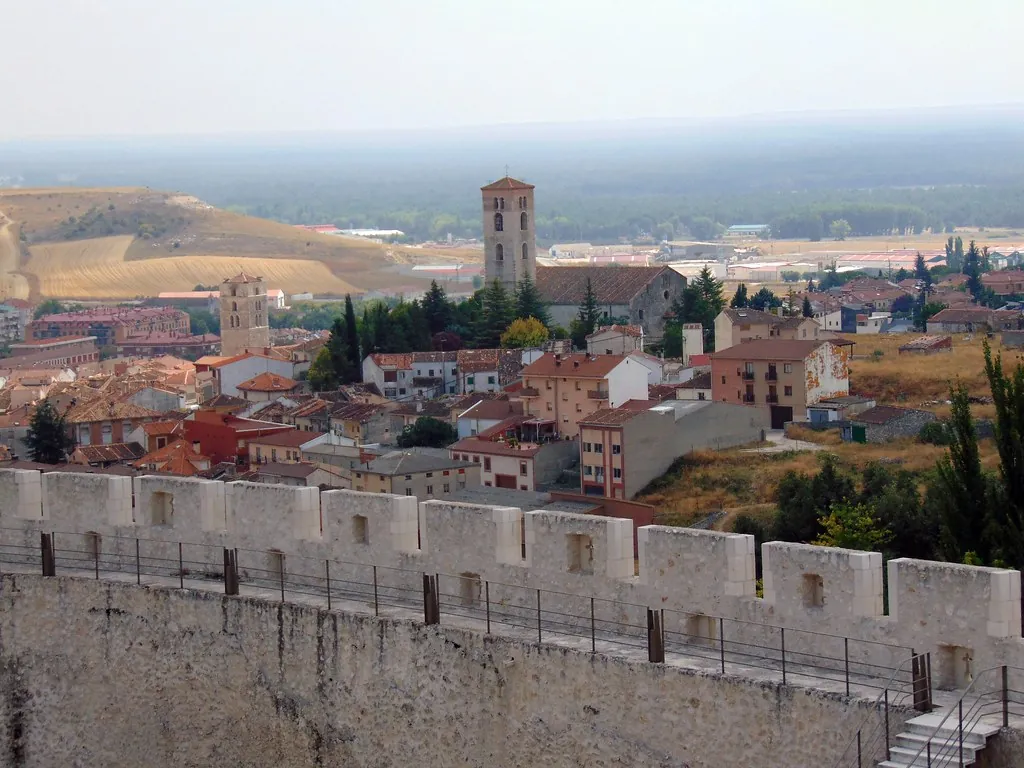
Vista aérea de Aldeasoña
Instituto Geográfico Nacional · CC-BY 4.0 scne.es
Castilla y León · Cradle of Kingdoms

Aldeasoña

The first thing you notice is the quiet. Not the muffled hush of a library, but a complete, expansive silence that makes your ears ring. Aldeasona ...

61 inhabitants · INE 2025
833m Altitude

Why Visit

Mountain Church of Santa María Magdalena Routes along the Arroyo de la Hoz

Best Time to Visit

summer

Santa María Magdalena Festival (July) julio

Things to See & Do
in Aldeasoña

Heritage

  • Church of Santa María Magdalena
  • Peña Mill

Activities

  • Routes along the Arroyo de la Hoz
  • Winery visits

Festivals
& & Traditions

Fecha julio

Fiestas de Santa María Magdalena (julio)

Las fiestas locales son el momento perfecto para vivir la autenticidad de Aldeasoña.

Full Article
about Aldeasoña

Small northern village with farming roots; still has a working mill and limestone buildings.

Ocultar artículo Leer artículo completo

The first thing you notice is the quiet. Not the muffled hush of a library, but a complete, expansive silence that makes your ears ring. Aldeasona sits at 833 metres above sea level in Segovia's Tierra de Pinares, where the resin-scented forests stretch so far that locals measure distance in pine cones rather than kilometres. With sixty-odd residents and several thousand trees, it's the sort of place where you're more likely to meet a tractor driver named Jesús than another tourist.

This is Spain stripped of flamenco and tapas bars. Stone houses with whitewashed walls and heavy wooden gates line a single lane that doesn't so much end as fade into the forest. There's no centre to speak of—just the 16th-century church tower acting as a compass point for anyone who bothers to walk beyond their front door. Mobile signal drops out on the CL-601 approach road; by the time you reach the village, Google Maps gives up entirely. Download offline maps before you leave the A-1, or you'll navigate by pine scent alone.

What Passes for Action

Mornings start late. Someone sweeps dust from a doorway. A dog stretches in the road. The only shop is ten minutes away by car in Carbonero el Mayor, so residents stock up like winter's coming even in May. There's no bar, no ATM, no street lighting—bring a torch for star-watching walks, though on clear nights the Milky Way provides enough glow to find your way home.

The village's architectural appeal lies in its refusal to entertain visitors. Houses are simply well-kept: stone the colour of wheat, terracotta roofs thick with moss, ironwork that predates the euro. Nothing's been converted into a gift shop. The church is usually locked; peer through the keyhole and you'll catch a flash of gilded altar, but that's as close as you'll get unless mass is on. Instead, the attraction is the perimeter—paths that dissolve into pine plantations and cereal fields stitched together like a patchwork quilt.

Walking tracks radiate outwards, flat and shade-sparse. One trundles 7 km north to Villacastín along a farm track where larks dive overhead; another cuts 12 km south-east to the ruins of a Roman milestone near the A-6. These aren't signposted national park trails—just dusty farm access used by resin collectors since the 1800s. Take more water than you think, and expect thigh-high grass in spring when the fields turn an almost violent green before bleaching to gold by July.

Seasons at Altitude

Spring arrives reluctantly. Frost can bite as late as April, but when it lifts the forest floor erupts with wild crocus and the air smells of damp bark. By June the heat builds; temperatures hit 30 °C yet the altitude keeps nights cool enough for a jumper. Spanish families descend briefly for long weekends, though even then you'll share the lane with more red squirrels than people.

Autumn is mushroom season. Locals guard níscalo patches like state secrets, but polite visitors asking in the neighbouring village of Ortigosa del Monte are sometimes pointed toward permissive zones. Carry a basket, never plastic, and know your chanterelle from your death cap—hospital Segovia is 35 minutes away if you get it wrong. October mornings bring mist that pools between tree trunks, burning off by eleven to reveal horizons so sharp they look drawn with a ruler.

Winter is serious business. At 833 m the meseta clamps down hard: daytime 5 °C, nights minus eight, roads glassy with black ice. The forest thins to charcoal silhouettes and the sky feels close enough to touch. Come prepared with snow chains; the council grades the main road but side tracks can stay white for days. This is when Aldeasona feels most remote—smoke curling from chimneys, bread delivered by van rather than baked on site, silence thickened by snow.

Where to Lay Your Head

Accommodation is limited to two options, both outside the village proper. Casa de Laura occupies a converted farmhouse 500 m west, its five bedrooms mixing rustic beams with rainfall showers. Laura, the Anglo-Spanish owner, stocks Yorkshire Tea and keeps a log fire ticking over from October to April. She'll cook a three-course "cena castellana" (grilled lamb, paprika potatoes, house red) if you book by 4 pm—essential since the nearest restaurant is a 20-minute drive. British guests repeatedly praise her directions to the only regional supermarket that sells Marmite.

For larger groups, a four-bedroom VRBO cottage on the eastern edge holds eight people, four bathrooms, underfloor heating and a fenced pool open May–September. It's popular with extended families who self-cater: the kitchen has a proper oven (rural Spain often doesn't) and a dishwasher to save arguments. Both properties provide blackout shutters—vital because sunrise strikes at 6:30 am year-round and the stars are absurdly bright.

Eating Beyond the Hamlet

Aldeasona itself offers zero food outlets. Drive 20 minutes to Carbonero el Mayor for Bar la Plaza, where €12 buys a three-course menú del día—think chickpea stew followed by grilled pork and a half-bottle of harsh local red. In the opposite direction, Villacastín's Asador de la Villa does slow-roast lamb for €18 a portion; ring ahead or wait 45 minutes while it finishes in the wood oven.

If you need city comfort, Segovia's old town is 35 minutes south. Mesón de Cándido, opposite the aqueduct, will sell Brits a half-portion of roast suckling pig so you don't wilt under a kilo of crackling. They'll also, whisper it, serve chips on request. Parking underneath charges €2 per hour; lunch stretches to 4 pm, so there's no rush.

The Practical Bits

Fly to Madrid, pick up a rental car at Terminal 1, and head north on the A-1/AP-6. Turn off at Villacastín and follow the CL-601 for 12 km; ignore the sat-nav's suggestion of a "shortcut"—the farm track is passable only if you fancy your ground clearance. Total driving time is roughly 75 minutes, but allow two hours if landing in rush hour. There is no public transport, none, not even a reluctant Tuesday bus. Without wheels you'll be hitch-hiking through a forest.

Fill the tank at the A-1 services; rural pumps close on Sundays and fiesta days. Pack a torch, walking boots with ankle support, and a light jacket even in August. Download offline maps (Google or Maps.me) before you lose signal. Phone reception improves on higher ground—if you desperately need four bars, climb the low hill behind the church and wave your handset like a 1990s pager.

Worth Knowing

Aldeasona won't suit everyone. Children addicted to Wi-Fi last about thirty minutes before the withdrawal tantrum begins. The pool of silence can feel oppressive rather than relaxing if you're used to urban white noise. Rain transforms dirt tracks into sticky clay that clogs shoe tread; on bad-weather days the highlight really is watching Laura light the fireplace.

Yet for travellers seeking a reset, the hamlet delivers. You could spend three days walking pine corridors, spotting booted eagles and returning only for lamb and Rioja, then drive away feeling like you've pressed a mute button on modern life. Just don't expect a souvenir shop. The only thing you'll take home is resin on your boots—and the realisation that sixty Spaniards already live in the exact place you've been searching for.

Key Facts

Region
Castilla y León
District
Tierra de Pinares
INE Code
40013
Coast
No
Mountain
Yes
Season
summer

Livability & Services

Key data for living or remote work

2024
Housing~5€/m² rent · Affordable
CoastBeach nearby
January Climate4.4°C avg
Sources: INE, CNMC, Ministry of Health, AEMET

Official Data

Institutional records and open data (when available).

  • PALACIO MEDIEVAL
    bic Monumento ~2.1 km

Planning Your Visit?

Discover more villages in the Tierra de Pinares.

View full region →

More villages in Tierra de Pinares

Traveler Reviews