Full Article
about Bocigas
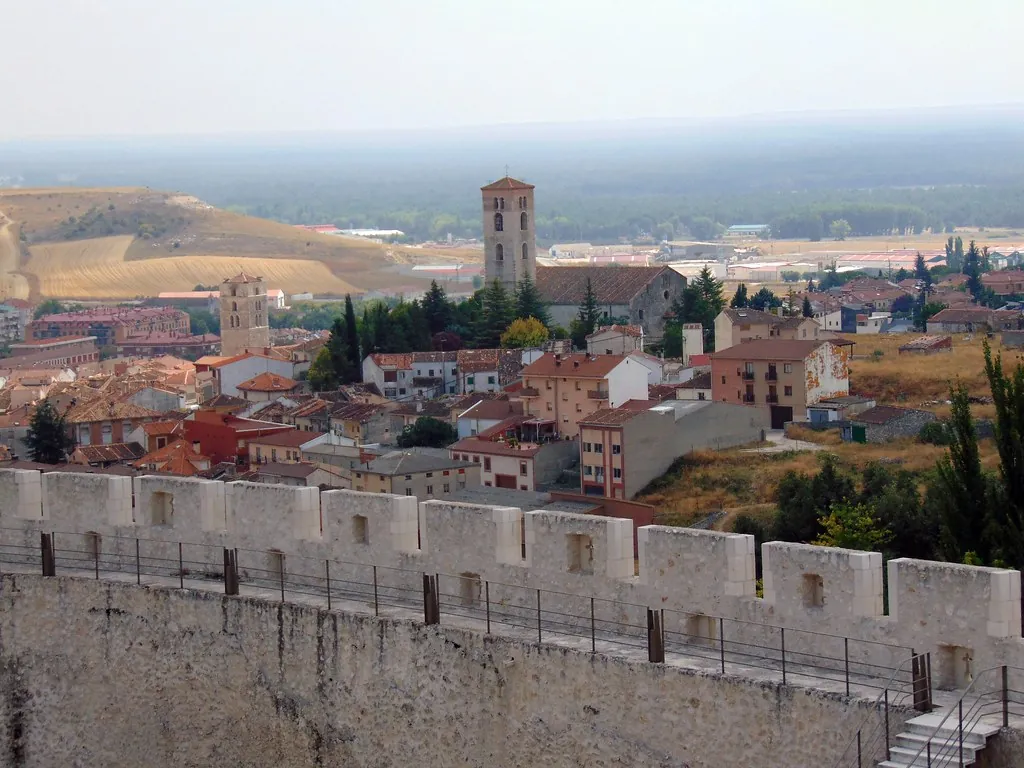
Small town surrounded by pine forests; it offers pleasant natural surroundings and a brick-and-stone parish church.
Hide article Read full article
A village shaped by pines and plains
Bocigas, in the Tierra de Pinares area of Valladolid, is the kind of place that makes more sense when seen in its landscape than located on a map. The village sits on a broad plain at around 770 metres above sea level, within a territory where pine forests and cereal fields have defined daily life for generations. Today, just over seventy people live here, and work still revolves around the land and nearby woodland.
Tierra de Pinares has a very specific history. For many years, stone pine and resin pine supported much of the local economy. Resin, pine nuts and timber moved through villages like this long before rural tourism reached the region. Around Bocigas, patches of pine forest still remain and help explain that forestry past, linking the present-day quiet to a more active, working landscape.
San Andrés and the village streets
The main building in Bocigas is the parish church of San Andrés. Its construction combines stone and brick, a common feature in this part of Valladolid. The origins of the church likely date back to the 16th century, with later alterations, as happened with many churches in the surrounding area over the centuries. Its appearance is restrained and practical rather than grand.
From the area around the church, the scale of Bocigas becomes clear. The village is low and spread out, with many houses built from adobe and rammed earth. Some have been restored, while others show the wear of decades without use. Behind these homes are corrals, small agricultural outbuildings and underground cellars dug into the earth. These spaces were traditionally used to store wine or food before refrigeration existed, and they still form part of the village layout.
Walking through the streets is less about ticking off sights and more about observing how the buildings relate to the land. Materials are local, shapes are simple, and everything feels tied to function rather than decoration.
Tracks through pine woods and cereal fields
The landscape around Bocigas changes noticeably with the seasons. In spring, cereal fields dominate the view. By summer, the land turns dry and muted. In winter, the horizon feels more open and bare, and the pine woods stand out more clearly.
From the village itself, agricultural tracks and forest paths lead into nearby pine areas. These are not marked walking routes but working paths, still used for farming and forestry. They can be followed on foot or by bicycle, though they retain their original purpose rather than being adapted for visitors.
Wildlife is part of these surroundings. It is not unusual to come across tracks left by wild boar or roe deer. In autumn, searching for níscalos, a type of wild mushroom common in Spanish pine forests, becomes part of local custom. This activity is tied to respect for land ownership and to regulations that govern mushroom picking in the area.
The experience here is quiet and open-ended. There are no signposts directing the route, and the interest lies in moving through a working landscape rather than a curated one.
A place without tourist infrastructure
Bocigas does not have dedicated tourist infrastructure. There are no operating bars or accommodation within the village itself, so visits usually happen as short trips from nearby villages or larger towns in the province.
A stay here tends to be brief and unhurried. A walk through the streets, time spent looking at traditional architecture, and perhaps a short route along one of the surrounding tracks is enough to understand the place. It is sensible to bring water and anything needed for the day, as the rhythm here follows that of an agricultural village rather than a destination set up for visitors.
This absence of facilities shapes the experience. Bocigas is not arranged for tourism, and that is part of its character.
Local life and seasonal gatherings
The main celebrations in Bocigas are usually held in summer, when many families who live elsewhere during the year return to the village. During this period, events such as masses, processions and neighbourhood gatherings take place, often centred around the square or the church.
The patron saint is San Andrés, whose feast day falls on 30 November. In a village of this size, participation depends largely on how many people are present at the time, so the scale of the celebration can vary.
Some traditions still continue, though less frequently than before. The matanza del cerdo, a traditional pig slaughter carried out in private homes for meat preservation, survives in a few households. It reflects older ways of life that are gradually becoming less common.
Before setting out
Bocigas can be explored in a short amount of time. What stands out is not a single monument but the relationship between the village, the open farmland and the surrounding pine forests. For those interested in vernacular architecture, it is worth paying attention to adobe walls and the old agricultural structures that remain across many plots.
If planning to walk the surrounding tracks, it is useful to carry a map or GPS. There is no specific signage, and the paths are part of a working environment rather than a designated network of routes.
Bocigas offers a clear view of how landscape and settlement fit together in this part of Castilla y León, with little separation between village life and the land that sustains it.