Full Article
about Calabazas de Fuentidueña
Small village with rural charm; noted for its quiet and the parish church.
Hide article Read full article
A village at the edge of the pines
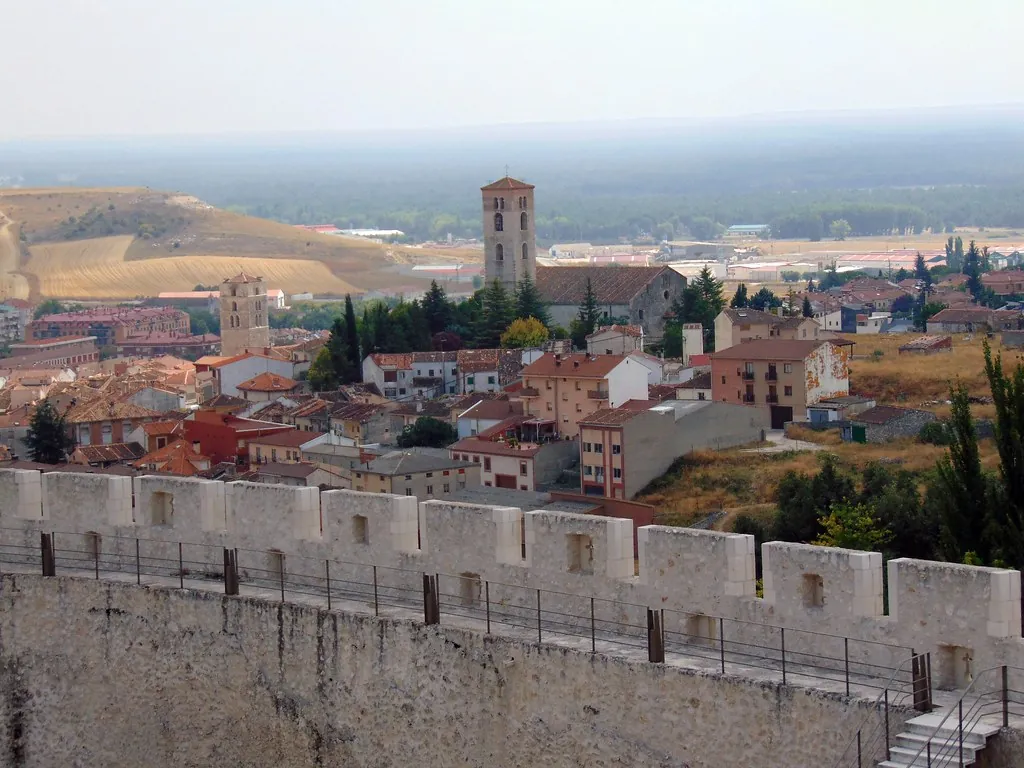
Just a few metres from open farmland, where pinewoods stretch towards the horizon, Calabazas de Fuentidueña comes into view. It is a small cluster of adobe houses with reddish roofs that almost blend into the earth when seen from the track. The quiet here is not empty. Wind brushes through the tops of the pines, a door closes somewhere, dry branches crack underfoot. As the sun warms the ground, the air fills with the resin scent that defines the Tierra de Pinares, a region known for its extensive pine forests.
Calabazas de Fuentidueña has just over twenty registered residents and belongs to this northern part of Segovia. It is not a place you pass through by chance. The approach involves secondary roads that cut across cereal fields and patches of woodland. In return, the village offers a slower pace of time. In winter, chimney smoke hangs low over the roofs. In summer, the streets regain a little life towards evening as those who keep family homes here return for a while.
San Andrés and the village centre
The Iglesia de San Andrés organises the village around it. Its walls, built with rammed earth and simple materials, show repairs from different periods. Inside, an old mural painting remains, often dated to around the 16th century. When the church is open, some residents are keen to point it out and explain its history.
In front of the church lies a small square where traffic is almost non-existent. At midday, especially in summer, the light falls almost vertically and shadows shrink beneath the benches. A couple of short streets lead away from here and quickly turn into tracks towards the countryside. In a place of this size, everything sits close together. Within minutes, the houses give way to paths through the pines.
Pines and cereal fields
The landscape around Calabazas de Fuentidueña reflects much of the Tierra de Pinares. Large areas of resin pine grow alongside plots of cereal crops. In spring, the fields appear vividly green. By July, the colour shifts towards yellow, and a fine dust hangs in the air as tractors move across the land.
The pinewoods change less through the seasons. In autumn, the ground becomes covered with dry needles and opened cones. Walking here brings out the sweet smell of resin, and on still days the sound of treetops moving high above becomes more noticeable. Old working paths linked to resin extraction can still be found, although some are now almost erased by sand and time.
Paths leading out into the forest
Dirt tracks begin at the edge of the last houses and continue into the pinewoods. These are not marked as official routes, but they are easy enough to follow with a map or a GPS-enabled phone. The terrain is mostly flat, which makes the area suitable for walking or cycling without much difficulty.
It is wise to carry water for longer outings. The village has no shops or services, and for several kilometres the surroundings consist mainly of forest and open fields. In summer, earlier starts help avoid the strongest sun, which becomes intense from midday onwards. Shade is limited outside the wooded areas.
Birds, stillness and dusk
Those who walk slowly through these pinewoods often become more aware of sound than sight. Jays make their presence known with harsh calls, while blue tits move restlessly among the lower branches. Occasionally, a bird of prey crosses the sky, carried by rising air currents.
As evening approaches and the heat of the day fades, other details emerge. Crickets begin to be heard, bats pass overhead, and on calm summer nights small points of light from fireflies appear among the grass. There are no viewpoints or facilities designed for wildlife observation. It is enough to stop for a moment and listen.
Food, supplies and village life
There are no bars or shops in Calabazas de Fuentidueña. People usually head to nearby villages for supplies or a meal. Even so, the cooking maintained in local homes follows the traditions of the area. Slow-cooked legumes, hearty soups in winter, and roast lamb during family celebrations remain part of daily life.
The village festivities tend to take place in August, when those who live elsewhere return. For a few days, the streets fill more than usual. There is a procession and gatherings in the square. Afterwards, everything returns to its usual rhythm.
Calabazas de Fuentidueña does not rely on much more than this: a handful of houses, the surrounding pinewoods, and a feeling that is increasingly rare. The day ends when the light fades rather than by the clock. Visiting early in the day or towards sunset makes that atmosphere more noticeable, when the scent of pine intensifies and the village seems suspended in the soft quiet of the Segovian countryside.