Full Article
about Camporredondo
Surrounded by pine forests and farmland; perfect for nature tourism and rural relaxation.
Hide article Read full article
First light in the pines
Early in the morning, when the sun still slips low between the trunks, the air in Camporredondo carries the scent of resin and cool earth. Dry needles crunch underfoot and, if no car passes, the only sound is the wind moving through the high canopy. Tourism in Camporredondo often begins in this way: in silence, along pale sandy tracks, with the feeling of being in one of the small villages of the Tierra de Pinares where daily life still follows the pace of the land.
Camporredondo, in the province of Valladolid, has just over a hundred residents for much of the year. The houses sit low, many built from brick and adobe, with inner courtyards that still hold old animal pens or former wine cellars. The streets do not follow a strict pattern. They open out, narrow again, and then drift back towards the surrounding countryside almost without notice.
The landscape sets the tone here. Long stretches of pine forest spread around the village, fairly uniform, the kind that fills the air with scent in summer and covers the ground with cones and dry needles in autumn. For decades, resin extraction and agriculture shaped local life. Traces of that work remain visible in the nearby woods.
Between church walls and quiet streets
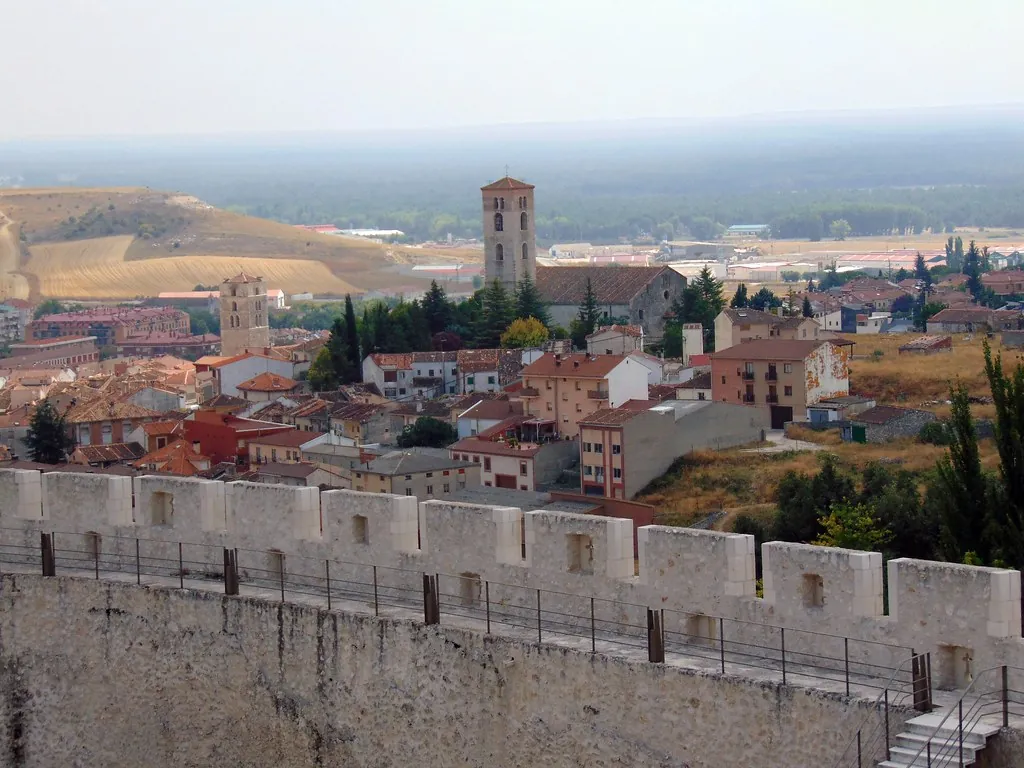
The parish church of the Asunción rises above the rooftops when approaching along the agricultural tracks. It is not a large building, yet its tower acts as a point of reference among the open fields that surround the village. The walls show different phases of construction and repair, something common in rural churches that have been altered over time.
Walking through the centre is less about following a set route and more about noticing details. Wide wooden gates still marked by years of use. Facades where adobe appears beneath layers of render. Small courtyards where firewood is stacked in preparation for winter.
At the edges of the village, dirt tracks begin almost immediately, leading into the pine forest. These are broad paths, long used for forestry work. Between the straight trunks, clearings appear where cereal plots break up the woodland. At dawn or towards evening, there is often movement among the trees: a fox crossing quickly, or the sharp tapping of a woodpecker against bark.
Walking through the Tierra de Pinares
The surroundings of Camporredondo lend themselves to walking without much planning. The paths are flat and easy to follow, and many link with other villages in the area, crossing long stretches of pine forest.
In summer, earlier starts make sense. The shade from the trees offers some relief, but the heat builds in the middle of the day. Later in the afternoon, the light softens and the scent of resin becomes more noticeable, especially after several days of warm weather.
Those interested in birdlife often bring binoculars. Great tits, blue tits and woodpeckers move among the pines, while in the open fields it is sometimes possible to spot steppe birds, provided there is distance and patience.
A village shaped by the forest
For a long time, much of the local economy depended on the pine forest. Resin collection was a common occupation in this part of Castile for decades. Some residents still recall clearly how the trees were tapped and how the containers filled with resin smelled at the end of the working day.
Agriculture remains present in the surrounding land, particularly in cereal fields that change colour with the seasons. In spring they show a strong green, later turning to a dry yellow as summer arrives.
These activities leave a visible imprint on the landscape. The forests are not untouched spaces but working environments that have evolved alongside the village. The tracks, the clearings and the rhythm of the seasons all reflect that connection.
August days and the return to quiet
The main festivities take place in August, when many former residents return after spending the rest of the year elsewhere. The atmosphere shifts during these days. There are more people in the streets, music in the evenings, and gatherings that repeat each summer.
Outside that period, Camporredondo settles back into its usual pace. A tractor passing slowly, brief conversations in the street, and the pine forest enclosing everything once again. Anyone arriving in search of constant activity is likely to be disappointed. What defines this place is space, clean air, and the chance to walk without hurry among the trees.