Full Article
about Cantalejo
Capital of the Tierra de Pinares, known for its 'gacería' slang; surrounded by lagoons and nature.
Hide article Read full article
The stone benches in the Plaza Mayor are cool and damp to the touch at dawn. A cat stretches on the sun-warmed tiles of the bandstand, and the only sound is the distant hum of a bread van making its rounds. Cantalejo wakes like this, slowly, wrapped in the quiet of the Tierra de Pinares. The scent of resin from the surrounding forest hangs in the air, a dry, clean smell that follows you down streets where the first shutters are just beginning to open.
The weight of wood and stone
You notice the wood first. It’s in the dark beams above doorways, in the heavy lintels, in the grain of old workshop doors now closed for the day. For generations, this was a village of trilleros, craftsmen who made threshing boards studded with sharp flint. That history isn’t just in a museum; it’s in the posture of older men drinking coffee in the plaza, their hands resting on tables, and in a particular, weathered look to certain streets behind the church.
The small museum dedicated to this trade feels less like an exhibition and more like a storeroom someone forgot to tidy. Dark wooden trillos lean against walls, their cutting stones still sharp. There are tins of polish, worn saws, and ration books from the post-war years laid out under glass. It’s a quiet, unvarnished collection that speaks of splinters, long journeys by cart, and a way of life measured in seasons.
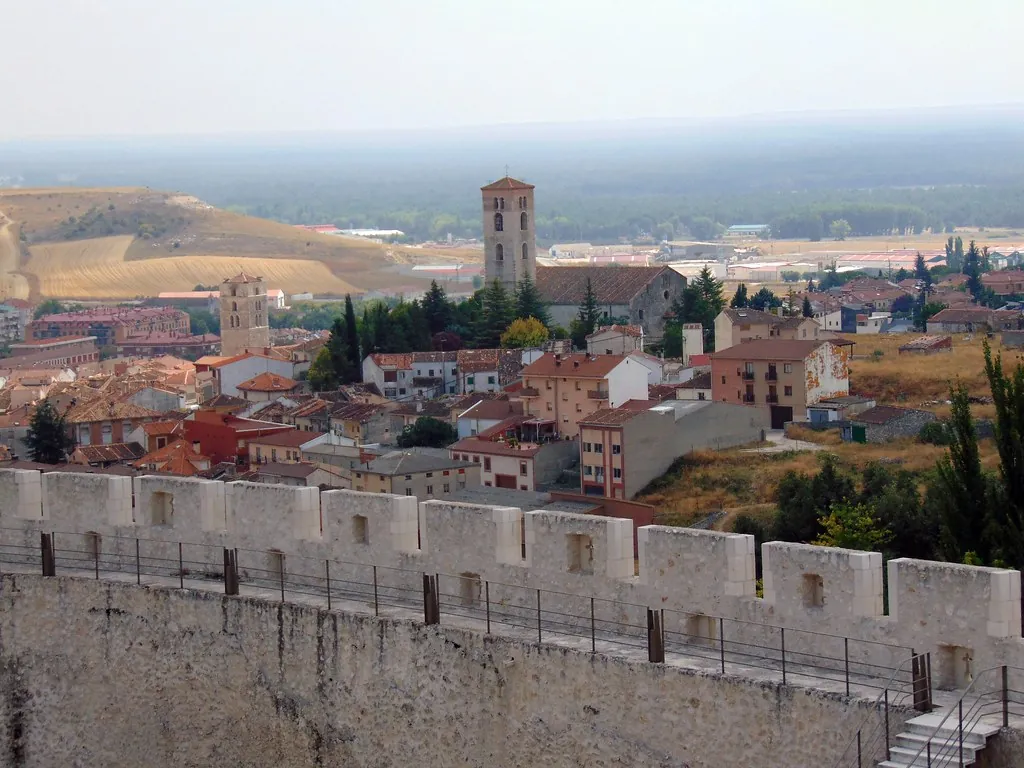
From almost anywhere in town, you can see the tower of the church of San Andrés. Inside, it’s cool and dim, the kind of quiet that makes your own footsteps sound loud. The air smells of wax and old wood. At midday in summer, when the heat outside presses down on the pale stone streets, this coolness is a physical relief.
Dust and yellow light: August in the fields
Come August, the rhythm changes. The encierros por el campo pull everyone out towards the dirt tracks that web the pine forests. This isn’t a running through barricaded streets; it’s bulls moving across open country, between pine groves and scrub oak.
People find their spots on a raised bank, behind a sturdy tree, or simply standing in the dry grass. There’s a low murmur of anticipation, then the rumble of hooves. Dust kicks up, hanging in thick clouds that catch the late afternoon light—a specific, hazy yellow common to this plateau in high summer. Afterward, as the dust settles back onto the rosemary bushes, conversations stretch out and cars raise new plumes of dirt on their slow return to town.
During these weeks, Cantalejo feels full. Parking near the plaza requires patience or an early arrival. The atmosphere is festive but dense; for a quieter experience, visit on a weekday morning before ten.
The shifting water at Carrilagunas
Drive five minutes east and the pines part to reveal Carrilagunas. These are seasonal lagoons. In a wet year, they are sheets of shallow water reflecting the sky, attracting herons and ducks. In a dry one, they’re meadows of bleached grass and cracked earth.
A sandy path circles the basin, passing through light pine forest where the ground is soft with needles. It’s best walked at first light or as the sun begins to drop, when the air is cool and the only sounds are jackdaws and your feet crushing pinecones. The space here feels expansive, a sudden openness where the horizon finally breaks free from the trees.
The forest floor in October
By autumn, attention turns inward. Fires smoke in chimneys and the air carries a sharper edge. The pine forests fill with people moving slowly, heads down, carrying wicker baskets. They’re looking for níscalos and boletus, which emerge from the damp carpet of needles after the first rains.
This is perhaps when Cantalejo sits most comfortably in its skin. The summer visitors have left; activity returns to a slow, domestic pulse around the plaza. The light slants low through the pines, turning everything gold for an hour before dusk. It’s a good time to walk without much purpose, to feel the crunch underfoot and smell woodsmoke mingling with the eternal scent of resin—a smell that will cling to your jacket long after you’ve left.