Full Article
about Chañe
Heart of the Segovian market garden; known for its strawberries and leeks in the Carracillo district.
Ocultar artículo Leer artículo completo
The morning sun lifts over cereal fields and catches the resin on a million pine trunks, filling the air with the scent of fresh turpentine. At 760 m above sea level, Chañe sits high enough for the air to feel scrubbed, yet low enough to dodge the worst snowdrifts that block the Sierra de Guadarrama an hour’s drive south. This is Segovia’s “Tierra de Pinares”, a forested plateau where log trucks still rumble through hamlets that rarely trouble the guidebooks.
A Village that Measures Time in Tree Rings
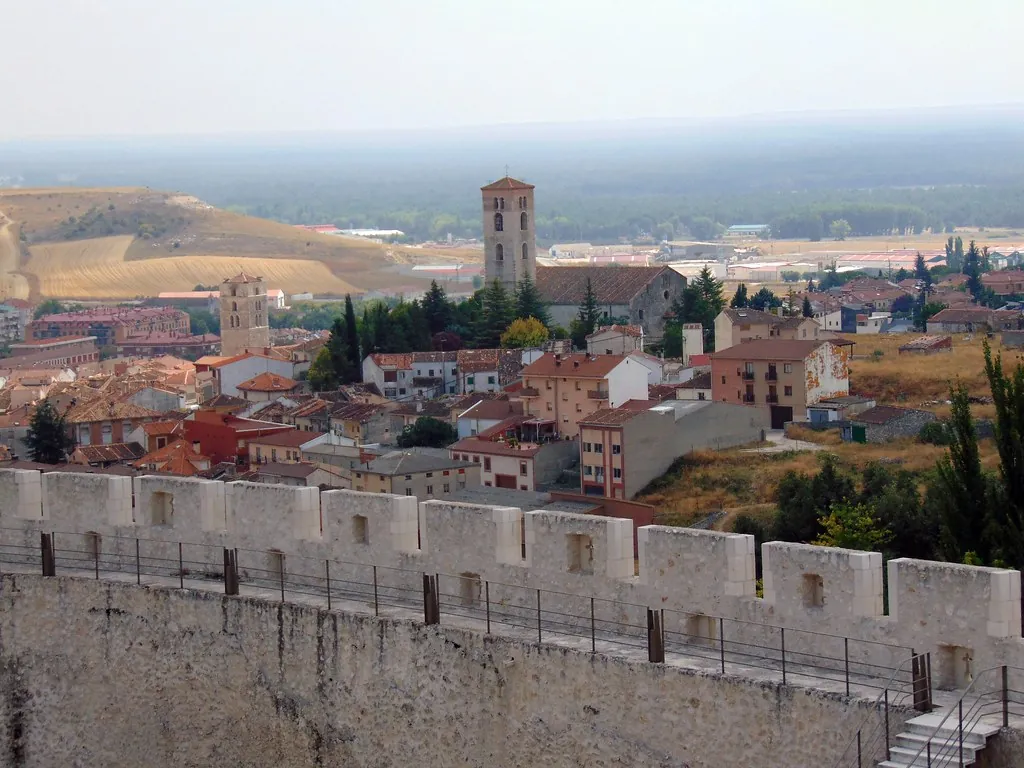
Roughly 700 people share the parish with a pine forest that stretches, almost unbroken, to the horizon. The village centre is a five-minute stroll end to end: stone houses the colour of toasted bread, Arabic-tile roofs and the occasional timber balcony added by some optimistic 19th-century returnee from Cuba. There is no souvenir shop, no ATM, no traffic light. What you do get is an acoustic of jackdaws and distant chainsaws, and a sky so wide that the evening clouds look like they’re on hinges.
The 16th-century church of San Juan Bautista anchors the main square. Its bell tower was rebuilt after a lightning strike in 1892; stone plaques inside list donors by the number of pine trunks they supplied. If the door is locked (it often is), ask at the bar opposite—whoever has the key is usually within shouting distance.
Walking without Way-markers
Formal hiking trails stop at the municipal boundary, but the web of forest tracks is easy to follow if you remember two rules: keep the sun on your right in the morning and accept that every path eventually meets a firebreak. A circular tramp south to the abandoned resin workers’ hut at Majada de la Callejo takes ninety minutes; add another hour to reach the viewpoint over the Duratón gorge, where griffon vultures wheel below your boots.
Spring and autumn are the comfortable seasons. Summer midday heat can hit 34 °C, though pine shade knocks off several degrees. In winter, night frosts are routine and the track to the gorge becomes a chocolate-coloured sludge—fine with boots, hopeless on road-bike tyres. come February, locals swap walking poles for mushroom knives; the níscalos (saffron milk-caps) appear first, followed by the prized boletus if October rains were kind. Picking requires a free regional permit—download the PDF before you leave home, because mobile signal vanishes within minutes of the village.
Calories and Cardio
Chañe keeps two bars, both on Calle Real. Café Dani opens at 07:00 for farm workers and serves a wedge of tortilla española thick enough to stun a badger; €4 covers coffee and a quarter-loaf bocadillo. Bar Restaurante Cabrera fires up the wood oven at weekends for lechazo—milk-fed lamb that arrives with parchment-crisp skin and a jug of local red softer than anything Rioja ships to Tesco. Order half a kilo for two; portions are unsentimentally large. If the blackboard lists migas—fried breadcrumbs with pancetta and grapes—say yes. The dish began as a way to use up stale bread; here it is an excuse to open another bottle.
Vegetarians can ask for judiones—giant butter beans from nearby La Granja—though advance notice helps; the chef may need to walk home for his mother’s frozen stash. Pudding is homemade flan, reassuringly plain, tasting of vanilla and Sunday lunch circa 1978.
Beds and Bases
Accommodation is limited to four guest rooms above what used to be the village grocer. La Posada de Chañe (€65 B&B) has beams, radiators that work, and Wi-Fi that doesn’t—consider it nature’s off-switch. The owner will lend mountain-bike helmets and point you towards a 22-km loop to Prádena via forest fire lanes; elevation gain is 400 m, mostly on gravel. If you want a pool, drive 25 minutes to the parador at Turégano and return for dinner once the heat subsides.
Getting There, Getting Out
Public transport is theoretical. One Alsa bus leaves Madrid’s Estación Sur at 15:00, reaches Arévalo at 16:45, and connects to a local service that deposits you at the village fountain around 18:00—total journey slightly longer than flying to Marrakech. Hiring a car at Madrid-Barajas is simpler: north-west on the A-6, fork onto the AP-6, peel off at Arévalo and follow the N-110 for 28 km. After Villacastín the road is free; the landscape tilts from wheat plateau to pine ocean, and Chañe appears on the right just when you think the sat-nav has given up.
Fill the tank in Arévalo and withdraw cash in Sepúlveda; both facilities close on Sunday afternoons, a timetable the village copies. Petrol stations on the motorway remain open, but the nearest is 40 km away—enough to make the fuel light an expensive worry.
When the Quiet Becomes a Silence
Even devotees admit the place flat-lines after 23:00. Summer fiestas (15 August) inject a weekend of brass bands and all-night bingo, but for 350 days the soundtrack is breeze and distant dogs. Bring a paperback, or plan star-gazing: at 900 m the night sky is dark-sky-site good, though wrap up—temperatures can dip 15 °C below the Madrid reading.
Rain is scarce (400 mm a year, half London’s), yet when it arrives the clay soil sticks like wet biscuit. Wait it out in the bar; within an hour steam will be rising from the road and the pine perfume will be cranked to eleven.
Leave when the forest starts to feel smaller than your inbox. The A-6 south carries you back to traffic and tailbacks, but the scent of resin lingers on clothes and hire-car seats long enough to make the M25 smell almost civilised.