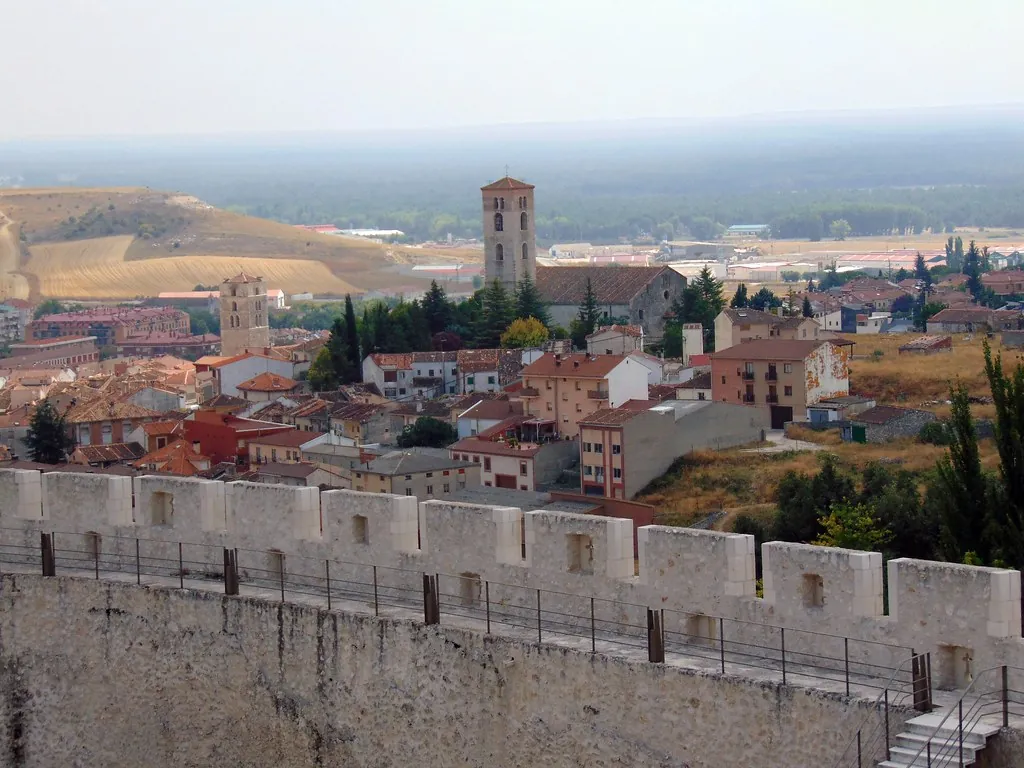
Cuéllar - Iglesia de San Andrés 01.jpg
Josep Maria Viñolas Esteva · Flickr 4
Castilla y León · Cradle of Kingdoms

Cuéllar

The castle keeps watch from 876 metres up, its four towers skewered with white stork nests that rattle when the wind funnels across the Meseta. Bel...

9,527 inhabitants · INE 2025
876m Altitude

Why Visit

Mountain Castle of the Dukes of Alburquerque Costumed castle tours

Best Time to Visit

year-round

Cuéllar bull runs (last weekend of August) agosto

Things to See & Do
in Cuéllar

Heritage

  • Castle of the Dukes of Alburquerque
  • Walls
  • Mudéjar Interpretation Center

Activities

  • Costumed castle tours
  • Bull runs (August)

Festivals
& & Traditions

Fecha agosto

Encierros de Cuéllar (último fin de semana agosto)

Las fiestas locales son el momento perfecto para vivir la autenticidad de Cuéllar.

Full Article
about Cuéllar

Medieval town with a castle, walls, and Mudéjar architecture; known for its encierros, the oldest in Spain.

Ocultar artículo Leer artículo completo

The castle keeps watch from 876 metres up, its four towers skewered with white stork nests that rattle when the wind funnels across the Meseta. Below, the old town of Cuéllar spills down a sandstone ridge, ringed by one of the best-preserved medieval walls in Segovia province. Step through the Portillo de San Basilio at dusk and the smell is instant: resin from the surrounding pinewoods and wood-smoke from lechazo ovens. No one will try to sell you anything; the street lamps still hum orange, and the only soundtrack is the clack of elderly heels on granite setts.

A Fortress That Refuses to Retire

The 13th-century Castillo de los Duques de Alburquerque is not a museum piece. It houses a working secondary school, so bell rings echo through the Renaissance courtyard at break-time. Public visits are possible but strictly timed: Spanish-language tours leave on the hour, while an English audio guide (£3) buys you 45 minutes of uninterrupted access but skips the keep. Arrive early; the next slot can mean a two-hour wait on the ramparts, excellent for photographs yet brutal under the summer sun. From the parapet the view is pure Castile: red-tile roofs, then an ocean of pine stretching to the horizon, the colours fading from bottle green to silver-blue where heat haze meets sky.

Crowds thin to almost nothing on weekday mornings, but coaches from Madrid roll in around 11 a.m. Plan accordingly or you will share the narrow adarves with forty retirees and a single overworked guide.

Brick, Not Stone, Makes the Point

Cuéllar’s secret is brick-laid Mudéjar, a style more common in Aragón than here. The apse of San Esteban church looks like interlaced red rope frozen in masonry; San Martín adds a Romanesque porch so long it once served as a grain market. Neither building is large, yet together they map 400 years of frontier culture where Christian kings reused Moorish craftsmen. Entry is free, though lights switch off automatically—wave at the motion sensor or you will study frescoes in the dark. The Mudéjar Interpretation Centre (Tue–Sun, free on Wednesday afternoons) tells the story in English panels and gives you an excuse to linger inside the cool stone when outside temperatures top 35 °C.

Forest Floor and Roast Lamb

Walk five minutes downhill from the Puerta de Santiago and the paving gives way to sandy tracks that disappear into resin-scented pinewoods. These are working forests: stacks of cut trunks wait beside signed footpaths, and locals arrive at dawn in autumn with woven baskets for níscalos (saffron milk-caps). Routes are flat, way-marked and rarely longer than 8 km—perfect for a half-day escape if you have hired a car and left the city behind. Cyclists share the wider fire roads; bring your own bike as rentals don’t exist in town.

Back in the centre, lunch starts at 14:00 sharp. Lechazo asado—milk-fed lamb blasted in a wood-fired oven—arrives on a clay dish, the skin blistered to the colour of burnt umber. Expect to pay €22–€25 for a quarter portion, enough for two if you add judiones (buttery white beans) and a glass of local Ribera del Duero. House wines are young and fruit-driven; asking for crianza bumps the bill by €3 but balances the lamb fat. Vegetarians will struggle, though castellana garlic soup and setas a la plancha appear on most menus.

When Tradition Turns into Traffic Chaos

Visit on the last Sunday of August and calm evaporates. The Encierros de Cuéllar, Spain’s oldest recorded bull-running, pull upwards of 20,000 people into a town built for 5,000. Metal barriers clang through the night, brass bands tour the squares, and every spare room is booked months ahead by taurine clubs. If you fancy the spectacle, reserve accommodation early and accept road closures that can add ninety minutes to the 55-mile drive from Madrid. Prefer silence? Come in May, when storks hatch and temperatures hover around 22 °C, or in late October for mushroom season and russet forest colour.

Practicalities Without the Pep Talk

  • Getting here: No direct train. Drive north-east from Segovia on the A-601 (45 min) or take the hourly bus from Madrid’s Estación Sur to Cuéllar (1 h 45). Buses stop at the castle gates.
  • Parking: Free blue bays on Calle Castillo fill by 11 a.m.; overflow is the Paseo de la Constitución, five minutes’ walk below the walls. Motorhomes can overnight on the bull-run avenue—no services, but the police turn a blind eye.
  • Money: One 24-hour ATM on Plaza Mayor. Many bars refuse cards under €10, so carry cash.
  • Language: English audio at the castle, little elsewhere. Download offline Spanish phrases; gestures work for lamb and wine.
  • Weather: The altitude tempers summer heat, but nights drop sharply—bring a fleece even in July. Winter mornings can be –3 °C; the cobbles ice over and the castle closes if snow sticks.

Cuéllar won’t dazzle with cathedrals or beaches. It offers instead the rhythm of a place that has lived off timber and sheep for centuries and sees no reason to hurry now. Stay a night and you will hear the church bells count the hours, smell resin on the dawn air, and understand why Castilians call this the “tierra de pinares”—a land where trees outnumber people and every stone wall has kept a secret since the Middle Ages.

Key Facts

Region
Castilla y León
District
Tierra de Pinares
INE Code
40063
Coast
No
Mountain
Yes
Season
year-round

Livability & Services

Key data for living or remote work

2024
ConnectivityFiber + 5G
HealthcareHealth center
EducationHigh school & elementary
Housing~5€/m² rent · Affordable
Sources: INE, CNMC, Ministry of Health, AEMET

Official Data

Institutional records and open data (when available).

  • LA VILLA
    bic Conjunto Histã“Rico ~0.2 km
  • IGLESIA DE SAN MARTIN
    bic Monumento ~0.2 km
  • IGLESIA DE SAN ANDRES
    bic Monumento ~0.4 km
  • IGLESIA DE SANTA MARIA DE LA CUESTA
    bic Monumento ~0.4 km
  • IGLESIA DE SAN ESTEBAN
    bic Monumento ~0.2 km
  • PALACIO LLAMADO DE DON PEDRO EL CRUEL
    bic Monumento ~0.3 km
Ver más (1)
  • RECINTO MURADO Y CASTILLO DE CUELLAR
    bic Monumento

Planning Your Visit?

Discover more villages in the Tierra de Pinares.

View full region →

More villages in Tierra de Pinares

Traveler Reviews