Full Article
about Fresneda de Cuéllar
In the Carracillo district; known for its vegetable farming and pine-wooded surroundings.
Hide article Read full article
A place where very little happens, and that’s the point
Some places give the sense that something is about to happen. Fresneda de Cuéllar does the opposite. You park, step out, look around, and quickly realise the plan is simple: walk slowly and listen to whatever is there. If that pace suits you, it works. If you expect constant activity, you will have understood the place within half an hour.
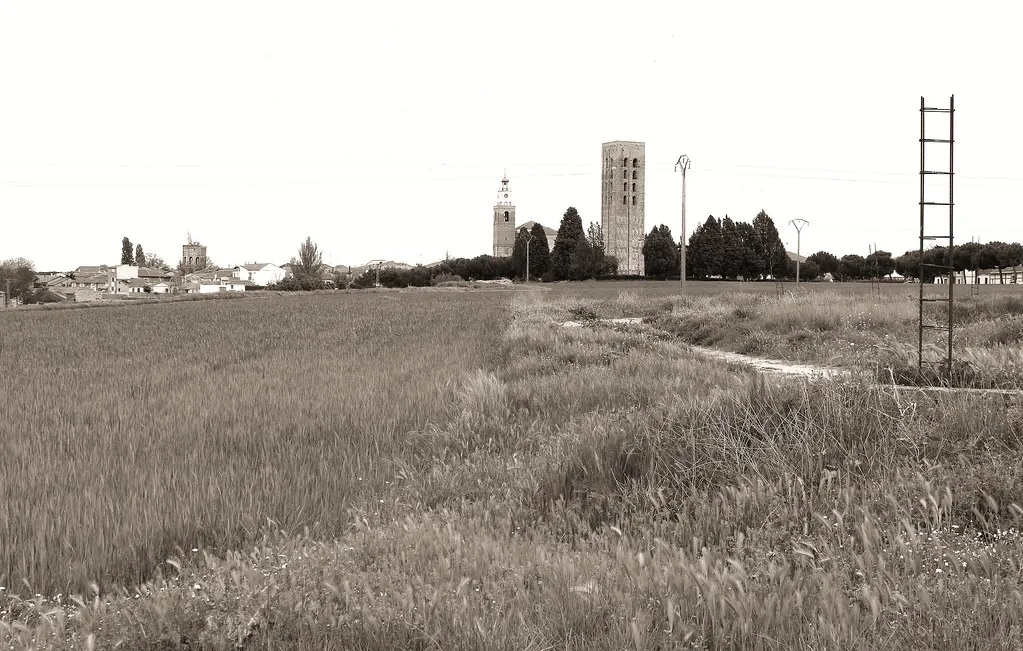
Fresneda de Cuéllar sits in the Tierra de Pinares area of Segovia province and has around 160 residents. The pine forest matters more than the village itself. It shows in the smell of the air, in the sandy tracks, and in that particular quiet found in pine woods, where sound seems to linger slightly between the trunks.
At times you hear the bells of the church of Santiago Apóstol, a tractor heading back from the fields, or wind brushing through the treetops. It is not complete silence, more the everyday sound of a small village moving at its own rhythm.
A small centre made for unhurried wandering
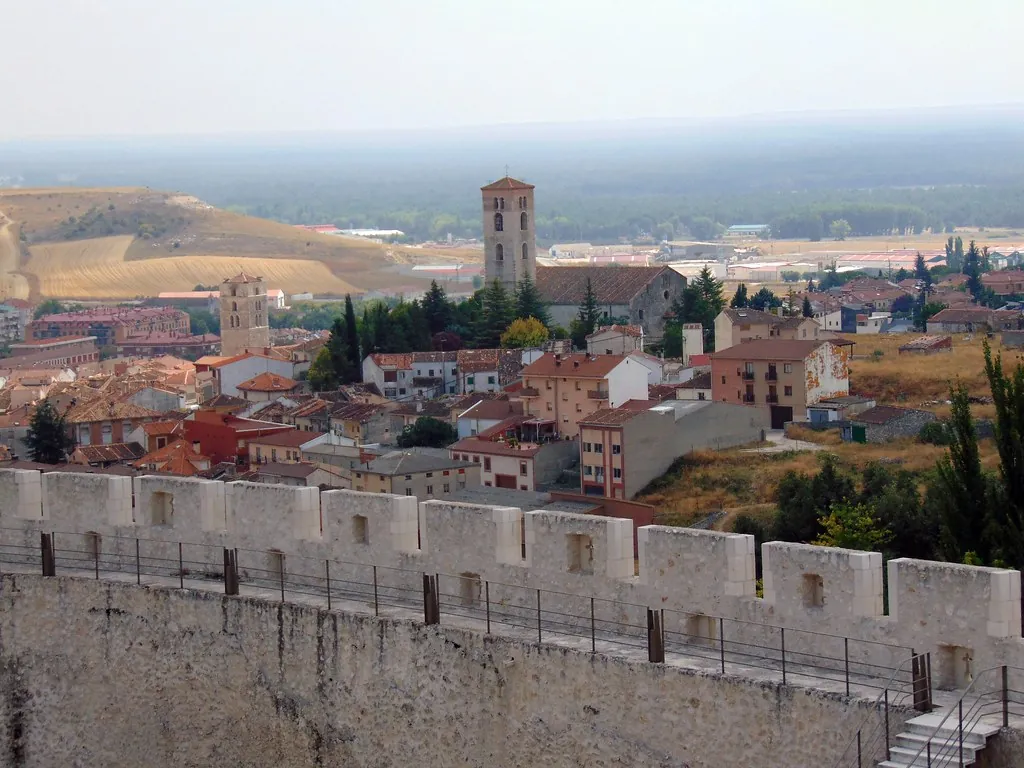
The village core is compact. There is no need for a map or any real sense of direction. A single main street runs through it, with houses, yards and the occasional stone wall branching off.
Many homes follow the typical style of this part of Castilla León: adobe, reddish brick and large gates once used for carts, tools or firewood. Some have been renovated, others keep a slightly worn look common in places where things are fixed when necessary, not for appearance.
The main square is simple, with an old trough-style fountain where in summer people still fill water containers or cool their hands. The church is not large or especially imposing. It tends to go unnoticed until you get closer and notice the bell gable and how the building has held up over time.
Even so, what defines Fresneda de Cuéllar lies beyond the village streets.
The pine forest as the real landscape
Step outside and the pine woods begin almost immediately. This is what defines the wider region. There are kilometres of fairly uniform forest, with sandy tracks, straight firebreaks and open clearings where the sun can feel intense in summer.
For decades these woods were closely linked to resin production. Today that activity is mostly a memory, although some marked trees can still be seen. The forest remains the dominant feature: wherever you look there are long trunks, sandy ground and the scent of resin, especially noticeable in the heat.
In autumn, another local tradition appears: the search for níscalos, a type of wild mushroom common in the area. Many people from nearby villages head into these woods or along the edges of paths to collect them. It is worth checking the rules beforehand, as in some forest areas gathering is regulated and may require permission.
Paths without signposts, and the appeal of that
You will not find interpretive panels every few metres here. The usual approach is to set off along a forest track and see how far it takes you.
The routes are essentially service tracks for the woodland: wide paths, loose sand in places and junctions that can be confusing if you do not have a reference point. The terrain is not difficult, but it is sensible to bring a GPS or at least check your route in advance, as everything starts to look similar among the pines.
The land is generally flat, which makes it popular for mountain biking as well. The sand can be tricky, though, especially with thinner tyres or when the ground is very dry.
These are calm routes, better suited to steady walking or cycling than to chasing viewpoints or specific landmarks. The experience comes from the rhythm of movement and the surroundings rather than any particular destination.
Eating: best to come prepared
Fresneda de Cuéllar does not have much in the way of places to sit down and eat. It is the kind of village where it makes sense to bring something with you or plan to eat in a nearby town.
Cuéllar is relatively close and offers more activity. There you can find traditional bakeries, local cured meats and shops to pick up supplies for an improvised picnic. The idea of buying bread, some embutidos and heading back towards the pine forest works surprisingly well.
It is also wise not to rely too heavily on opening times. In villages of this size, shops may close early or simply not open on certain days.
Festivities that bring everyone together
As in many small villages, the calendar becomes livelier in summer, when people who live elsewhere during the year return.
Celebrations around Santiago Apóstol at the end of July typically include a procession, music and traditional dances such as the jota. It is not a large-scale event, more a gathering that clearly belongs to the village itself.
In winter, another deeply rural tradition continues in some households: the matanza del cerdo, the traditional pig slaughter. It usually takes place within the family setting, without much public attention, but it remains part of the long-standing rhythm of life in the area.
Fresneda de Cuéllar is not a destination for monuments or a long checklist of attractions. It makes more sense when approached as a place to slow down, step into the pine woods and let time pass without much urgency.