Full Article
about Fuente el Olmo de Íscar
On the border with Valladolid; pine forest area and pine nut production
Hide article Read full article
A village that wakes with the fields
Early in the morning, when the sun has only just lifted above the pine woods, Fuente el Olmo de Íscar sounds like open countryside. A distant engine hums somewhere, wind brushes through the tops of the pines, and cows move slowly in search of shade. A reddish dirt track leads into the village without ceremony. The houses, built in adobe and brick, some with wooden gates darkened by time, seem to stand exactly where they always have.
The village lies in the Tierra de Pinares, not far from Íscar, and that closeness shapes daily life. For shopping, errands or simply a coffee, most residents head there. In Fuente el Olmo, what remains is mainly homes, yards and that sense of a small place where time follows older patterns: farm work, short walks, and a quiet that settles in as evening falls.
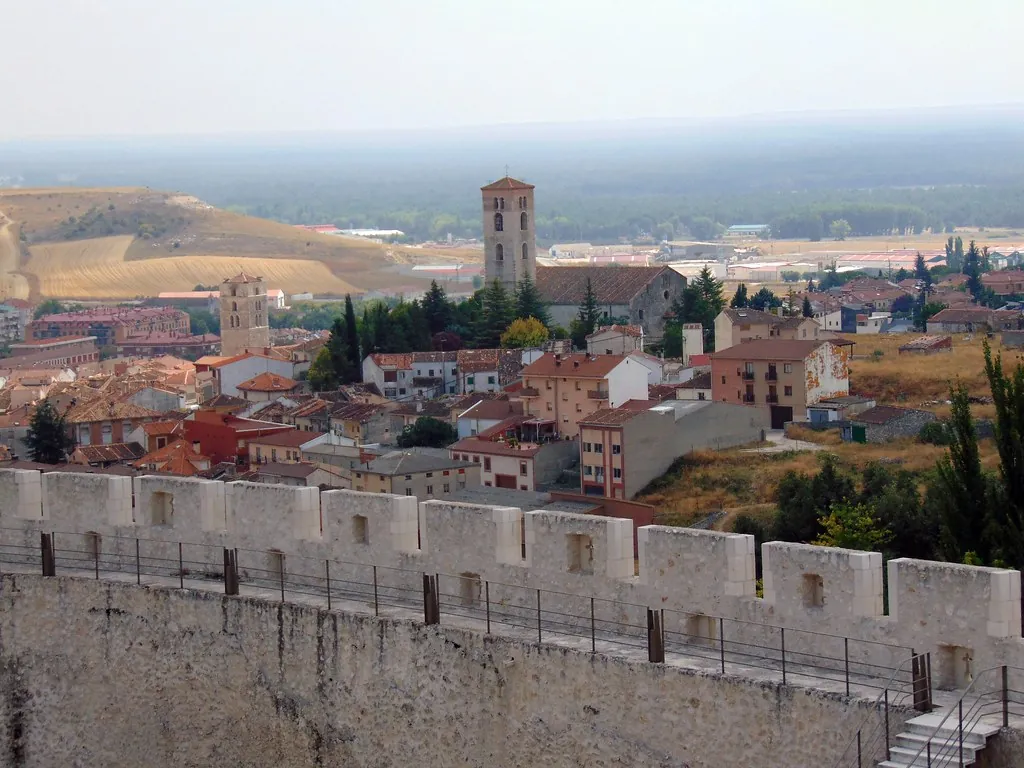
The streets are plain and functional. Whitewashed façades sit alongside earthen walls, and here and there a vine climbs a wall in search of shade. There are no grand monuments to draw attention. What stands out instead is how naturally the village blends into the landscape around it.
Pinewoods and open ground
The most recognisable landmark on arrival is usually the church of San Cristóbal. It is a modest stone building with a simple bell gable, the kind of village church that has watched generations pass and still marks the centre of the settlement. Nothing elaborate, just a steady presence.
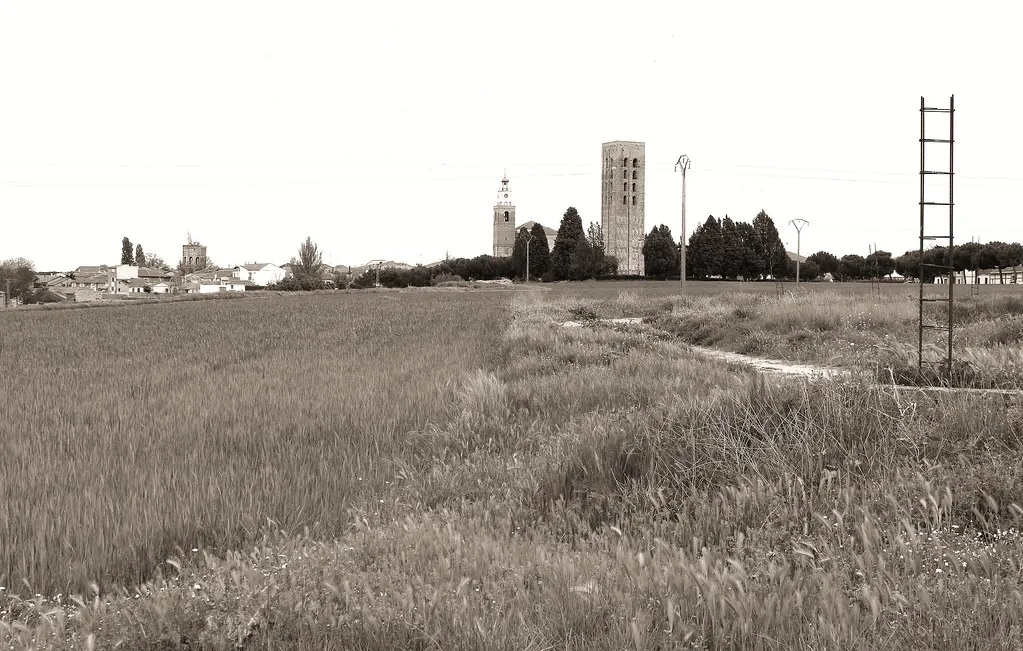
Beyond it stretches the defining scenery of the region: stone pine woods and open fields. The tracks run straight for long stretches, their pale sandy surface giving off a resinous scent in summer that is typical of this area. When the wind picks up, the treetops creak with a dry sound that carries across the distance.
Walking here reveals a mix of land uses. There are cereal plots, small scattered vineyards and clearings among the pines where the light falls more cleanly. The terrain barely shifts in height, yet there is a gentle sequence of low rises that keeps the view from feeling flat.
Tracks through working land
From the edge of the village, several agricultural tracks lead out into the pinewoods or circle the cultivated land. These are not formal walking routes. They are working paths used by locals to reach their plots or to travel between nearby villages.
They can still be followed without difficulty. It helps to have a simple map or a reference on a phone, as many junctions look similar and it is easy to lose direction when going deeper into the woods.
At an unhurried pace, small details begin to appear. Partridges cross the path, a buzzard glides above the fields, and goldfinches produce a metallic sound from high branches. Nothing dramatic, but enough to anchor the walk in the everyday life of the landscape.
Traces of earlier ways of living
On the edges of the village, old livestock pens can still be seen, along with remains of threshing floors where grain was processed in summer. These open spaces, sometimes covered with grass or compacted earth, hint at how the village once functioned when more people lived here throughout the year.
The festivities of San Cristóbal are still remembered among residents. Traditionally, they included a mass and a shared meal for those who stayed in the village or returned for those days from other towns and cities. Today the atmosphere is quieter, yet the name of the patron saint remains tied to the local calendar.
Eating in a place without bars
Fuente el Olmo de Íscar has no bars or restaurants, so it makes sense to arrive prepared if planning to spend several hours in the area. Many visitors bring a sandwich or something simple to eat outdoors, making use of the shade provided by the pines along nearby tracks.
The wider region is known for pine nuts and for hearty cooking when winter arrives. Dishes based on legumes, cured meats and slow-cooked stews were designed for long days of fieldwork. For a sit-down meal, the usual option is to go to Íscar or other nearby villages.
Getting there and choosing the moment
The most practical way to reach the village is by car, first passing through Íscar and then following local roads into the Tierra de Pinares. From Segovia or Valladolid, the journey takes a little over half an hour, depending on route and traffic.
Spring and autumn tend to be the most pleasant times to visit. Light filters low through the pines, and the air carries that damp resin scent that lingers on clothes. In high summer, the midday heat presses down on the sandy tracks and there is hardly anyone outside.
Silence here is not a pose. It is simply what remains when the countryside fills almost the entire horizon. In villages like this, that quiet is part of the place itself, as much as the adobe houses or the pinewoods that begin just beyond the last street.