Full Article
about Fuenterrebollo
Surrounded by lakes and pine forests; perfect for nature tourism and birdwatching
Hide article Read full article
A Village Shaped by Pine Forests
Fuenterrebollo lies in the province of Segovia, within the comarca of Tierra de Pinares, at around 900 metres above sea level. The surrounding landscape is dominated by extensive stands of pino resinero, maritime pine, which define both the scenery and the history of this part of Castilla Leon.
The village forms part of a broad forest belt that for centuries supported an economy linked to timber, resin extraction and the wider use of woodland resources. This relationship with the pinewoods is still visible today, not only in the terrain around Fuenterrebollo but also in aspects of local life that continue to reflect that heritage.
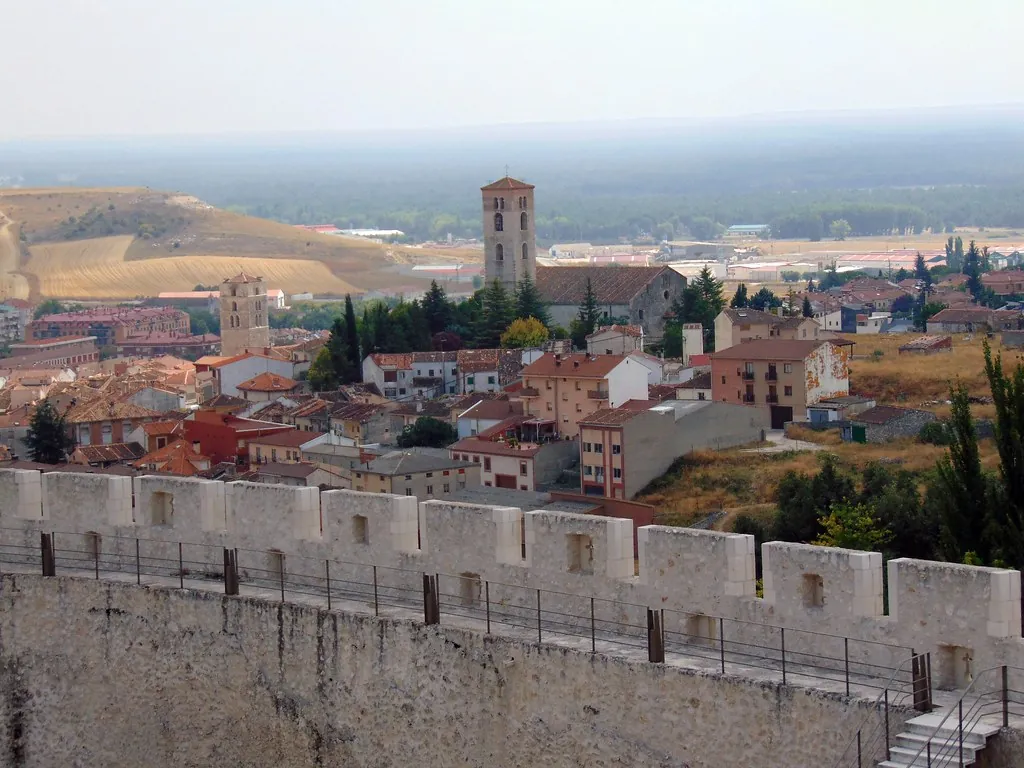
The built-up area follows a pattern typical of this part of Segovia province. Houses are generally one or two storeys high, constructed from stone, adobe and brick, and topped with clay roof tiles. Fuenterrebollo is not a monumental town filled with grand buildings, yet it feels consistent with its agricultural and forestry past. Some homes retain wide wooden gates that once opened onto yards or livestock enclosures, a common feature in villages across this area.
The Church of the Asunción and the Village Square
The most prominent building in Fuenterrebollo is the iglesia de la Asunción. Its origins date back to the 16th century, although later alterations have changed parts of the original structure. As in many rural parishes in the province, the importance of the church lies less in an elaborate artistic programme and more in its presence within the life of the village.
It stands beside the main square, which acts as a modest centre of local activity. Around it are traditional houses and a few open spaces that make it easier to picture how the settlement functioned before the arrival of modern traffic. Everyday elements from another era can still be found here: stone troughs once used for watering animals, low stone walls and remains of old washhouses.
The historic centre can be explored quickly. In around half an hour it is possible to walk through most of it, though it is worth slowing down to notice small domestic details that say more about the place than any information board. The layout, the materials and the scale of the buildings speak of a community shaped by farming and forestry rather than by trade or aristocratic patronage.
Forest Tracks and the Wider Landscape
Fuenterrebollo is surrounded by pinewoods that form part of the vast forest mass of Tierra de Pinares. For much of the 20th century, many local residents worked in resin extraction. This involved tapping the pino resinero to collect resin, a traditional activity that has declined but is still present in some woodland areas of the comarca.
Forest tracks lead out from the village and run through these pinewoods, generally with gentle gradients. They are broad paths used for forestry work as well as for walking and cycling. From them it is possible to link up with routes towards nearby villages, something typical of this part of Segovia where settlements lie relatively close to one another.
In autumn, the pine forest attracts mushroom enthusiasts. It is an environment where níscalos, known in English as saffron milk caps, and other species associated with sandy pinewoods of the central plateau often appear. Mushroom gathering is regulated in much of the province, so it is advisable to check the current rules before heading into the forest.
Wildlife reflects these ecosystems. Roe deer and foxes inhabit the area, along with woodland birds that are easier to spot at dawn or towards dusk. The landscape is not dramatic in a mountainous sense, but it offers a broad, continuous horizon of pines that conveys the scale of the forest belt stretching across Tierra de Pinares.
Local Traditions and the Rhythm of the Year
Life in Fuenterrebollo remains closely linked to the agricultural calendar and to gatherings among neighbours. As in many villages in the province, the population increases in summer when families who maintain a home here return for holidays. The seasonal shift changes the atmosphere of the streets and square, bringing a busier rhythm without altering the village’s character.
The main festivities are held around the Virgen de la Asunción in mid-August. During these days, Fuenterrebollo takes on a different pace. Processions move through the streets, open-air dances known as verbenas fill the evenings, and activities organised by residents occupy the square and surrounding areas. These are not celebrations designed primarily for visitors. They function above all as a meeting point for people who have a connection to the village, whether they live here year-round or return each summer.
This emphasis on community is part of what defines Fuenterrebollo. The forest economy may no longer dominate daily life as it once did, yet the shared memory of working in the pines and managing the surrounding land still shapes local identity.
Practical Notes for Visiting
Fuenterrebollo is small and easy to explore on foot. The streets are straightforward and distances short, making it simple to gain an overall sense of the village in a brief visit.
Arriving by car is advisable, as public transport options are limited. Once there, combining a walk through the village centre with a stroll along the tracks leading into the pinewoods offers the clearest understanding of how Tierra de Pinares has influenced the history and economy of this part of Segovia.
In a relatively short time, it becomes evident that the forest is more than a backdrop. It has been a source of work, materials and seasonal traditions, and it continues to frame daily life in Fuenterrebollo.