Full Article
about Hornillos de Eresma
Town on the Eresma River, known for its Baroque church and riverside pine setting.
Hide article Read full article
Hornillos de Eresma: un pueblo de la Tierra de Pinares
Hornillos de Eresma se encuentra en la provincia de Valladolid, dentro de la comarca de la Tierra de Pinares. El topónimo "Hornillos" suele referirse a pequeños hornos de cal o teja, una industria que aquí convivió con el trabajo del campo y del bosque. El paisaje lo forman dos elementos: el pinar resinero, que ocupa grandes extensiones, y la llanura cerealista. El pueblo se levanta a 718 metros, en un terreno llano donde el verde del pino contrasta con el color cambiante de los campos.
La relación con el bosque ha sido histórica. La extracción de resina, la madera y el pastoreo bajo pinar modelaron una economía que aún se lee en el territorio. No es un paisaje ornamental, sino uno hecho de usos. Los tractores en las calles y las huertas traseras son parte de esa continuidad.
La estructura del pueblo y la iglesia de San Román
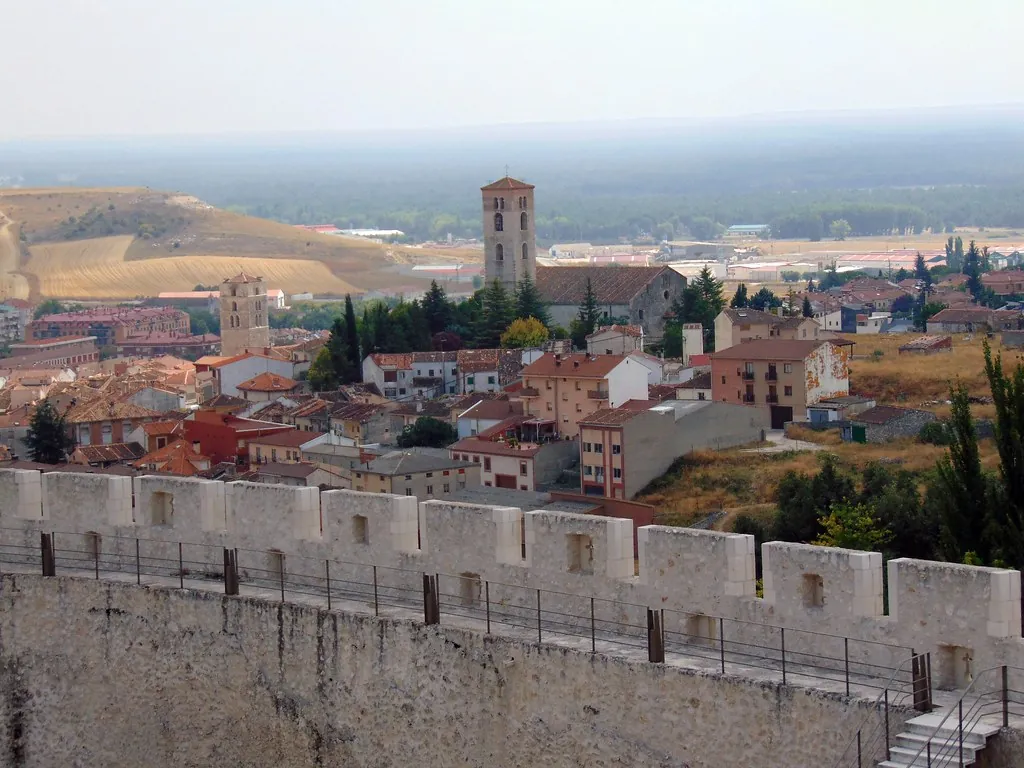
El plano es el de un pueblo lineal, con una calle principal y varias menores que se abren a eras y corrales. En el centro está la iglesia parroquial de San Román. Su construcción es sencilla: tapial y ladrillo, con una espadaña de modestas proporciones. La decoración es escasa. Más que por su valor artístico, importa como referencia visual y sonora en la vida diaria; sus campanas marcan las horas.
La arquitectura doméstica sigue el modelo de la zona: casas de una o dos plantas, con fachadas encaladas y corredores de madera orientados al sur. En los patios traseros aún se ven algunas bodegas subterráneas. También permanecen, integrados en las viviendas, antiguos establos y gallineros, un recordatorio de cuando la casa era también unidad de producción.
El pinar como territorio
Los pinares de resinosa que rodean Hornillos no son un bosque virgen. Son cultivos forestales con siglos de historia, ordenados en repoblaciones. Hay caminos señalizados que los recorren, aptos para paseos a pie o en bicicleta. El terreno es mayormente llano, sin desniveles pronunciados.
El cambio estacional es notable. En primavera, el verde es intenso; en verano, los campos de cereal se vuelven amarillos; en otoño, aparecen los ocres y, con las primeras lluvias, las setas. Esta variedad atrae a distintas aves. Es común ver rapaces sobrevolando los claros del bosque y pequeños pájaros en los sotos cercanos al arroyo Eresma.
Prácticas y ritmos locales
Las opciones para comer dentro del pueblo son limitadas. La gastronomía se basa en los productos de la tierra: legumbres, carnes guisadas y, en ocasiones festivas, cordero asado al horno de leña. En temporada, las setas del pinar forman parte de la mesa. Conviene informarse sobre horarios o considerar llevar algo.
El ciclo festivo tiene su punto álgido en agosto, con las fiestas patronales. La Semana Santa se vive con recogimiento. Fuera de esas fechas, el ritmo es tranquilo, marcado por las tareas agrícolas y forestales.
Cómo llegar y qué esperar
Se accede desde Valladolid por carreteras secundarias que atraviesan la Tierra de Pinares. Son unos 50 kilómetros por vías con tráfico agrícola ocasional. El viaje permite observar la transición entre la llanura cerealista y los montes de pino.
Hornillos de Eresma interesa a quien busca un paseo sosegado por un paisaje modelado por el uso. No hay grandes monumentos ni panorámicas espectaculares. Su valor está en esa normalidad castellana, donde el bosque y el campo se encuentran sin estridencias.