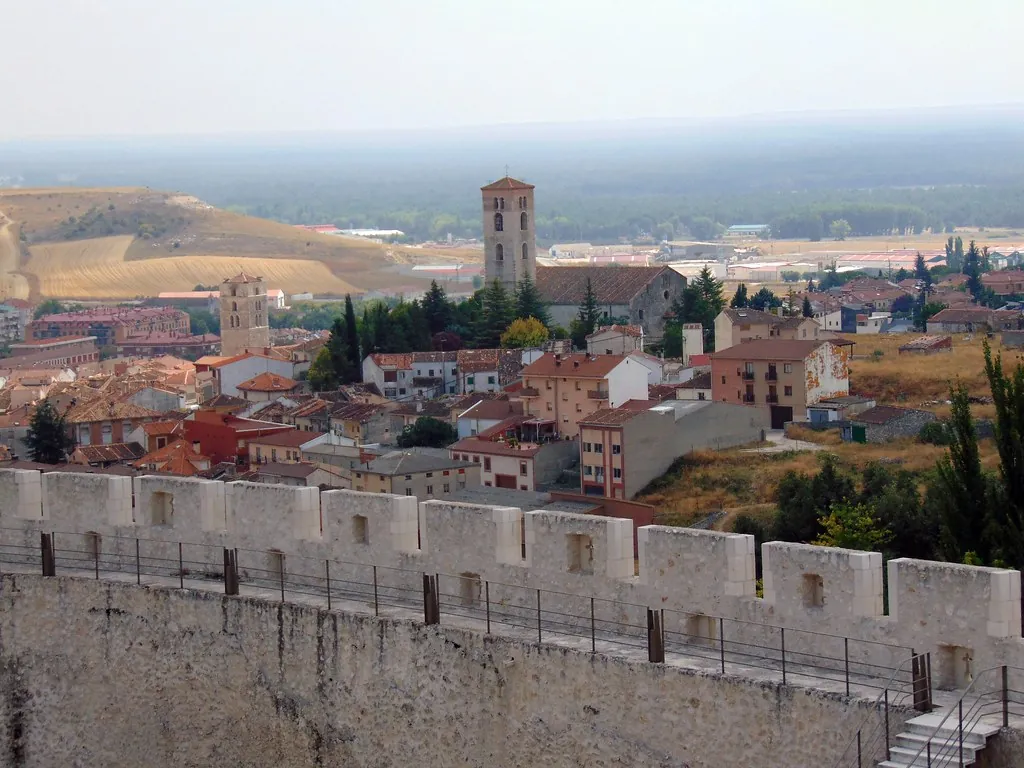
La Cistérniga - Calles 01.jpg
Castilla y León · Cradle of Kingdoms

Cistérniga

The church bell strikes nine and the only other sound is a lone dog barking somewhere beyond the wheat. From the bench outside the 16th-century por...

9,489 inhabitants · INE 2025
736m Altitude

Why Visit

Church of San Ildefonso Peri-urban routes

Best Time to Visit

year-round

Our Lady of Carmen (July) julio

Things to See & Do
in Cistérniga

Heritage

  • Church of San Ildefonso

Activities

  • Peri-urban routes
  • Cultural activities

Festivals
& & Traditions

Fecha julio

Nuestra Señora del Carmen (julio), San Ildefonso (enero)

Las fiestas locales son el momento perfecto para vivir la autenticidad de Cistérniga.

Full Article
about Cistérniga

Fast-growing municipality tied to Valladolid; blends industrial zones with residential areas and farming tradition.

Ocultar artículo Leer artículo completo

The church bell strikes nine and the only other sound is a lone dog barking somewhere beyond the wheat. From the bench outside the 16th-century portico you can see the city lights of Valladolid winking on the horizon, just eight kilometres away, yet La Cistérniga feels like the middle of nowhere—in the best possible way.

A Village That Grew Sideways

La Cistérniga sits at 736 metres above sea level on the flat, cereal-heavy plateau of Tierra de Pinares. The landscape is ruler-straight: barley, wheat, barley again, then a sudden square of pine that smells of resin when the sun hits it. There are no dramatic sierras here, only the wide Castilian sky and roads that vanish into heat shimmer. The village has expanded in loose estates of ochre brick rather than upwards, so the centre keeps its low, tiled roofs and adobe walls that crumble politely at the corners. A morning walk from the modern health centre on Calle del Doctor Fleming to the plaza mayor takes seven minutes; you will pass a 1970s bakery, a hairdresser that doubles as a lottery outlet, and three grandparents on stools who greet strangers with “Buenas, ¿qué tal?” before you’ve decided whether to reply in Spanish.

Most visitors arrive with the car radio still tuned to Madrid and a boot full of luggage bound for Galicia or Portugal. They come because the A-62 spur delivers you straight into underground parking behind the Avenida de Castilla, and because hotel rates here run €20–30 below the city. What they find is a commuter satellite that still remembers how to be a pueblo: the same family names on the butcher’s awning for three generations, the same waiter who remembers how you take your coffee even if you only stopped last August.

What Passes for Sightseeing

The guidebooks give La Cistérniga three lines: church, wheat fields, done. That is accurate, but it misses the pleasure of a place that asks nothing of you. The Iglesia de San Juan Bautista is open from 7.30 a.m. to 9 a.m. for the daily mass; slip in afterwards and you’ll see how parish churches accreted over centuries—Romanesque feet, Gothic ribs, Baroque head. The altarpiece is gilded but not garish; the stone floor dips where centuries of espadrades have worn it away. Outside, the single old street—Calle Real—retains houses of mud and straw, their upper balconies now reinforced with steel rods so they don’t part company with the street during spring gales. If you want the photograph, stand opposite the BBVA cashpoint at 11 a.m.; the eastern wall glows terracotta and the metal grills throw latticed shadows that look almost planned.

Beyond that, the attraction is the circumference. A 5-kilometre loop south of the village follows a stone-track cañada real used by shepherds moving merino sheep to winter pasture; you’ll share it with the occasional cyclist and, in June, the smell of chamomile crushed under tyres. There are no signposts, just keep the pine copse on your left and the telegraph poles on your right until you reach the ruined brick kiln—now a roost for kestrels—then turn back. Total ascent: zero.

Eating Without Show

Castilla y León does not do dainty. Lunch starts at 2 p.m. sharp and the weekday menú del día hovers around €12–14 for three courses, bread and wine. Bar La Cueva, opposite the Guardia Civil hut, offers half a roast chicken and chips for the unadventurous; ask for “alas extra” and you’ll get the wing pieces crisped separately. Locals gravitate to El Portazgo on Calle de los Frailes where the lechazo arrives in a copper pan, still bubbling in its own parchment-thin skin. Vegetarians get a plate of piquillo peppers stuffed with goat’s cheese—order it as “entrante” or you’ll be billed the full ración price. Pudding is usually rice pudding with a caramel jacket, served lukewarm. Coffee comes in a glass; request a “tubo” if you want the dainty cup.

Evenings are for tapas, but pace yourself: portions are calibrated to people who have worked the fields. A “tapa” of morcilla is a black-pudding wheel the size of a coaster; the “ración” could feed a family of four in Leeds. House white is from Rueda, sharp enough to slice through lamb fat, and poured from a height that would be theatrical anywhere else. Sunday supper finishes by 10 p.m.; afterwards the square belongs to teenagers on bicycles and the pharmacist locking up with the air of someone who knows she won’t open again until Monday.

When to Come, When to Leave

April and late-September are the sweet spots: daytime 22 °C, nights cool enough for a jacket, wheat either green-gold or stubble-brown depending on the month. Easter (Semana Santa) brings a modest procession—one paso, one trumpet, done in forty minutes—and the bars stay open all afternoon. August fiestas mean fairground rides powered by a portable generator that hums like a distant aircraft; accommodation sells out to returning grandchildren, prices rise 15 % and every balcony sprouts the burgundy-and-yellow flag of Castile. If you want the place to yourself, choose the last week of October: the grain has been trucked away, the air smells of pine smoke, and you can hear the Valladolid commuter train at night even though it never stops here.

Winter is raw. At 736 m the plateau ices over; the wind straight from the Meseta finds every gap in British clothing. Hotels switch on heating after sunset only—Spanish law once dictated 15 °C as the legal minimum, and old habits die hard. Snow is rare but fog is not; morning visibility can drop to 50 m, turning the pine avenues into something from a Victorian etching. Still, the roast lamb tastes better when the thermometer reads 4 °C and the barman throws an extra log into the brasero under your table.

Practicalities You’ll Actually Use

Driving from Valladolid airport (VLL) takes twelve minutes on the A-62; car-hire desks close for siesta between 2 p.m. and 4 p.m., so time your arrival. If you land at Madrid, budget 1 h 45 min up the AP-6 toll road (€22) then west on the A-62. Buses run roughly hourly from Valladolid’s Estación de Autobuses—buy your ticket on board, cash only, about €1.65. Taxis from the city clock in at €12–14 unless it’s after midnight, when the fare leaps 40 %.

Parking is free on any street without a yellow line; underground garages charge €1 per daylight hour but nobody checks after 8 p.m. The BBVA cashpoint on Calle Real is the only one—if it flashes “sin efectivo” the nearest alternative is a Repsol garage back on the A-62. Supermarkets: Dia on Avenida de Castilla opens 9 a.m.–9 p.m. but shuts for siesta (2 p.m.–5 p.m.) and all day Sunday. Bring a reusable bag; plastic costs 10 c and the cashier will not budge.

Hotels are small and functional. The three-star Sercotel Cimsur has rooms for €55 mid-week, Wi-Fi that copes with iPlayer if the wind is right, and a breakfast buffet strong on churros but weak on tea. Hostal Conde Ansúrez is €10 cheaper; walls are thin, so pack ear-plugs if the neighbours favour late-night telenovelas. Rental flats cluster on the eastern edge—check the map before booking or you’ll find yourself in an industrial estate overlooking the Carrefour depot.

The Honest Verdict

La Cistérniga will never make the front of a Spanish tourism brochure. It offers no cathedrals, no Michelin stars, no cliff-top selfies. What it does provide is a pause: a place to sleep soundly, eat well, and remember that most of Spain lives in ordinary towns where the weekly highlight is fresh bread at 6 a.m. Use it as a base for Valladolid’s museums, for the wineries of Rueda, or simply as somewhere to break the long haul south. Come with modest expectations and you’ll leave with your petrol tank full, your shirt smelling of wood smoke, and the odd sensation that eight kilometres can still feel like a world away from the nearest city lights.

Key Facts

Region
Castilla y León
District
Tierra de Pinares
INE Code
47052
Coast
No
Mountain
No
Season
year-round

Livability & Services

Key data for living or remote work

2024
ConnectivityFiber + 5G
TransportTrain nearby
HealthcareHospital
EducationHigh school & elementary
Housing~6€/m² rent · Affordable
CoastBeach nearby
Sources: INE, CNMC, Ministry of Health, AEMET

Official Data

Institutional records and open data (when available).

  • LAS FUENTES DE ARGALES
    bic Monumento ~3.8 km

Planning Your Visit?

Discover more villages in the Tierra de Pinares.

View full region →

More villages in Tierra de Pinares

Traveler Reviews