Full Article
about Parrilla
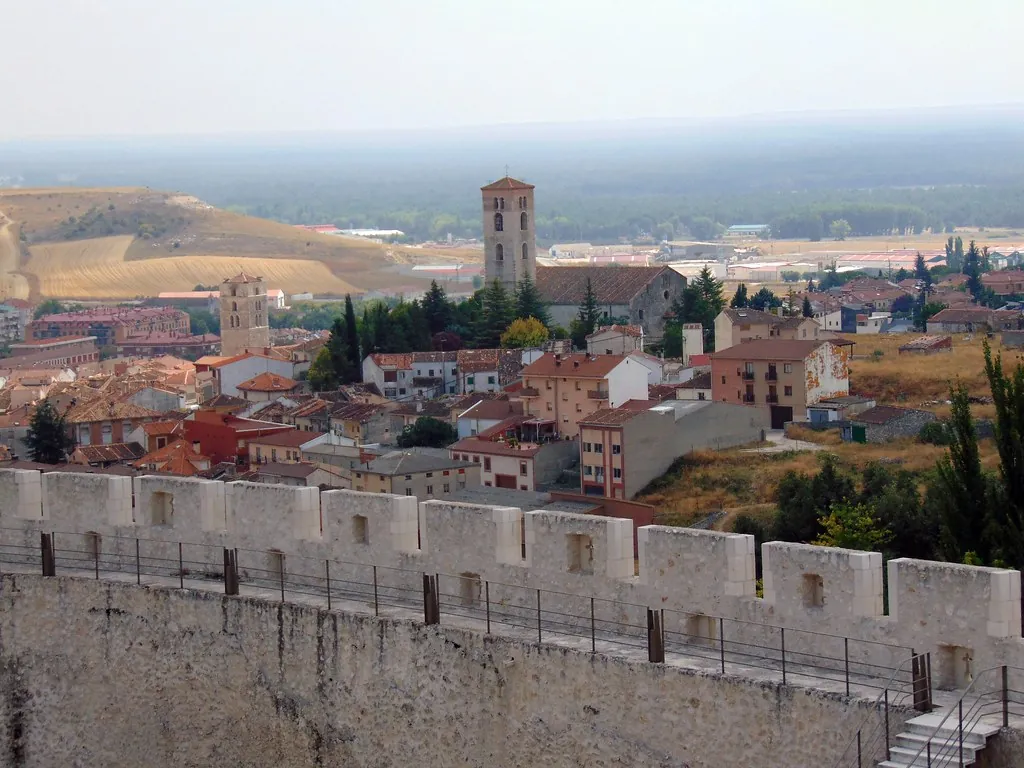
A municipality in pine-forest country, noted for its Gothic church and the San Francisco hermitage.
Hide article Read full article
A village that keeps its rhythm
La Parrilla sits in the Tierra de Pinares area of Valladolid, a place where daily life still follows a steady, almost mechanical pace. With fewer than 500 residents, the village does not attempt to impress or reinvent itself for visitors. Work in the fields and the passing of the seasons continue to shape everyday routines, much as they have for generations.
This is not a destination built around spectacle. The appeal lies in its plainness and continuity, in a way of life that has changed very little over time. The surrounding natural setting plays a central role, offering a landscape that feels complete without needing embellishment.
Pine forests and shifting seasons
The wider region has long been tied to resin extraction and forestry. Pine woods dominate the terrain, forming a landscape that shifts noticeably through the year. Winter brings frost that settles over the treetops, while summer fills the air with the distinctive scent of resinous wood.
La Parrilla stands at around 856 metres above sea level, which affects its climate compared with nearby plains. Winters tend to be short and cold. Summers remain moderate rather than intense, making it easier to spend time outdoors once the heat begins to ease.
Reaching the village involves travelling along rural roads with limited signage. The arrival does not feel dramatic. Instead, there is a gradual sense of entering a place where everyday life remains tangible and unvarnished.
Streets, houses and the village centre
The built environment reflects that same practicality. Houses are constructed from stone and adobe, sometimes with wooden balconies or covered walkways. These features point to a functional approach to building that dates back decades. Some homes still retain original beams or walls coated in mud, while others show more recent updates or entirely new construction.
At the centre lies the Plaza Mayor, a small square that acts as the village’s focal point. The parish church, Iglesia de Nuestra Señora del Rosario, stands there as the main visual reference. Built in the 18th century, its exposed stone façade is simple rather than decorative. It has served as a gathering point for generations.
Inside, the church holds an old religious image and a modest altarpiece. Yet the building’s significance often comes less from its artistic elements and more from its role in daily life. Residents gather here after mass or during local celebrations, reinforcing its place within the community.
Walking through the streets without a fixed مقصد reveals much of what La Parrilla offers. Traditional houses line the main routes, many still featuring balconies or covered corridors. Flowers or old tools sometimes hang from these spaces, small details that reflect ongoing use rather than display. There are no staged settings here, only lived-in homes shaped by continuity.
The forest as the main attraction
Beyond the village, the pine forest defines the experience. These woods stretch for kilometres, forming a dense green expanse that appears almost unbroken whether heading north or south. Some routes are marked, while others follow quieter rural tracks that see little traffic.
The history of resin extraction remains visible in the trees themselves. Older trunks often bear parallel marks made by hand tools, traces of a traditional industry that shaped the local economy for many years. These marks persist as quiet evidence of past labour.
For those who enjoy walking, several paths of varying difficulty cross the area. Some routes allow for hours of walking without encountering anyone, especially away from the more commonly used trails. The sense of space and stillness becomes one of the defining features of the surroundings.
Autumn introduces another aspect of local life: mushroom gathering. Varieties such as níscalos grow among sandy soil and dry pine needles. This activity forms part of the seasonal rhythm, though it requires experience and careful knowledge. Some edible mushrooms closely resemble harmful ones, and there are no specialised shops or stalls in the area. Successful foraging depends entirely on knowing what to look for.
Scattered remains of small-scale industrial activity can also be found. Old tejeras, linked to textile-related work, and simple shelters once used by resin workers appear along secondary paths and tracks. These remnants reflect an economy that relied on forest resources until the decline of the resin sector left only fragments behind.
Food rooted in simplicity
Local cuisine follows the same straightforward approach seen elsewhere in the village. Dishes are filling and based on familiar ingredients rather than modern trends. Meals often include dried legumes cooked slowly, sometimes with bone to deepen the flavour.
Roast lamb, known locally as lechazo, holds a prominent place. It is prepared in traditional ovens at a slow pace that preserves its texture and taste. When mushrooms are in season, they are typically grilled or cooked with garlic and parsley, keeping preparation simple and direct.
This style of cooking reflects the broader character of La Parrilla. There is no attempt to innovate or reinterpret. The focus remains on what is available locally and on methods that have been used for years.
Festivities tied to the calendar
Several local celebrations follow the agricultural and religious calendar. Summer brings festivities dedicated to Santiago Apóstol, drawing together many families from the village. These gatherings often include simple processions accompanied by traditional music.
Such events do not rely on large-scale organisation or spectacle. They unfold in a familiar rhythm, shaped by custom rather than performance. For many residents, they provide an opportunity to reconnect after time spent away for work or family reasons.
A place without pretence
La Parrilla does not present itself as a destination designed for visitors. There are no constructed narratives or curated attractions. What it offers instead is a clear sense of continuity, where landscape and daily life remain closely linked.
Time moves here without urgency. The village and its surroundings invite a slower way of observing, whether through a walk in the forest, a quiet moment in the square, or simply watching how routines unfold.