Full Article
about Laguna de Duero
Second most populous municipality in the province; known for its natural lake and proximity to the capital with full services.
Hide article Read full article
A town shaped by forest and water
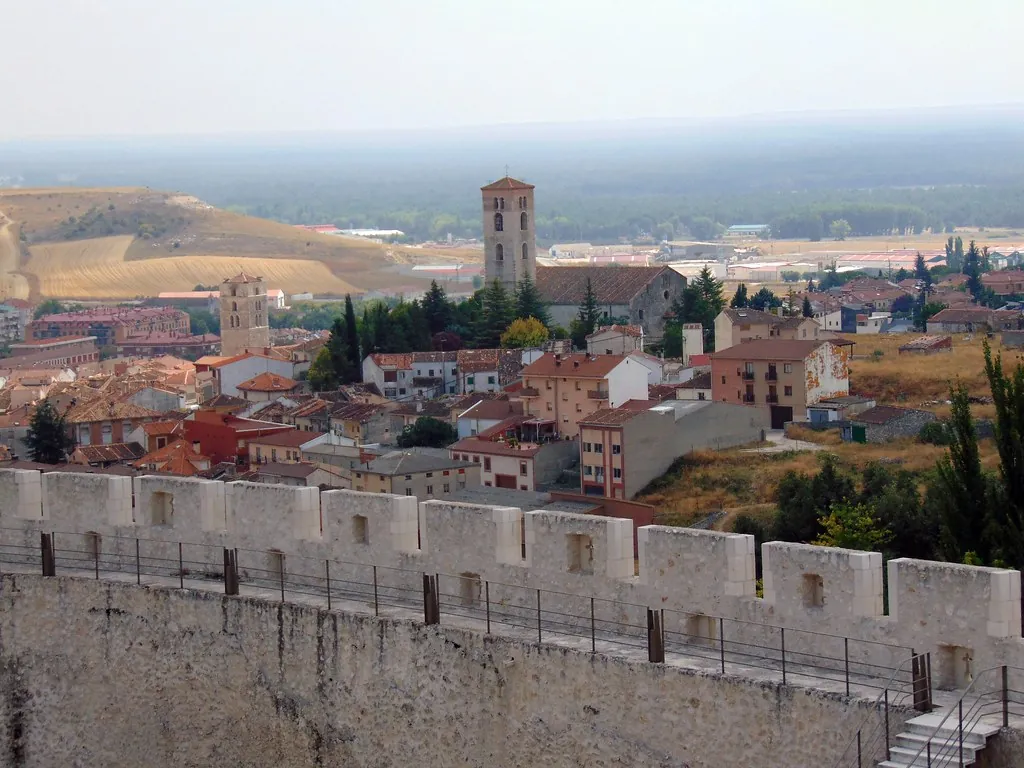
The scent of resin arrives before the first houses. It comes from the pinewoods that surround Laguna de Duero, part of the wider Tierra de Pinares in the province of Valladolid. The town’s name points to something that no longer exists: for centuries there was a broad lagoon here, gradually drained and transformed as farmland expanded across the fertile plain near the River Duero.
What remains today is a sizeable town closely linked to Valladolid. Its setting still tells the story of that transformation. Pine forests, irrigated fields and a handful of historic sites combine to show how this landscape has been shaped over time. It is a place where natural features and human intervention sit side by side, each leaving a visible mark.
El Abrojo: traces of a monastic past
A few kilometres from the town centre, set among fields and pinewoods, lie the ruins of the former convent of El Abrojo. The complex dates back to the 15th century, when Franciscan monks established a religious house here. Over time it became connected to the Castilian court, as this area served both as a hunting ground and a place of retreat. Various monarchs are known to have spent periods in these pine forests.
Today, only fragments remain: stretches of brick wall and parts of the old structure, enough to suggest the scale the convent once had. The site stands slightly raised above the surrounding plain, looking out towards the Duero valley. Its calm position helps explain why it was chosen in the first place.
The Franciscan history of El Abrojo is often linked with San Pedro Regalado, who was closely associated with this house before founding other convents across Castile. Although the building is now in ruins, the setting still carries a sense of its past. It becomes easier to understand when imagining these pinewoods as former royal hunting grounds and places of seclusion.
The hill of El Villar and its enduring devotion
To the south of Laguna de Duero rises the cerro del Villar, a modest hill that stands out against the otherwise flat terrain. From its summit, the view opens across the surrounding countryside, stretching towards Valladolid and over the patchwork of pinewoods that define this region.
At the top sits the ermita del Villar, a small chapel built between the 16th and 17th centuries according to local records. Inside is the image of the Virgen del Villar, deeply connected to the identity of the town. The sculpture is considered medieval and remains an important focus of devotion. For much of the year it is covered with mantles, only fully revealed during certain celebrations before being carried in procession down to the parish church.
A well-known local legend tells of how the image was discovered in a cave on the hill itself. When attempts were made to move it into the town, it repeatedly returned to the same spot. As in many rural shrine stories, the solution was to build the chapel exactly where the image was found. Behind the altar, a small cavity is still pointed out as part of this tradition.
The walk up the hill is not long, though it is a steady climb. At the top, wind is common, and the wide view helps make sense of the geography of this part of the province: agricultural plains, clusters of pine forest and, further away, the line of the Duero valley.
Food rooted in the land
In Laguna de Duero, the local cuisine remains closely tied to Castilian tradition. Roast lechazo, a young lamb cooked in a wood-fired oven, appears frequently, often alongside sopa castellana or other hearty dishes suited to colder weather.
Ingredients reflect the surrounding landscape. Judiones, large white beans, are cooked slowly into rich stews. Small game meats and simple preparations such as conejo al ajillo, rabbit with garlic, are also typical. The presence of pine forests is felt in the use of piñones, pine nuts, which appear in both savoury dishes and desserts.
Wine usually comes from nearby denominations such as Rueda or Cigales, both widely produced in the province of Valladolid and commonly found across the area.
Walking through pinewoods and irrigation channels
Much of Laguna de Duero’s character is best understood by walking its surroundings. Several easy routes link the town with nearby pine forests and with the hydraulic infrastructure that reshaped the area in the late 19th and early 20th centuries.
One of the usual paths follows a network of acequias and irrigation channels that still supply water to orchards and farmland. These are short, flat walks where young pinewoods alternate with cultivated fields.
Another well-used route runs alongside the Canal del Duero, the engineering project that has carried water towards Valladolid since the late 19th century. Along the way, sluice gates and small hydraulic structures can still be seen in operation.
A third classic walk leads through the pine forest to El Abrojo. This is perhaps the quietest stretch, with sandy ground underfoot, the smell of resin in the air and the sound of wind moving through the trees.
Practical notes for getting around
The cerro del Villar can be reached on foot from the town itself, following marked paths that pass through areas of pine forest.
The surroundings of El Abrojo are set in open countryside. It is worth wearing comfortable footwear and not expecting any services at the site.