Full Article
about Las Navas del Marqués
A noble town ringed by vast pine forests, noted for the Castillo-Palacio de Magalia and the Convento.
Hide article Read full article
A Slow Start in the Sierra
At nine in the morning, the sun has not yet warmed the air in Las Navas del Marqués. The scent of pine resin hangs lightly, mixed with the smoke of chimneys still burning low in winter. From the Plaza Mayor come the bells of the convent, echoing off pale façades before fading towards the surrounding hills. It is a quiet hour, before the village gathers pace, especially at weekends when more people arrive.
This is a place shaped by altitude and forest. At around 1,300 metres above sea level, the air often feels cooler than expected, even when the plains below are already hot. The nearby pinewoods and the open mountain landscape give the village a steady rhythm that shifts with the seasons but rarely feels hurried.
The Castle That Was Not Eiffel’s
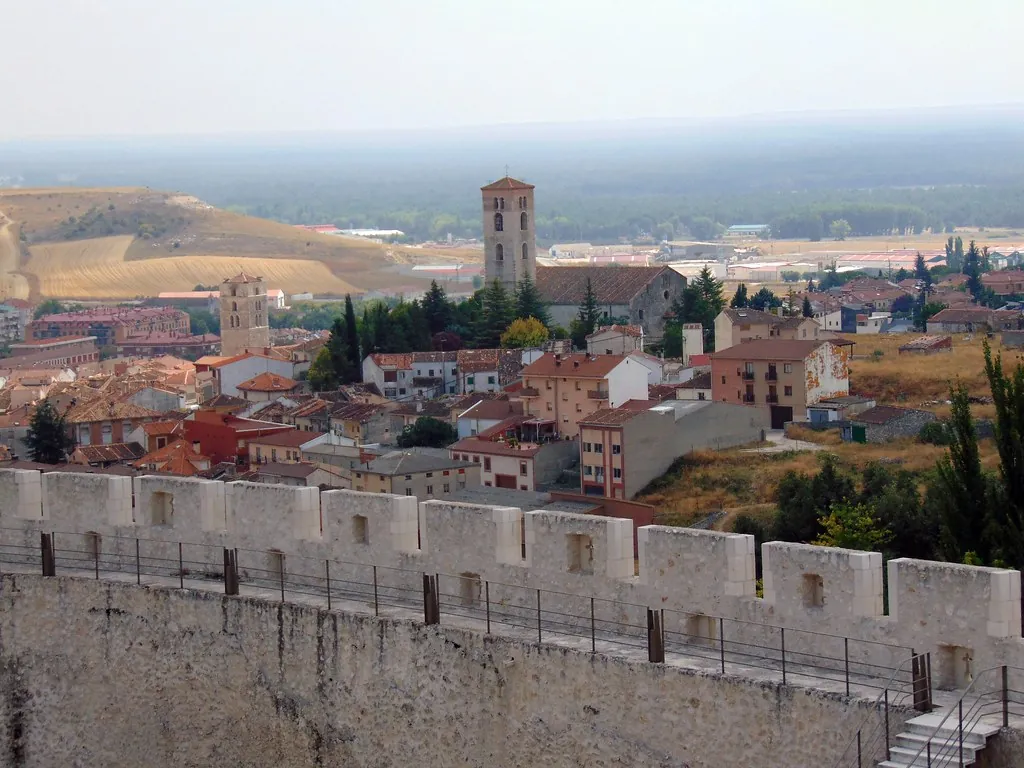
The Castillo‑Palacio de Magalia rises on higher ground, a solid block of grey granite overlooking the settlement. It does not resemble a fairy-tale castle. Its lines are restrained, closer to the austere style often associated with Castile. Two flat domes, unusual in Spain, sit on top like half-closed eyes facing the valley.
Local legend tells of a princess named Magalia, said to be the daughter of a centaur. The documented story is simpler. The building began in the 16th century under Pedro Dávila, the first marquis of Las Navas. The name remained, along with the contrast between myth and history.
Inside, thick walls hold onto cool air even in summer. Rooms feel hushed, as though sound settles quickly into the stone. A plain courtyard opens to the sky with little ornamentation. From the terrace, when the day is clear, the view stretches towards the Sierra de Gredos. The elevation becomes noticeable here, both in the clarity of the air and in the temperature, which can drop quickly.
Paths Marked by War
Behind the castle begins one of the best-known walking routes in the nearby forest: the Civil War bunkers trail. It runs for about five kilometres through tall pines and pale rock. Along the way, concrete structures appear without warning, partly hidden among vegetation.
These bunkers have low vaults and narrow openings facing the valley. Some are covered in moss, blending into the ground, while others carry more recent graffiti. The setting shifts the sense of quiet. Wind moves through the treetops, and dry pine needles crackle underfoot.
In autumn, mushrooms spread across the forest floor and the smell of damp earth replaces the sharper scent of resin. If the walk stretches into evening, it is sometimes possible to hear deer during the rutting season, their deep calls carrying through the woods. Water is worth bringing along, as there are not always fountains in this stretch of pine forest until reaching the edges of the village again.
The Kitchen That Takes Its Time
By midday, when the sun falls directly onto rooftops, aromas begin to drift out from kitchens. Roasted lamb is a familiar presence, often spending much of the morning in the oven. Food in Las Navas tends to be hearty and rooted in long cooking.
One dish closely tied to the village is the pucherete. It combines chickpeas with lamb, hen, vegetables, all cooked slowly until the broth becomes thick and golden. The result is filling and suited to the cooler climate of the area.
Traditional ovens still exist in central streets, where sweets are prepared at certain times of year. During Semana Santa, pestiños are common. These are pieces of dough made with wine or anise, fried and then coated in honey. Outside those periods, the dominant smell is that of fresh bread, with a dark crust and a compact crumb.
Music, Processions and Summer Nights
Summer brings a noticeable change in pace. For several years now, the castle has hosted classical music concerts as part of a festival usually held in July. At night, the courtyard is lit and the sound carries beyond the walls into the surrounding pine forest. Walking up from the centre, the music can be heard mixed with the croaking of frogs from a nearby reservoir.
August is marked by the patron saint festivities dedicated to the Cristo de la Salud. The image is carried in procession through the sloping streets of the town, accompanied by bands. Streets fill with tables, long conversations that stretch into the evening, and the smell of freshly cut sheep’s cheese. These are days when the village stays awake well into the early hours.
Getting There and Choosing the Moment
From Madrid, the journey takes a little over an hour via the A‑6 and then the N‑110. The final stretch passes through woodland of pines and oaks. At dusk, it is not unusual to see animals crossing the road. There are also bus connections with Ávila and Madrid at certain times, although outside the busiest months a car offers more flexibility.
September is often a good moment for a quieter visit. The forest remains green, the air is clear, and the village returns to its usual rhythm after the summer. Winter brings a more pronounced cold. The altitude makes itself felt as evening falls, days are shorter, and warm clothing becomes essential. In return, the pine forest is nearly empty, and the silence of the hills becomes much more noticeable.