Full Article
about Mata de Cuéllar
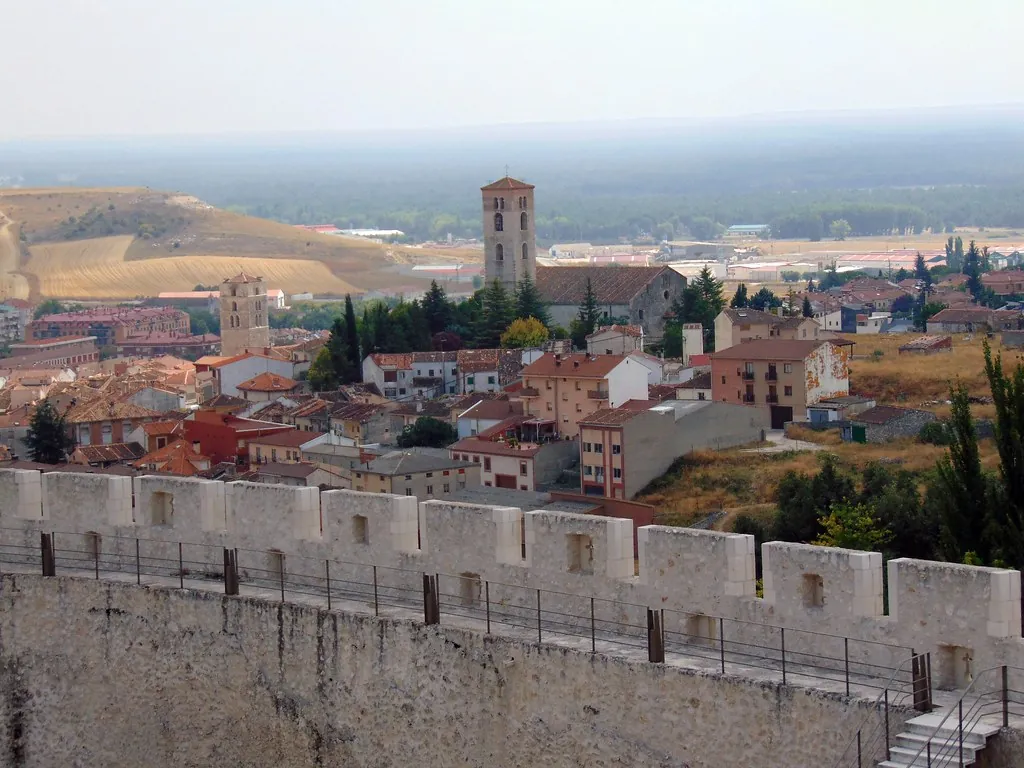
In the Valcorba valley; noted for its hilltop church and wine cellars.
Ocultar artículo Leer artículo completo
The morning resin collectors start their rounds at dawn, their white vans creeping through lanes barely wide enough for a tractor. By the time the church bell strikes eight, the air in Mata de Cuéllar already carries that sharp, sweet smell of fresh pine sap—a scent that has financed this Segovian hamlet since before its 260-odd residents can remember.
At 753 metres above sea level, the village sits in a natural saucer of rolling forest. The surrounding pinewoods aren't merely scenery; they're the reason the place exists. Every house, every stone wall, every hand-built bread oven owes its existence to centuries of resin tapping, timber felling and charcoal burning. Even the name—literally "Cuéllar's copse"—nods to the trees that press in from every side.
The Architecture of Making Do
Start at the plaza and you'll see what rural Castilians mean by aprovechar—making the absolute most of what's to hand. Adobe walls the colour of burnt cream rise to terracotta tile roofs, their edges nibbled by fifty winters of freeze-thaw. Ground-floor zaguanes (those deep entrance passages designed for animals and carts) now serve as shady parking for hatchbacks. Peer inside one and you'll spot the original wine presses: granite screws still greased with decades-old must, family initials chiselled into the lintel.
The parish church keeps the same pragmatic aesthetic. No soaring Gothic here—just a modest stone rectangle whose bell tower doubles as the village timepiece. Step through the pine-shaded porch and the temperature drops ten degrees; the interior smells of beeswax and the ghost of Sunday incense. Look up: the roof beams are resinous pine, hauled from the very woods that frame the village.
A five-minute wander down Calle Real reveals the shift from full-time homes to weekend retreats. Half the houses sport new aluminium windows and fresh limewash; the other half hang on with cracked wooden shutters and blistered paint. Property prices hover around €600 per square metre—roughly a tenth of Madrid's rate—which explains the sprinkling of retired teachers and IT consultants who've traded city flats for crumbling stone and a hectare of land.
Forests That Swallow Sound
Leave the last cul-de-sac and the pinewoods absorb you instantly. The ground turns springy with needles; traffic noise fades to nothing. These aren't manicured Forestry Commission plantations but working woods, scored with generations of resin scars that gleam like amber wounds. Pick any track heading south and within fifteen minutes you'll have lost sight of rooftops, phone signal and, on weekdays, other humans.
The walking is gentle—think Thetford, not Snowdonia. A circular trudge to the abandoned charcoal platforms and back takes ninety minutes, with maybe 50 metres of elevation gain. Spring brings drifts of white silene under the pines; autumn explodes with saffron milk caps (níscalos) that draw hordes of foragers every October weekend. Picking is legal for personal use, but the regional government limits each person to three kilos per day and bans all commercial sale without a permit. Ignore the rules and you risk a €300 fine—more than the market value of your fungi.
Cyclists find the same undemanding terrain. A gravel bike handles the sandy tracks comfortably; road bikes stay on the CV-101 that links Mata to Cuéllar 12 km away. Traffic averages one car every ten minutes—perfect for families whose idea of adventure is a picnic among the pines rather than a white-knuckle descent.
What You'll Actually Eat
Forget tasting menus and craft-ale tapas. The village's single bar, Casa Galo, opens at seven for coffee and churros, shutters for siesta, then reappears at eight with whatever Doña Galo feels like cooking. One evening it might be judiones (buttery Segovian beans) with chorizo; the next, grilled lamb chops that cost €9 including wine. Vegetarians get pisto—a thick ratatouille topped with fried egg—while vegans should probably phone ahead or self-cater.
For self-catering, stock up in Cuéllar before you arrive. The Tuesday market sells local lechazo (milk-fed lamb) at €14 per kilo, but you'll need an oven big enough for the traditional asador technique: 220 °C for an hour, no seasoning beyond salt and a splash of water. The village bakery fires up a wood oven on Fridays; order your pan de pueblo before ten or you'll be stuck with sliced baguette from the van that passes through at noon.
Using the Village as a Base
Mata works best as a low-key headquarters rather than a destination in itself. Cuéllar's Mudéjar castle (open weekends, €6) is fifteen minutes by car; Coca's brick fortress twenty-five. Both offer proper battlements and audio guides in English—handy when Spanish school parties drown out the curator. Segovia's aqueduct sits forty minutes west along the A-601; arrive before ten to photograph it without a selfie-stick traffic jam.
Back in the village, evenings revolve around the plaza benches. Grandparents gossip while grandchildren chase feral cats across the dust. At 22:30 the streetlights dim, the temperature drops to a crisp 12 °C even in July, and the Milky Way spills across a sky untainted by light pollution. Bring a jacket; altitude trumps latitude here.
The Practical Bits
Getting there: No railway line comes close. From Madrid's Chamartín station, take the ALSA coach to Cuéllar (1 h 45 min, €11), then taxi the final 12 km (€18). Hiring a car at the airport adds €30 per day but saves three hours each way.
Where to sleep: Un Mar de Pinares offers two pine-clad studios with kitchenettes (from £65). Larger groups rent El Cobo, a converted grain store four kilometres out, complete with pool and outdoor oven (£212 nightly, three-night minimum). Both book solid for the August fiestas—reserve early or arrive in May when the woods are empty and the price drops thirty per cent.
When to come: May-June for orchids under the pines and daytime highs of 24 °C. September-October serves up mushroom foraging and grape-harvest fumes drifting from Cuéllar's cooperatives. Mid-winter turns beautiful but bleak: expect sub-zero nights, possible snow drifts across the CV-101, and the bar closed while Doña Galo visits her daughter in Valladolid.
Leave the drone at home. Residents tolerate visitors who nod greetings and keep noise down; hovering cameras and midnight guitar sessions will earn a polite but firm request to move on. Respect that, and Mata de Cuéllar repays with something increasingly rare: a Spanish village that still belongs to the people who live there, not the people who pass through.