Full Article
about Matapozuelos
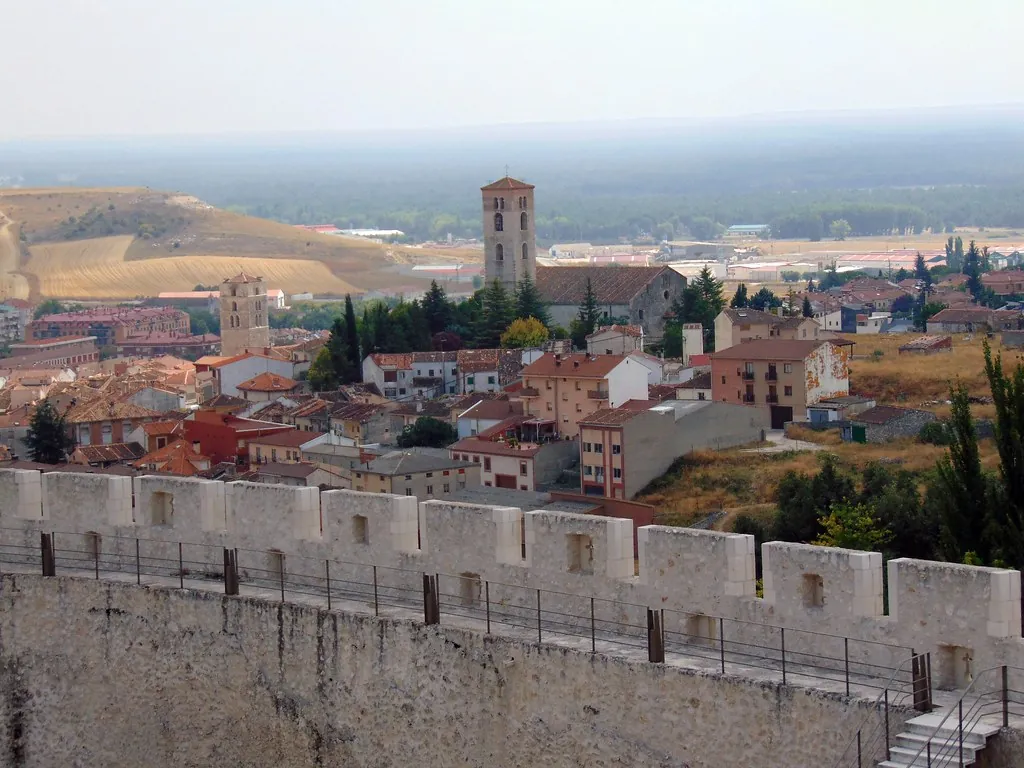
Gastronomic town known for its rabbit and pastries; noted for its striking church with tower.
Hide article Read full article
Between Pine Forest and Cereal Plain
To talk about tourism in Matapozuelos, it helps to start with the map. The village lies in the Tierra de Pinares, in the south of Valladolid province, in Castilla y León. This is a stretch of land where stone pine and maritime pine forests interrupt the sweep of cereal fields. The terrain is largely flat, with long horizons and sandy soils that have shaped the area’s traditional economy.
Less than 30 kilometres from the city of Valladolid and around 730 metres above sea level, Matapozuelos functions more as a quiet local town than as a standalone tourist destination. For generations it depended on agriculture, the use of the surrounding pinewoods, particularly resin extraction for much of the twentieth century, and modest livestock farming. That past still reads clearly in the landscape and in the layout of the village itself.
This is a place where the environment sets the tone. The sandy ground, the pine trunks and the changing colours of the fields through the year all explain how people have lived here.
San Juan Evangelista and the Village Streets
The most visible building in Matapozuelos is the church of San Juan Evangelista. Its origins date back to the sixteenth century, although later alterations, probably in the eighteenth century, modified parts of the structure. The tower rises above the low houses of the town centre and acts as a reference point when approaching by road.
Inside, the church preserves several Baroque altarpieces and liturgical objects of local interest. As in many villages in the area, opening times are not always fixed, so it is sensible to check locally in advance if you hope to see the interior.
The centre of Matapozuelos can be explored without difficulty. There are houses built of stone and adobe, many with interior courtyards hidden from the street. It is not a monumental historic quarter, yet it retains the features of traditional architecture typical of the Tierra de Pinares: thick walls, simple façades and buildings designed to withstand the climate rather than to impress.
Life revolves around the central streets and the main square. Outside the summer period, the pace is unhurried, in keeping with other villages in the comarca.
The Rhythm of the Tierra de Pinares
Step beyond the last houses and the pinewoods appear almost immediately. These forests give the comarca its name and were, for decades, an important source of income thanks to resin extraction and the harvesting of pine nuts. On some trunks, the scars from those incisions in the bark are still visible.
The forest tracks and firebreaks cross the woodland without major changes in elevation. There are no dramatic viewpoints or striking landforms. The appeal lies elsewhere: sand underfoot, the scent of resin in summer and a quiet that settles between the trees.
Between the pinewoods, agricultural plots open out. The landscape shifts noticeably with the seasons. Winter brings brown tones, spring an intense green, and when harvest time arrives the cereal fields turn yellow. The contrast between forest and farmland defines this part of Valladolid province.
Straight Paths Across the Plateau
Several rural tracks leave from Matapozuelos, used by farmers, cyclists and walkers. They are long and straight, typical of this stretch of the Meseta, Spain’s central plateau, where orientation depends more on the position of the pinewoods and field boundaries than on hills or valleys.
Carrying some form of reference, such as a map or GPS track, is advisable. Within the pine forest many paths look alike, and it is easy to lose a sense of direction. Early in the morning or towards the end of the day, it is relatively common to spot red kites circling overhead, rabbits darting across clearings or the distinctive shape of a hoopoe among the trees.
In hunting season, some nearby woodland areas are used for this activity. It is generally a good idea to ask in the village whether organised shoots are planned before heading out for a walk.
The practicalities are simple. The terrain is mostly flat but the sandy soil can make walking more demanding in hot weather. Shade is not continuous, so water and sun protection are sensible essentials when exploring on foot.
Food Traditions and the Influence of Rueda
Local cooking follows the broader Castilian pattern: hearty stews, pulses and cured meats form the basis of many meals. Pine nuts appear in traditional sweets and in certain savoury dishes, which makes sense in a comarca where this product has long been part of the local economy.
Matapozuelos is also close to the area covered by the Denominación de Origen Rueda, a protected designation for wines produced in this part of Castilla y León. The white grape verdejo has played an important role in the recent history of the territory. Many visitors combine time in Matapozuelos with a trip to nearby villages linked to this wine-producing area, where verdejo has become a defining feature.
Food and wine here are closely tied to the land. Pulses and cereals reflect the agricultural landscape, while pine nuts connect the table to the surrounding forests.
August Festivities and Village Life
The moment when Matapozuelos changes pace usually arrives in August, during the celebrations in honour of San Roque. These festivities are closely linked to local residents and to those who return in summer to their family village. Religious events, gatherings in the squares and activities organised by local clubs and associations shape those days.
Outside these dates, daily life follows the rhythm typical of villages in the comarca. Streets are quiet, activity centres on the square and the surrounding landscape continues to mark the passing of the seasons.
A Practical Note
Matapozuelos itself can be seen in a short time. The real interest often lies in the surroundings: tracks through the pinewoods, small local roads and neighbouring municipalities in the Tierra de Pinares that help to explain how people have historically lived in this part of Valladolid province.
It is a setting defined by flat land, sandy soil and the steady presence of the pines. For travellers seeking grand monuments or dramatic scenery, the appeal may seem understated. For those interested in rural landscapes and the way environment shapes community life, Matapozuelos offers a clear, unembellished view of the Tierra de Pinares.