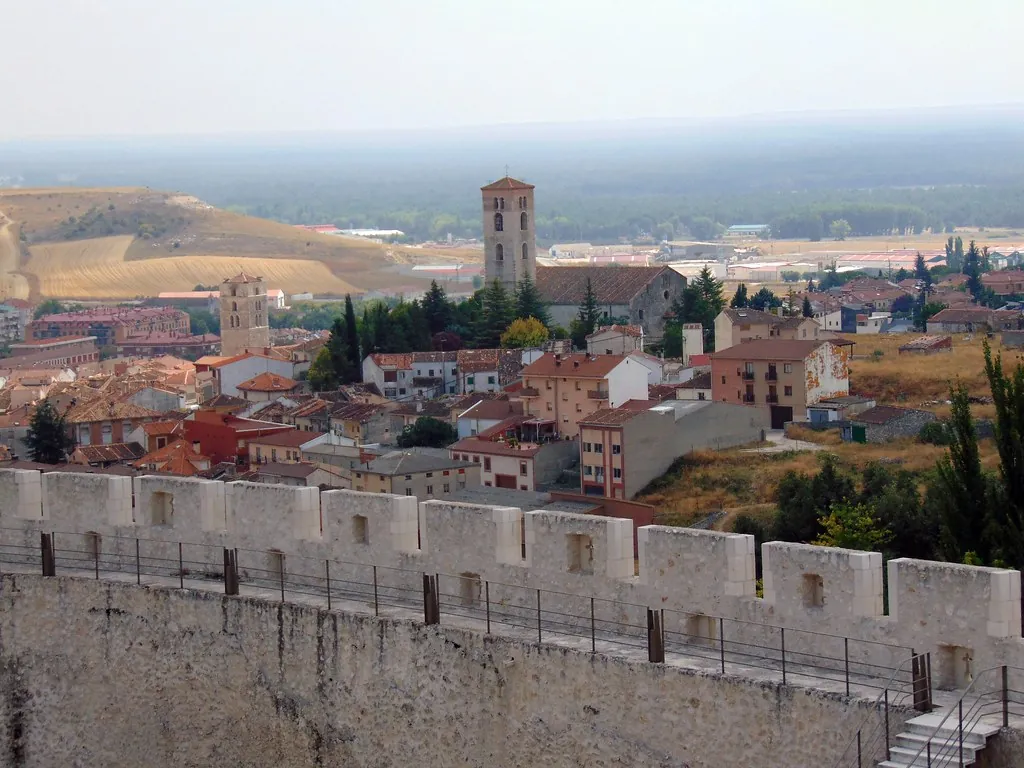
Vista aérea de Membibre de la Hoz
Instituto Geográfico Nacional · CC-BY 4.0 scne.es
Castilla y León · Cradle of Kingdoms

Membibre de la Hoz

The church bell strikes noon, yet only two tractors and a stray dog acknowledge it. At 878 metres above sea level, Membibre de la Hoz keeps its own...

42 inhabitants · INE 2025
878m Altitude

Why Visit

Mountain Church of San Martín (Romanesque apse) Valley routes

Best Time to Visit

summer

May Cross Festival (May) mayo

Things to See & Do
in Membibre de la Hoz

Heritage

  • Church of San Martín (Romanesque apse)
  • Arroyo de la Hoz

Activities

  • Valley routes
  • Cultural visit

Festivals
& & Traditions

Fecha mayo

Fiestas de la Cruz de Mayo (mayo)

Las fiestas locales son el momento perfecto para vivir la autenticidad de Membibre de la Hoz.

Full Article
about Membibre de la Hoz

Set in a hollow; known for its Romanesque church and the Arroyo de la Hoz.

Ocultar artículo Leer artículo completo

The church bell strikes noon, yet only two tractors and a stray dog acknowledge it. At 878 metres above sea level, Membibre de la Hoz keeps its own time—one governed by cereal harvests, migrating raptors, and the slow retreat of rural Spain. Thirty-five residents remain, give or take, and they have learned to measure distance not in kilometres but in the number of gates you have to open.

Stone, Adobe and the Sound of Empty Roads

Approach from the CL-610 and the village appears as a faint smudge on a wheat-coloured ocean. The road climbs gently, then drops into a shallow limestone incision—the hoz, or ravine, that gives the place its name. Houses cluster on the ridge like spectators unsure whether to watch the sky or the soil. Most date from the early 1900s, built from local stone and adobe bricks the colour of dry tobacco. Their wooden doors hang slightly askew; knock and you may wake a swallow rather than an owner.

The single street, Calle Real, is barely two cars wide. Park by the stone cross at the entrance—there is no other option—and walk. The parish church of San Miguel fronts a plaza paved with granite slabs so worn they reflect the weather. Inside, the air smells of beeswax and extinguished candles; outside, the tower serves as a landmark for booted walkers who navigate by “la torre de Membibre” rather than GPS coordinates. No ticket office, no opening hours: push the heavy door and hope the hinges agree.

Peer into the side alleys and you will find cuadras—tiny stable-courtyards—still fitted with mangers and iron rings for donkeys long since replaced by quad bikes. A few wine cellars are dug into the hill behind the houses; their vaulted ceilings keep bottles at a steady 12 °C without electricity. One belongs to the mayor, another to the baker who drives in twice a week from Peñafiel. Both will offer a glass if you ask, but do not expect a tasting menu—this is bulk tinto drawn from plastic taps, drunk in three gulps before the next chore.

Walking the Paramera: Larks, Harriers and Absolute Silence

Leave the last house behind and the world tilts sideways. The paramera is not dramatic—no jagged peaks or crashing waves—yet its very restraint is disarming. Rolling plains of barley and durum wheat ripple like watered silk when the wind changes gear. In April the green is almost lurid; by late July the stubble glows bronze and every footstep raises dust that smells of biscuit.

A lattice of farm tracks heads north towards the Cueva Valiente ravine. None are way-marked, but the logic is simple: keep the village antenna on your left shoulder and you will loop back in 75 minutes. Boots are advisable after rain; the clay sticks to soles like wet cement and doubles the weight of every step. Expect to meet no one, apart from a distant tractor whose driver waves with the casual elevation of one finger from the steering wheel.

Birdlife compensates for the human absence. Calandra larks rise in vertical song flights, strewing liquid notes across the thermals. A Montagu’s harrier quarters the field edges, tilting like a faulty weather vane. If you are lucky—and quiet—you may spot a lone great bustard stalking through the wheat stubble, all gravitas and disapproval. Binoculars help, but the land is so open that the birds often fly within mobile-phone range.

Spring and autumn are the comfortable seasons: daytime highs around 18 °C, nights cool enough to justify the log-burning stoves you will smell at dusk. Mid-winter can touch –8 °C and the wind carries powdered snow horizontally; summer, conversely, pushes 34 °C by 14:00 and shade is measured in single-tree units. Whichever month you choose, carry water—there are no fountains once you leave the village.

Eating (or Not) in the Land of Roast Lamb

Membibre itself has no bar, no shop, no ATM. The nearest coffee arrives 12 km away in Peñafiel, so plan accordingly. Locals eat at home: roast suckling lamb in wood-fired ovens, judiones (buttery white beans) stewed with morcilla, and thick torreznos that crack like toffee between the teeth. If you are invited—often signalled by the phrase “¿No vas a comer?”—say yes and bring a bottle from the Ribera del Duero corridor just west of here. A decent Crianza costs around €9 in the supermarket and earns instant respect.

For self-caterers, Peñafiel’s Friday market sells vegetables trucked in from Valladolid and cheese made by shepherds who still migrate their flocks to summer pastures in the Sierra de Urbión. Buy early; stalls pack up by 13:00 and the town rolls up its streets for siesta. The alternative is the roadside venta 6 km south on the N-122—grilled chops, metal chairs, and a television permanently tuned to bullfighting. Expect to pay €14 for a three-course menú del día, wine included, and do not ask for vegetarian options unless you are content with omelette.

Getting There, Staying Put, Knowing When to Leave

Public transport is theoretical. Valladolid’s bus station lists a daily service to neighbouring San Llorente, but it runs only during school term and the driver may decide to terminate early if no students appear. Hiring a car at Valladolid airport (45 minutes on the A-62) is simpler and usually cheaper than two rail tickets from Madrid. Petrol stations thin out after Peñafiel; fill the tank and the windscreen washer before you branch onto the local roads.

Accommodation is scattered across the countryside. Three stone cottages have been restored as holiday lets, booked through the provincial tourism board under the label “Casas Rurales Castilla y León”. Prices hover around €90 per night for two, minimum stay two nights, heating extra in winter. One cottage sits beside the village threshing floor—an expanse of compacted earth where locals once winnowed grain and which now serves as an impromptu helipad for fire-fighting crews during summer wildfires. Bring slippers: traditional floors are solid stone and feel like refrigerated marble at dawn.

Stay long enough to watch dusk smother the plain and you will understand the village’s quiet argument: not every landscape needs to be spectacular, not every itinerary needs a tick-list. Leave while that thought still feels generous; stay too long and the silence may begin to sound like a question you cannot answer.

Key Facts

Region
Castilla y León
District
Tierra de Pinares
INE Code
40127
Coast
No
Mountain
Yes
Season
summer

Livability & Services

Key data for living or remote work

2024
Housing~5€/m² rent · Affordable
CoastBeach 18 km away
Sources: INE, CNMC, Ministry of Health, AEMET

Planning Your Visit?

Discover more villages in the Tierra de Pinares.

View full region →

More villages in Tierra de Pinares

Traveler Reviews