Full Article
about Mojados
Historic town where Carlos V met his brother; known for its bridges and the church of Santa María.
Hide article Read full article
Morning in a Castilian village
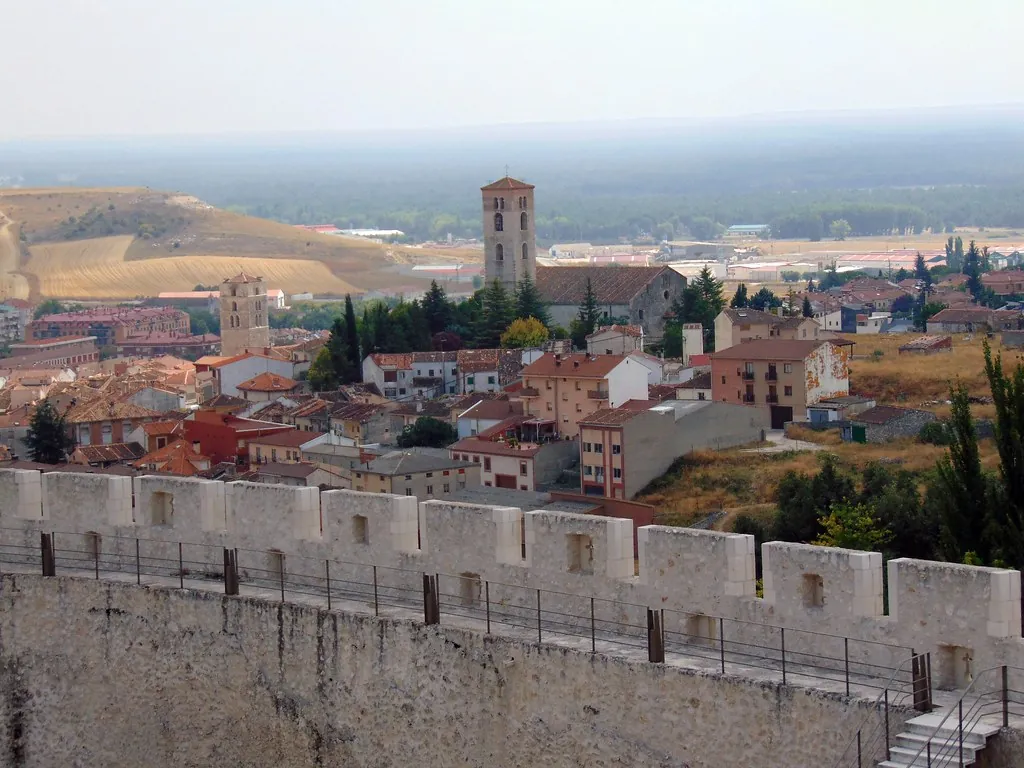
At eight in the morning, the bells of Santa María ring out and their echo drifts across the wheat fields that surround Mojados. From the main square, where the sun has not yet warmed the paving stones, a thin mist lifts off the river Cega as if the water were breathing. At that hour, the air carries the smell of freshly baked bread and resin from the nearby pinewoods.
Just beyond the edge of the village lies Albosancho, the large communal pine forest. It remains part of everyday life here. People speak of it as something that has always been there, tied to Mojados for centuries, as familiar as the streets themselves.
The emperor who stayed the night
In the late 1520s, Charles V passed through Mojados with his entourage. He met his siblings Ferdinand and Eleanor here at a delicate moment in European politics. The house where he stayed still stands on a quiet corner of the old town and now houses the Museo de Carlos V. Its stone walls are darkened by sun and the long winters of Castile.
Inside, the museum is modest. There are no elaborate displays or endless rooms. It is the kind of place to move through slowly. The visit explains the emperor’s time in the village and also everyday life in that period: how wool was worked, how cheese was made in nearby monasteries, and the role these lands played along the routes between Valladolid and Segovia.
The courtyard is worth a pause. A simple stone fountain sits at its centre and, when there are no groups around, the only sounds are the water falling and the occasional door opening in neighbouring houses.
Two churches within a short walk
The church of Santa María was built over several centuries, from the late Middle Ages into the Renaissance. The result is a mix of materials and styles: stone and brick, Gothic forms and Mudejar details, reflecting the influence of Muslim craftsmen working in Christian territories. From the outside, the red brick tower stands out and can be seen from almost anywhere in the village.
Inside, the space feels more restrained than the exterior might suggest. There is the scent of old wood and cold stone in winter. When the door is left open in the afternoon, a band of light cuts across the nave, catching dust in the air.
A couple of streets away stands the church of San Juan. Smaller and easy to miss if you do not know it is there, it is linked to Mudejar communities who continued working in the area for centuries. On windy days, the roof tiles shift slightly, making a dry, irregular sound that blends with the bells from Santa María.
Crossing the Cega
At the edge of Mojados, the Puente Viejo spans the river Cega. The current structure dates from the 16th century and is often associated with the reign of Philip II, when earlier, more fragile crossings were replaced after winter floods repeatedly washed them away.
The bridge is built from solid stone with several well-set arches and still carries local traffic. It is not a grand monument. It feels practical, made to last rather than to impress.
Towards evening, it is worth walking out to it. The Cega moves slowly between poplars and small cultivated plots, and the low light at the end of the day casts the shadows of the arches onto the water. At that hour, there are few cars, and the main sounds are birds and the steady murmur of the river.
Bread, cheese and vines
Life in Mojados starts early. In the morning, the smell of bread drifts from the ovens and lingers in the streets near the square. The loaves here tend to have a thick crust and an elastic crumb, the kind that holds up well throughout the day.
Sheep’s cheese is a staple in many households. Livestock has long been part of the area, and it is still easy to find cheeses made in fairly traditional ways, with a dry, slightly salty flavour shaped by the grazing lands of the plateau.
Vineyards also surround the village. This is land close to the area known for verdejo grapes, so it is common for households to have their own wine or bottles from nearby producers. The continental climate, with very dry summers and cold winters, strongly influences the character of the grapes.
In autumn, when the vines change colour and the air in some courtyards smells of fermenting grape must, the pace of the village slows even further.
When to go, and what to bear in mind
May and October are usually good times to visit Mojados. In May, the pinewoods and fields are green and the river carries more water. October brings mild days and a more golden landscape along the Cega.
July can be intense if you are not used to the heat of the plateau. At midday, the sun falls directly onto the open streets, making it difficult to walk without seeking shade. During the historical re-enactment dedicated to Charles V, the atmosphere changes noticeably and the village fills with people.
Weekends in August are also busier, especially with visitors arriving from Valladolid or Madrid. For a quieter experience, weekdays and early hours tend to work better.
One practical detail: after several days of rain, the Cega often rises and some of the paths near the river become quite muddy. It is worth wearing suitable footwear in those conditions.