Full Article
about Mozoncillo
A key farming and service town, noted for its crafts and fiestas.
Hide article Read full article
A village shaped by pine and silence
On the edge of Mozoncillo, winter light filters through the pines and falls in wide bands across sandy ground. Grey and green tones shift gently as the day moves on. The forest feels still, broken only by the soft crunch of fallen needles and the occasional call of birds. This calm presence is as tangible as the village itself, where many houses retain the plain character of adobe walls and wood aged by time.
Mozoncillo stands at 854 metres above sea level and has fewer than a thousand residents. Its streets hold a living trace of rural life in Castilla. Large wooden gates and inward-facing courtyards point to a past shaped by resin extraction, agriculture and livestock. Some newer buildings have altered the outline of the village slightly, yet clear examples remain of how homes were built here decades ago.
The surrounding land is flat rather than dramatic. There are no high cliffs or mountains, just open ground dotted with pines. In autumn, clearings turn shades of ochre and gold. Sandy soil dominates, carrying the scent of resin that mixes with the smell of damp earth after rain. Old resin towers still stand in places, and many trees bear marks on their bark. These traces belong to an activity that sustained generations and has now largely disappeared.
Traces of heritage in stone and wood
At the centre of Mozoncillo stands the parish church of San Juan Bautista. Its walls reveal several phases of construction. The main structure shows later alterations in its windows and façade, evidence of gradual change over time. Inside, the nave is simple. Rounded arches frame the space, and light enters through small openings, creating a subdued atmosphere. Footsteps echo softly across the stone floor, reinforcing a sense of continuity with earlier centuries.
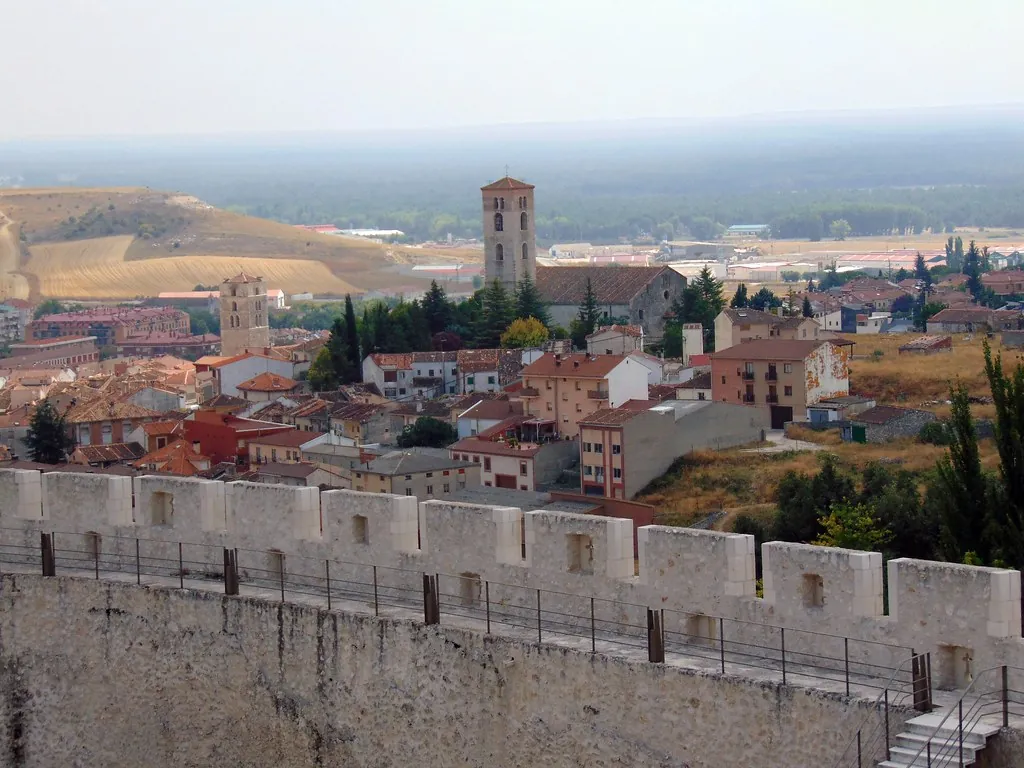
The streets of the village reflect traditional building methods. Exposed masonry, solid carpentry and whitewashed courtyard walls appear frequently. Some houses still preserve their original doors and windows, while others have been restored without losing their rustic identity. Straight, narrow streets lead towards newer areas or into quieter corners where rural life remains close at hand.
Beyond the houses, the pine forests form Mozoncillo’s main natural setting. Wide paths lead into woodland where trees grow slowly and evenly spaced. In summer, the shade is dense and cool. In autumn, dry pinecones scatter across the ground and the air carries a deeper, earthier scent. Spring brings contrast, as scattered holm oaks and oaks among the pines turn a vivid green against the muted tones of the soil.
Evidence of resin work appears throughout these woods. Trees show cuts and metal fixtures that once guided the flow of resin. These marks remain visible, silent indicators of a trade that shaped the local economy for centuries and still lingers in the memory of the landscape.
Paths through the pines
Routes across the pinewoods are straightforward yet varied. The terrain is flat, which makes walking accessible without technical difficulty. Some paths stretch for long distances, while others can be linked into shorter, more relaxed walks. The landscape often repeats itself, with similar tracks crossing through the forest, so it helps to check a map or a mobile device before heading out. Even so, small differences appear with careful observation, whether in the texture of the ground or the spacing of the trees.
Wildlife is easy to notice here, especially birds. Black kites circle above the treetops, while small eagles move with measured precision through the air. In the clearings, smaller birds fill the space with soft, constant sound. Spring intensifies this presence. Morning brings a fuller chorus, and a brief pause is enough to feel surrounded by quiet life.
Those who step away from the forest find open land nearby where local food traditions continue. Roast lechazo, a young lamb typically cooked in a wood-fired oven, is a well-known dish in the area. It often appears alongside simple stews and mushrooms gathered in autumn. Artisanal production of cured meats and cheeses also forms part of the local food culture. The approach is modest, with familiar flavours rather than elaborate presentation.
Around 15 kilometres from Mozoncillo lies Cuéllar. This nearby town offers a more monumental setting. Its medieval castle and Mudéjar architecture present a different historical layer from that of Mozoncillo. Visiting both places provides a broader sense of how varied ways of life have developed across this part of Castilla over time.
Traditions that bring people together
Local festivities in Mozoncillo centre on San Juan Bautista, the village’s patron saint. Celebrations usually take place in June. These days include simple processions and religious events, along with social and sporting activities that bring together residents and regular visitors.
The tone of these gatherings reflects the wider character of the village. They are rooted in continuity rather than spectacle, shaped by shared habits and familiar rhythms. People meet in public spaces, take part in long-standing customs, and maintain a connection to the past that remains visible in daily life.
Mozoncillo does not present itself through grand landmarks or dramatic scenery. Its identity lies in quieter elements: the pattern of streets, the persistence of traditional buildings, the scent of pine resin in the air. Time moves at a steady pace here, and much of what defines the village can be found in details that reveal themselves gradually.