Full Article
about Navalilla
Near the Hoces del Duratón; quiet village surrounded by pine and juniper
Hide article Read full article
Where time loosens its grip
Some places draw you in with a landmark or a viewpoint you have already seen in photos. Others work differently. You arrive, step out of the car, and the first thing that crosses your mind is that everything moves a bit more slowly here. Tourism in Navalilla fits that second category.
This small village, with around 90 residents, sits in the Tierra de Pinares area of Segovia province. It is not built around attractions or checklists. What it offers is quieter than that: silence, woodland on all sides, and a sense that no one is in a hurry.
At about 900 metres above sea level, Navalilla is surrounded by pine forests. When there is a light breeze, the air carries the scent of resin, and that smell tends to linger in your memory of the place. Daily life follows a small-village rhythm, with long walks, evening chats in the street, and a close relationship with the surrounding woodland.
Streets shaped by rural life
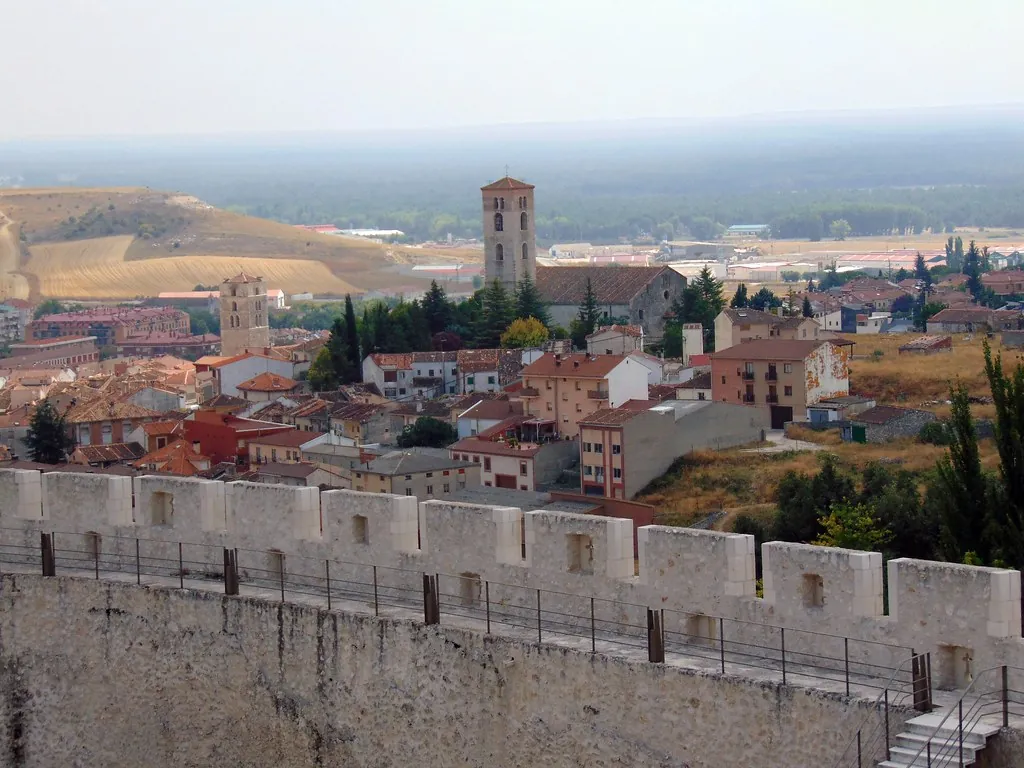
The architecture of Navalilla says a lot about its past. Houses built from stone and adobe line the streets, some restored, others showing the wear that comes naturally with time. Between them are corrals, old haylofts and small auxiliary buildings that point to a way of life centred on farming and livestock.
This is not a village that has been polished up for visitors. And that is part of the appeal. Walking through the streets, what you see is a place that continues to function as a real village rather than a staged version of one. There is no attempt to disguise age or simplify its character.
Walking out into the pines
If you spend any time in Navalilla, chances are you will end up walking. Not because there is a single famous route that everyone follows, but because the pine forests begin almost as soon as you leave the village.
The terrain is gentle, with no steep climbs to worry about. There are forest tracks, winding paths between the trees, and plenty of space to wander without much planning. It is the kind of setting where you set out for a short stroll and only realise later that an hour has passed.
There are no dramatic cliffs or mountain backdrops. The landscape here is quieter than that: soft hills, pines stretching into the distance, and long stretches of stillness.
Small plans: mushrooms, bikes and birds
Autumn brings a shift in activity. The pine forests around Navalilla attract people looking for mushrooms such as níscalos or boletus. If that is something you are interested in, it is worth checking the local rules beforehand. Foraging is regulated, and heading out without knowing what you are doing is not a good idea.
The same forest tracks also suit mountain biking. These are not highly technical routes. They are long paths through the trees where distance and scenery matter more than difficulty.
There is also plenty to notice if you slow down. Birdlife in the pines is easy to spot with a bit of patience. With binoculars, you might see coal tits, nuthatches or the familiar great spotted woodpecker tapping away at a trunk. Nothing rare or unusual, but enough activity to reward anyone who stops and listens.
Eating in the area
The food you find around here follows the traditions of inland Segovia. Roast lamb appears on special occasions, alongside cured meats, hearty stews and legume dishes that suit colder weather.
In autumn, mushrooms from the surrounding forests make their way into local cooking when the season is good. That said, Navalilla itself has limited options for sitting down to eat. It is common to drive a few kilometres to nearby villages if you are looking for more choice.
A base for the Tierra de Pinares
Navalilla also works well as a starting point for exploring other villages in the Tierra de Pinares. This region is dotted with small settlements, many with a history linked to resin extraction from pine trees. Traces of that work can still be found in the surrounding woodland.
This is not an area of grand monuments or large historic centres. What defines it instead are quiet villages, secondary roads threading through pine forests, and a landscape that tends to take priority over anything built.
Approached with that in mind, Navalilla makes sense. And even without a plan, there is always the option of another walk among the pines. Here, that is usually enough.