Full Article
about Navalmanzano
A lively town in pinewood country, known for its chapel and farming.
Hide article Read full article
The bells of San Pedro ring out in the early evening and the sound drifts off towards the pines. From the main square, where an old olive tree offers a patch of shade in the hotter months, the lowering autumn light settles over the fields that surround Navalmanzano. In this part of the Tierra de Pinares, an area known for its vast pinewoods, the air often carries two clear scents: damp soil after irrigation and pine resin warmed by the sun.
Navalmanzano is a small village in the province of Segovia, set within a landscape that defines this corner of Castilla y León. On one side stretch extensive pine forests; on the other, cultivated plots that change appearance with the seasons. There are no grand monuments or streets designed with tourism in mind. What shapes the place instead is the steady rhythm of an agricultural community, where people still notice exactly when a crop begins and when it is time to bring it in.
A Calendar Measured in Harvests
Life in Navalmanzano does not move at the pace of the nearby cities. The year is marked by crops. Spring brings the fresón campaign, with fields turning productive and busy. At the end of summer, potatoes are lifted from the earth. The first autumn rains prompt many to glance towards the pinewoods, wondering if it is time to look for mushrooms.
The plaza mayor is simple and open, with arcades beneath the town hall building. At certain hours, small groups still gather to talk. The conversations revolve around familiar concerns in any farming village: the price of the harvest, whether frost has arrived too early, when the next irrigation will come.
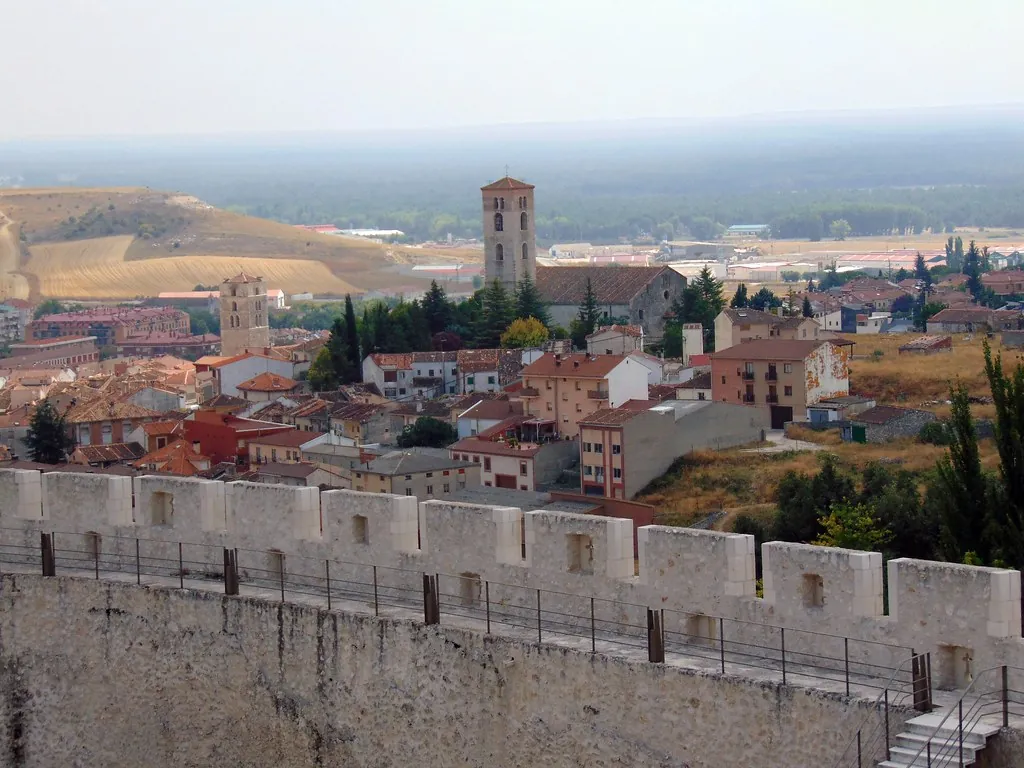
The church of San Pedro Apóstol stands on slightly higher ground within the village. Its tower is visible from almost anywhere and acts as a reference point for those returning on foot from the sandy tracks that thread through the pines. From that higher position, red-tiled roofs mix with interior courtyards and small kitchen gardens. To the west begin the pinewoods, long and fairly dense. To the east, the land opens out into cultivated fields that look very different depending on the time of year.
Here, time is read in practical signs: plastic tunnels appearing in spring, tractors heading out towards the fields, neighbours pausing to compare notes on the weather. The shifts are subtle but constant.
Paths Through the Pines
Just beyond the edge of the built-up area, dirt tracks begin. Many residents walk or cycle along them in the evening, when the sun drops and the smell of resin grows stronger among the trees.
One of these paths climbs gently towards a small hermitage dedicated to Santa Juliana. The route is not long, yet in summer it is best tackled early or later in the day, as the sun can be intense in this open stretch of the Segovian countryside. From the higher ground near the hermitage, it becomes clear how closely the pine forest presses towards the first houses of the village.
Autumn brings a different kind of activity. After several days of rain, there is noticeable movement as people head into the woods carrying baskets and small knives. Mushroom picking forms part of life across the comarca, the wider district that includes Navalmanzano. Locals tend to be discreet about the exact spots where fungi appear, a quiet code that regulars understand.
Even without setting out far, the presence of the pinar is constant. Its scent drifts into the streets, especially after warm days. The sandy soil underfoot and the tall, straight trunks give this part of Segovia its particular character.
August and the Fiestas de San Roque
August alters the atmosphere. During the fiestas of San Roque, the village fills with relatives returning for a few days and with visitors from surrounding areas. San Roque is a traditional summer celebration in many Spanish towns, and here it centres on the plaza and nearby streets.
Music in the evenings, communal meals and chance meetings between different generations shape those days. People who now live elsewhere come back, and encounters take place that happen only once a year. The square becomes the focus, and the usual calm gives way to conversation and shared tables.
Once the festivities end, the quieter rhythm returns. Mornings bring the sound of garage doors opening, a tractor heading out towards the fields, brief errands to buy provisions or collect bread. The pace is steady rather than hurried. On weekdays the village follows its habitual routine; at weekends it can feel even calmer than some might expect.
Fresón Fields and Home Cooking
The fresón, a large strawberry variety, is one of the best-known crops within the municipality. In spring, fields are covered with plastic tunnels and lined with collection crates. During the campaign it is common to see small roadside stalls or signs advertising direct sales along nearby roads.
Agriculture shapes the local table as much as it shapes the landscape. Cooking in Navalmanzano revolves around what the land provides and what has long been part of the area’s food culture: potatoes, products from the traditional matanza, lamb, and hearty spoon dishes that are particularly welcome in winter when cold air blows from the pinewoods. The matanza refers to the annual pig slaughter that historically supplied families with cured meats and sausages for the year. Recipes are domestic and practical, prepared without strict measurements and based on whatever is available in the pantry that day.
Seasonal change affects both fields and kitchens. Spring feels active and green, with work underway among the crops. Autumn carries a stronger resin scent from the pines, and once summer visitors depart, a deeper quiet returns to the streets.
For those considering a visit, spring often coincides with visible activity in the fields and a greener landscape. Autumn offers the distinctive smell of the pinar and a sense of stillness after August. During the week, daily life follows its agricultural rhythm. At weekends, the calm can be striking.
Navalmanzano does not rely on spectacle. Its identity lies in cultivated land, pine forests and routines repeated year after year. The bells of San Pedro continue to mark the hours, the harvest continues to mark the seasons, and the village moves in step with both.