Full Article
about Olombrada
A town with farming and artistic roots, noted for its zarrones at carnival.
Ocultar artículo Leer artículo completo
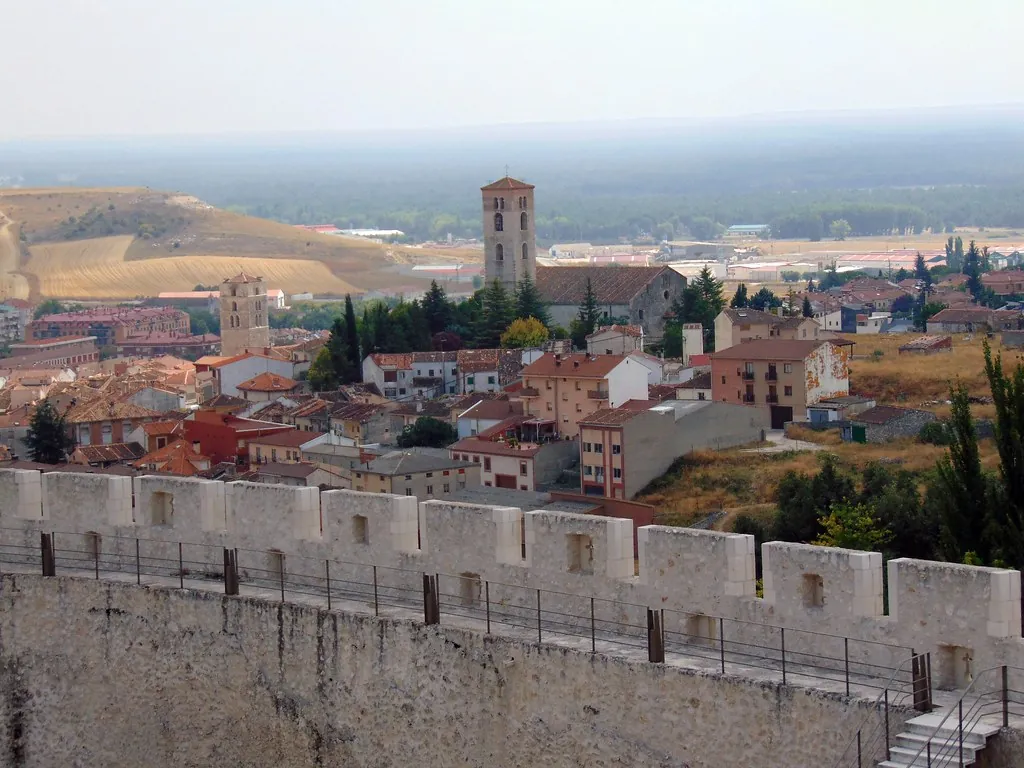
The tractor arrives at 7:23 am. Not 7:20, not 7:30—7:23, every morning except Sundays, rattling past the church tower whose bricks have watched over this rhythm since 1723. In Olombrada, population 488, time hasn't stopped so much as settled into its own cadence, 872 metres above sea level where the resin pine forests of Segovia's Tierra de Pinares still dictate the day's tempo.
The Architecture of Survival
Adobe walls three feet thick keep interiors cool through Castilla y León's brutal summers and hold heat during winters that can stretch from October to April. These aren't museum pieces—they're working houses, many with satellite dishes bolted onto centuries-old facades, television competing with the wind's conversation through million-pine needles. The church tower, constructed from local brick rather than the region's more typical stone, stands as a testament to what happens when materials available trump architectural fashion. Its simplicity shocks visitors expecting Spain's usual baroque excesses. Inside, the single-nave structure fits the entire village with room to spare, assuming anyone bothered to attend.
Traditional houses retain their soportales—covered porticos where farmers once stored implements and grain. Some have been converted into garages for Renault Clios and Seat Ibizas, the agricultural giving way to the automotive without apology. Walk Calle Real at dusk and you'll spot the transition everywhere: ancient wooden doors painted royal blue beside corrugated iron additions, solar panels sitting atop terracotta roofs, the 21st century grafting itself onto the 16th with pragmatic determination.
Forest Economics
The Pinus pinaster forests surrounding Olombrada aren't scenic backdrop—they're former workplace. Until the 1980s, resin collection provided primary employment. Look closely at tree trunks and you'll find V-shaped scars, the forest's version of worker's compensation claims, each mark representing labour that paid roughly half what factory work offered in Segovia city. The industry's collapse explains why village population peaked at 1,200 in 1950 and has declined ever since.
Autumn transforms these same trees into mushroom supermarkets. Locals guard their favourite spots with the same fervour British gardeners protect prize roses. The boletus edulis, known here as hongo de pinar, fetches €40 per kilo at Segovia markets—more than most villagers earn daily. But pick without proper authorisation and face fines starting at €300. The regional government employs forest rangers who patrol with the dedication of customs officials, checking permits and weighing hauls.
Hiking trails exist, though "trail" flatters what are essentially centuries-old paths between clearings. The PR-SG 12 starts behind the cemetery and loops 8 kilometres through forest and farmland. Marking ranges from adequate to optimistic—bring GPS and water, because the nearest bar closes when the owner's granddaughter's football practice finishes. Summer temperatures hit 35°C by 11 am; start early or risk becoming another statistic for the Guardia Rural mountain rescue team based 40 kilometres away in Cantalejo.
The Mathematics of Village Life
Olombrada supports one bar, one shop, and one restaurant. Bar Luan opens at 7 am for coffee and pincho de tortilla (€2.50), closes at 3 pm, reopens at 6 pm for cañas (€1.20), and shuts definitively at 10 pm unless someone's celebrating. The shop stocks tinned goods, bread delivered daily from Sepúlveda, and not much else—plan meals accordingly. Restaurant Casa Juan only operates weekends outside summer, serving roast suckling lamb at €22 per portion, enough for two modest appetites or one hungry farmer.
The village's single cash machine broke in 2019 and nobody's bothered fixing it. Credit cards work at Bar Luan, sometimes, depending whether the owner's son remembered to top up the card reader. Bring cash. The nearest functional ATM sits 12 kilometres away in Carbonero el Mayor—close enough unless you discover Saturday afternoon that every Spanish village within 50 kilometres takes their siesta seriously.
Calendar Rituals
Fiesta Patronales, honouring the Virgen del Rosario, happens first weekend of August. Population temporarily quadruples as descendants return from Madrid, Barcelona, even London. The paella popular feeds 800 people using pans the size of small swimming pools. Chupinazo—the opening rocket—fires at midnight Friday, launching three days of concerts, corridas de vacas (young bulls run through temporary barriers, less dangerous than Pamplona's version but still requiring travel insurance), and verbenas that continue until sunrise.
December brings matanza—the pig slaughter. Families gather to transform one animal into an entire year's meat supply. The process starts at 6 am and finishes with morcilla (blood sausage) hanging from every available rafter. Visitors sometimes find this confronting; locals view it as practical sustainability. If invited, bring wine and accept that vegetarianism marks you as either foreign or faint-hearted.
Winter transforms the village completely. At 872 metres, snow arrives predictably each January, sometimes cutting road access for days. The council maintains one snowplough for the entire municipality; during heavy falls, priority goes to the road connecting the cemetery—death stops for no weather. Central heating runs on butane bottles delivered weekly; running out means cold nights and expensive emergency deliveries. Yet January also brings crystal-clear skies and views stretching 50 kilometres across the meseta, the kind of light that makes photographers risk frozen fingers for the perfect dawn shot.
Getting Here, Getting Away
No trains stop here. The nearest AVE (high-speed) station sits 60 kilometres away in Segovia, connecting Madrid in 27 minutes—faster than crossing London on the Northern Line. From Segovia, bus service runs twice daily except Sundays (once daily, 2 pm departure). Hiring a car transforms the experience from endurance test to pleasure drive; the A-1 motorway from Madrid takes 90 minutes, assuming you resist the temptation to stop in medieval Sepúlveda en route.
Accommodation options remain limited. Two village houses offer rural tourism lets—Casa Rural El Pinar charges €60 nightly for two people, minimum two nights, includes firewood but not heating oil. Book directly through the council website; Airbnb hasn't discovered Olombrada yet. Alternatively, stay in Sepúlveda (15 kilometres) where the Hotel-Restaurant Los Templarios offers proper facilities from €75 per night, plus restaurants that stay open Monday through Thursday.
The tractor passes again at 7:23 pm, same driver, same rhythm. In between, the village has lived an entire day—bread delivered, gossip exchanged, forests walked, lunch cooked, siesta taken, afternoon coffee drunk. Nothing remarkable happened, which is precisely the point. Olombrada offers no Instagram moments, no bucket-list ticks, no life-changing revelations. Instead, it provides something increasingly rare: permission to exist at human speed, where the loudest sound remains wind through million pine needles and the most urgent deadline involves getting to Bar Luan before the tortilla sells out.