Full Article
about Perosillo
One of the smallest villages; noted for its Romanesque fountain and quiet.
Hide article Read full article
Arriving without an agenda
Some places come with a mental checklist. Tourism in Perosillo works the other way round. You arrive, look about, and realise the plan is simply to be there. Walk a while, listen to the wind in the pines, and accept that your phone is more use as a clock than anything else. Perosillo is a very small hamlet in the province of Segovia, set within the Tierra de Pinares, with adobe houses scattered along a slope and a kind of quiet that can feel unusual at first.
The population hovers around a couple of dozen people. Anyone expecting a roster of sights will run out of material quickly. The place makes more sense if the aim is to understand how life works in this part of inland Castile, where villages are small, the countryside is close at hand, and much of the work has long been tied to the forest.
A modest cluster of houses
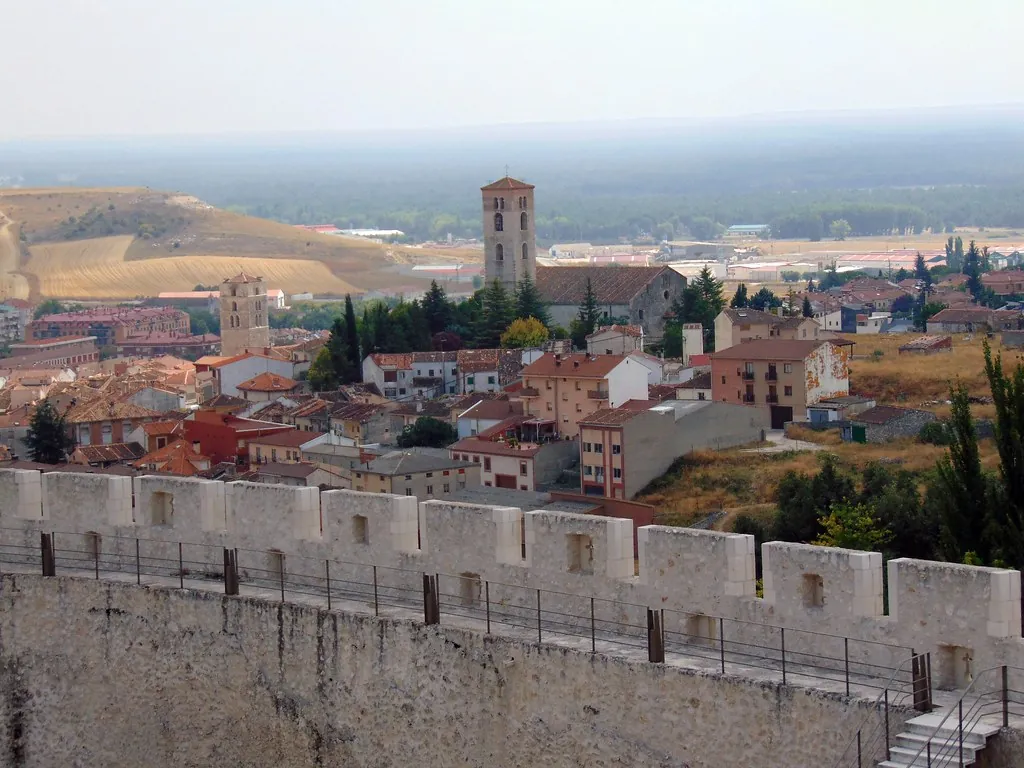
Perosillo has no grand square and no buildings that call attention from a distance. It is a handful of simple homes, several built with traditional techniques such as rammed earth and timber framing. The construction is easy to read: materials came from what was available locally, and the forms follow that logic.
The parish church, dedicated to Santa María Magdalena, keeps to the same tone. It is an austere building with a square bell tower and very little ornament. It tends to open mainly for religious services. The rest of the time the village keeps its steady pace, with little arranged specifically for visitors.
The pines set the rhythm
The landscape explains Perosillo. This part of Segovia is defined by pinewoods, and here they are close and constant. A few minutes on foot is enough to be among the trees, on long forest tracks that seem to stretch on without end.
For a long time the woodland formed a key part of the local economy. Resin was an important trade across many villages in the area, and timber mattered too. The level of activity has changed, but the landscape still tells that story.
Walking through these pinewoods has its own pull. It is not a dramatic forest, yet it draws you in. The ground is gentle, the tracks are wide, and an hour can pass without much notice.
Paths that link nearby villages
Rural tracks lead out from the village towards other small settlements such as Cabañas or Carrascal del Río. These are not signposted routes in the style of a natural park. They are the paths people have used for everyday movement between villages or for work in the forest.
Most of them are easy to follow and do not demand much preparation. In summer it is sensible to carry water. After rain, decent footwear helps, as the soil turns clay-like and the mud clings to boots with surprising persistence.
Wildlife, mushrooms and time to notice
A slow pace and a bit of quiet often reveal movement. Birds of prey such as buzzards circle over clearings, and an early start can bring the chance of a fox crossing a track. Smaller birds are active among the pines as well.
Autumn brings another focus familiar across Castile’s pinewoods: níscalos, a type of wild mushroom. Many people in the area head out to look for them when the season arrives. It is important to know what is being picked and to respect any rules that apply in the forest.
A village that keeps its own tempo
Local celebrations revolve around Santa María Magdalena, traditionally in summer. At that time the place changes noticeably. Residents who live elsewhere return, simple events are organised, and the village regains a touch of bustle.
For the rest of the year, Perosillo follows a different rhythm. Livestock, small vegetable plots, walks in the woods, and conversations that run longer than planned shape daily life. Time does not feel as tightly measured as it does in a city.
Is it worth the detour?
Think of it as a friend would put it: do not come expecting a big plan. Perosillo works best as a quiet stop if you are already travelling through the Tierra de Pinares or moving around this part of Segovia.
If walking in pinewoods appeals, if pausing to look at the landscape feels like time well spent, and if there is curiosity about how very small inland villages carry on, then it has its appeal. Travel sometimes means passing through places where little seems to happen, and noticing that this is precisely where the interest lies.