Full Article
about Portillo
Walled medieval town with an impressive castle; known for its pottery and mantecados.
Hide article Read full article
That well in the castle is deeper than it looks
You lean over the edge of the well inside Portillo’s castle and the light just vanishes. It’s a proper, serious hole in the ground. They say it goes down dozens of metres, and if you drop a pebble, you wait a good second or two before you hear the faint clink from below. Standing there, you get why this place held Álvaro de Luna before they took him to Valladolid. It feels like a spot for endings.
A town with an upstairs and a downstairs
Portillo is split right down the middle, geographically and in mood. Downstairs is the Arrabal, next to the main road. It’s where things get done. You hear garage doors rolling up early and smell petrol in the air. Upstairs is the old town, piled on a hill with the castle on top like a paperweight.
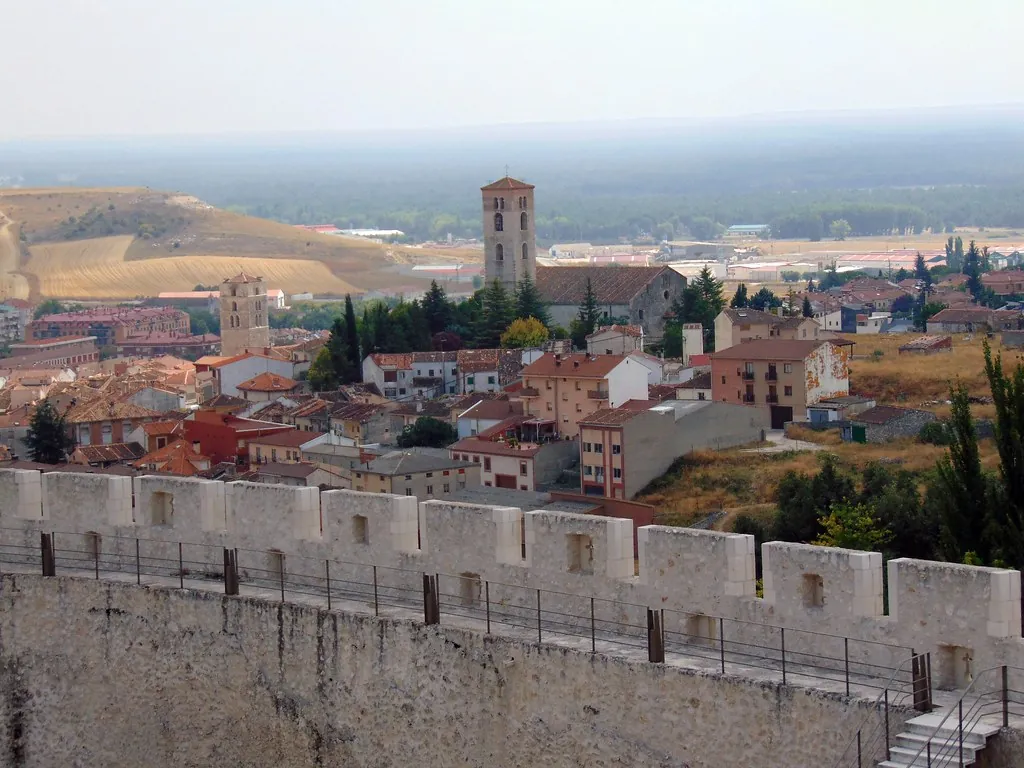
The walk up connects the two worlds. It starts easy but your legs notice the incline by halfway. The reward is the view from the top, which explains everything. You see why someone built a fortress here. The whole Tierra de Pinares unfolds around you, that sea of green pine blending into fields. On a good day, Valladolid is just a smudge on the horizon.
A castle that doesn’t do cosy
The Castillo de los Condes de Benavente isn’t dressed up for visitors. No fancy exhibits, no soundtrack. It’s just stone and space and wind.
The walls have that grey, weathered look that takes five hundred years to achieve. Inside, rooms feel cool even when it’s warm outside. One marks where Álvaro de Luna was held. It’s a stark room that makes you think about power and how quickly it can evaporate.
The place changes completely when a school group turns up. The silence shatters with echoes and shouts until they file out again. Then it reverts to type: less a palace, more a strategic lump of rock.
The mantecado test
Tell someone from Valladolid you’re going to Portillo and they’ll ask about the mantecados before you finish your sentence. These are the town’s edible signature.
Local bakeries use recipes that haven’t changed much: lard, flour, sugar, heat. The result is uncomplicated and dangerously moreish. A fresh mantecado has a short crunch that gives way to crumbliness. You eat one, then automatically reach for another.
They also make other things like bollos blancos or ciegas, but those feel more seasonal, tied to specific fiestas or family tables.
Where everything used to be clay
For centuries, Portillo lived off clay from its surroundings. They turned it into jugs, pots, bowls—the useful stuff of daily life.
That tradition gets its moment each year during the pottery fair. The town fills with wheels turning and stalls displaying pieces still warm from the kiln or waiting for a final glaze.
The best part is watching someone work a lump of mud on a wheel. In what seems like no time, it rises into the shape of something recognisable. It looks effortless until you try it yourself.
How to walk through Portillo without rushing
Portillo isn't big but its geography forces you to slow down. Start in the Arrabal and let your feet find the upward path.
Head to the castle first thing, before the sun gets high and that climb feels heavier. Afterwards, walk back down through the Arco Grande. The arch has a solid, medieval weight to it, and past it the streets unwind naturally towards lower ground.
You start noticing small things as you go: thick wooden doors left slightly open, courtyards hidden behind them, geraniums on windowsills. Life here happens in doorways and on benches.
Portillo isn't trying to be Toledo or Salamanca. Its appeal is quieter—a fortress on a hill holding its ground against time; pine-scented air when wind comes from certain direction; paper bags of mantecados sitting on passenger seats for maybe ten minutes before being opened.
Sometimes travel works best at this scale: an uphill walk; staring into dark water far below; spending an afternoon somewhere content with what it is