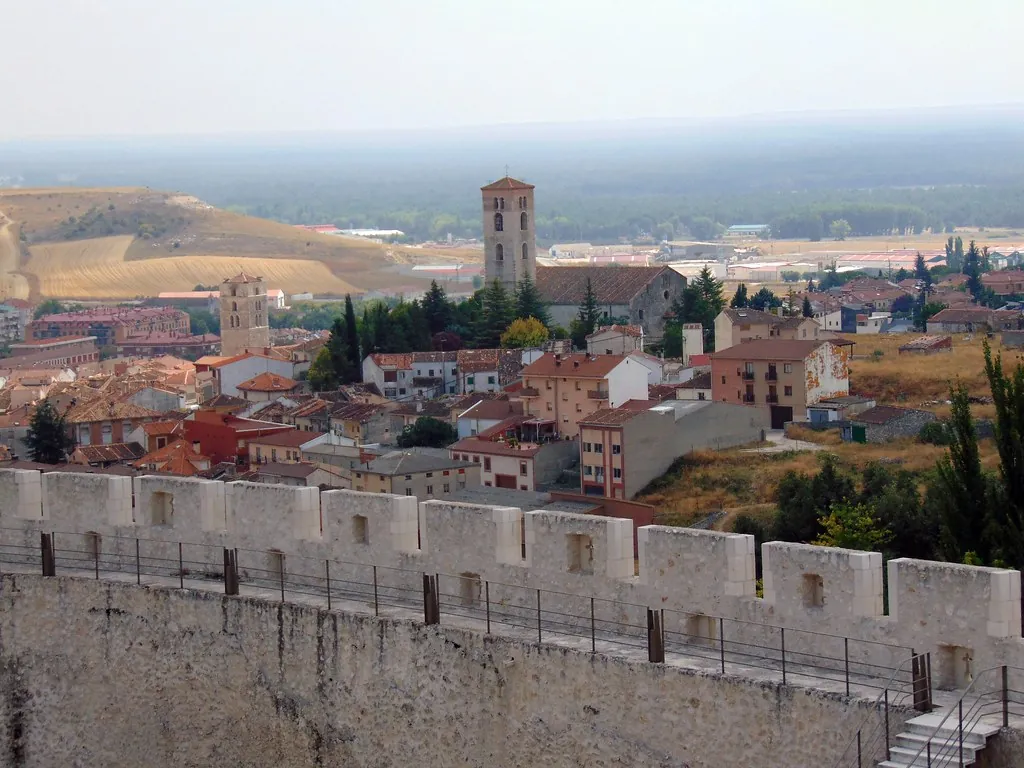
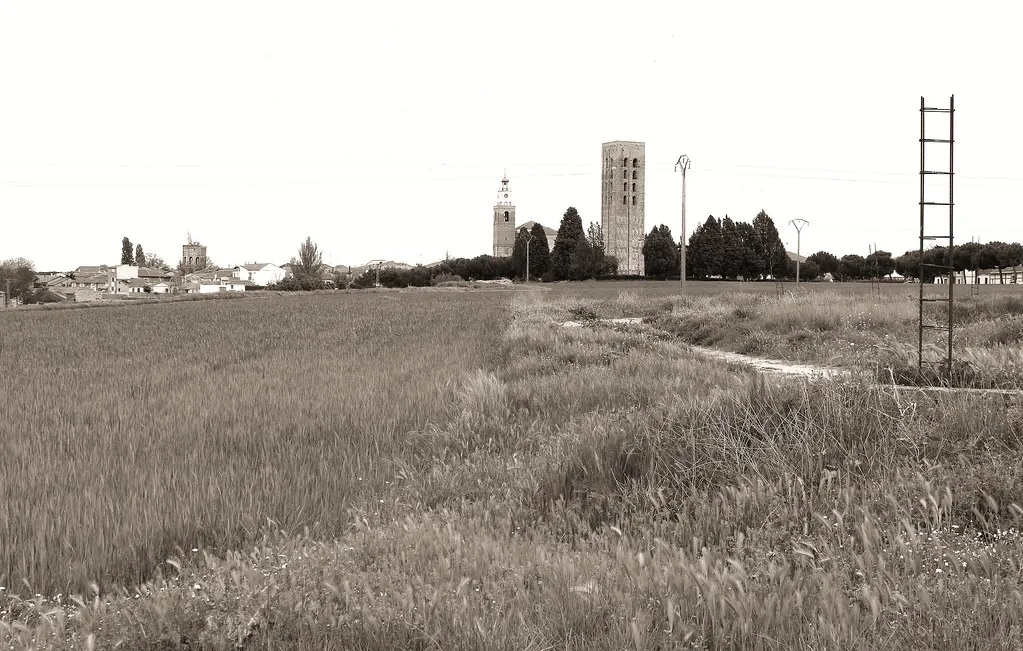
Vista aérea de Samboal
Instituto Geográfico Nacional · CC-BY 4.0 scne.es
Castilla y León · Cradle of Kingdoms

Samboal

The resin smell hits before you see the place. Step out of the car at 794 m and the air is sharp with pine, as though someone has up-ended a bottle...

459 inhabitants · INE 2025
794m Altitude

Why Visit

Church of San Baudilio (Mudéjar) Mudéjar route

Best Time to Visit

summer

San Baudilio Festival (May) mayo

Things to See & Do
in Samboal

Heritage

  • Church of San Baudilio (Mudéjar)
  • Pine forests

Activities

  • Mudéjar route
  • Walks through the pine forest

Festivals
& & Traditions

Fecha mayo

Fiestas de San Baudilio (mayo)

Las fiestas locales son el momento perfecto para vivir la autenticidad de Samboal.

Full Article
about Samboal

In the Carracillo region; noted for its large Mudéjar church.

Ocultar artículo Leer artículo completo

The resin smell hits before you see the place. Step out of the car at 794 m and the air is sharp with pine, as though someone has up-ended a bottle of turpentine across the meseta. Samboal doesn’t announce itself with spires or postcard plazas; it simply materialises between two folds of forest, 459 souls wrapped in stone, adobe and silence.

This is Castilla’s quiet quarter, forty minutes north-west of Segovia city and light-years away from its tour buses. No souvenir stalls, no weekend craft market, not even a café for a mid-morning cortado. What you get instead is an hour-by-hour demonstration of how life functioned before smartphones began to schedule leisure: bread ovens still warm at dawn, corrals that once held sheep now used as wood stores, and a church bell that rings only when someone remembers to pull the rope.

A village that keeps its doors closed—until you knock

Stone houses line the single main street, their wooden doors the colour of weathered railway sleepers. Many stay shut; second-home owners from Madrid arrive sporadically and locals work the fields or the pine plantations. Knock politely at the parish church and a neighbour will usually fetch the key. Inside, the nave is plain lime-wash and filtered light, the only flourish a 17th-century crucifix whose paint has faded to the shade of dried blood. Expect nothing baroque; the art here is in the timber trusses, hand-hewn and still carrying carpenters’ marks.

Wander the back lanes and you’ll spot potros de herrar—stone blocks with iron rings where horses once stood to be shod—now used as plant stands. Adobe walls bulge like well-proofed loaves; when they crack, owners patch them with fresh mud rather than cement. It’s domestic upkeep carried out in public view, a slow-motion renovation project that doubles as village theatre.

Forest tracks made for wandering boots

Samboal sits inside the Tierra de Pinares, one of Spain’s largest continuous pine belts. The forest is neither national park nor nature reserve, just everyday working land where loggers and mushroom hunters share the paths. Signposting is minimal, but the tracks are wide enough for a tractor and almost impossible to lose. A 30-minute stroll east brings you to the Arroyo de la Vega, a seasonal stream lined with broom and wild rose. Continue another hour and you’ll reach the ruins of an old resin-workers’ camp: rusted distilling tanks and a stone chimney now inhabited by blue tits.

Autumn turns the under-storey into a flea-market of fungi. Ceps, saffron milk-caps and charcoal burners appear after the first October rains. Locals carry wicker baskets and opinel knives; visitors should register for a free day permit online (Castilla y León forestry website) and stick to the two-kilo personal limit. Even if you never slice a single mushroom, the hunt is a legitimate excuse to loiter under the canopy, ears tuned to the distant bark of a roe deer.

Where to lay your head—and why you’ll need supplies

Accommodation is limited to a handful of self-catering houses. The pick is Casa de los Siete Lagos, a detached stone cottage with fibre broadband strong enough for Zoom, though you may feel guilty wasting the silence on virtual meetings. Price hovers around €90 a night for two, minimum stay two nights. Bring groceries: the village shop closed five years ago when the owner retired. The nearest supermarket is a 10 km drive to Arévalo, a small market town whose Thursday morning produce stalls stock excellent morcilla and sheep’s-milk cheese wrapped in walnut leaves.

There are no restaurants in Samboal itself. Lunch options within a fifteen-minute radius include Asador de Arévalo (order the cochinillo for two with crackling that shatters like thin ice) or the simpler Bar Segovia where a three-course menú del día costs €12 and the garlic soup arrives with a poached egg bobbing in the centre. Both close on random weekdays; telephone before you set off or risk reheating chorizo in your rental kitchen.

High-summer heat and winter white-outs

May and late-September are the sweet spots: daytime temperatures hover around 22 °C, nights cool enough for a jumper. July and August can top 36 °C; the forest offers shade but also pine-processionary caterpillars—check dogs’ paws for the irritant hairs. January often brings snow flurries that melt by noon, though access is rarely cut off. The A-6 motorway is kept clear, but the final 6 km of local road can ice over; carry chains if you’re arriving after dark.

How to arrive without tears

Fly to Madrid-Barajas, pick up a hire car and head north-west on the A-6. After 90 km fork onto the AP-51 towards Arévalo, then take the CL-601 for 10 km before turning off on the CU-101. Total driving time is roughly 1 h 40 min, cheaper than the train-and-taxi combo and infinitely more flexible. Public transport does exist on paper—a twice-weekly bus from Madrid’s Estación Sur—but it deposits you in Arévalo at 14:00 with no onward link. Taxi drivers refuse the short hop unless pre-booked, and even then charge €25 for what the odometer insists is 9.8 km.

The honest verdict

Samboal is not a destination for tick-box tourism. Stay a single day and you might wonder why you bothered; stay three and you’ll find yourself adjusting to a slower metabolic rate, waking with the woodpeckers and sleeping once the Milky Way has climbed over the pines. The village rewards patience more than curiosity. Bring walking boots, a paperback you don’t mind abandoning for mushroom pamphlets, and enough provisions to avoid emergency trips to Arévalo. Treat it as a base camp rather than a highlight and the surrounding forest will repay the effort with a quiet that lingers longer than any souvenir.

Key Facts

Region
Castilla y León
District
Tierra de Pinares
INE Code
40176
Coast
No
Mountain
No
Season
summer

Livability & Services

Key data for living or remote work

2024
Connectivity5G available
Housing~5€/m² rent · Affordable
CoastBeach nearby
Sources: INE, CNMC, Ministry of Health, AEMET

Official Data

Institutional records and open data (when available).

  • IGLESIA DE SAN BAUDILIO
    bic Monumento ~1.1 km

Planning Your Visit?

Discover more villages in the Tierra de Pinares.

View full region →

More villages in Tierra de Pinares

Traveler Reviews