Full Article
about San Miguel del Arroyo
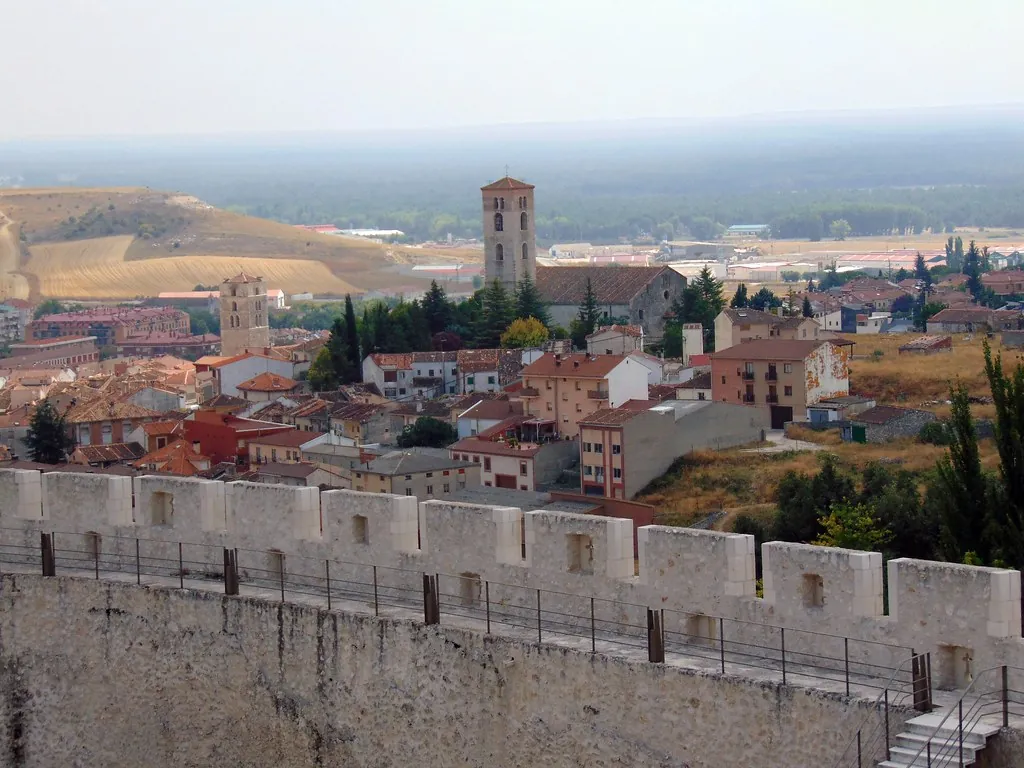
Charming municipality in a pine-forest area, noted for its two churches and traditional architecture.
Hide article Read full article
A quiet start in Tierra de Pinares
Early in the morning, when cool air still drifts down from the pine woods, the square of San Miguel del Arroyo sits almost silent. A door opens somewhere, footsteps echo briefly, then fade. The church of San Miguel faces the open space, its square bell tower outlined against a pale winter sky that often breaks into a washed-out white here. It is not a large building. The stone carries the muted tone shaped by years of wind across the Castilian plateau.
Talking about tourism in San Miguel del Arroyo really means talking about a pause. The village lies around 25 kilometres from Valladolid, within the area known as Tierra de Pinares, where the horizon is defined by pine forests and open fields. Just over six hundred people live here, and the pace reflects a place where the seasons are still clearly felt.
The church and the village centre
The parish church has stood at the centre of the municipality for centuries. Its current form seems to reflect a series of extensions and alterations from different periods. Inside, there are wooden altarpieces darkened by time and by the smoke of candles from long ago. Nothing grand or showy, but the kind of interior where wood creaks slightly as the temperature shifts.
Around it, the streets are short and gently sloping. Some houses combine adobe with fired brick, and large doorways are common, originally built for carts or storing tools. Many homes hide interior courtyards that are barely visible from the street.
Those arriving by car usually find it easiest to park near the square and continue on foot. The centre can be crossed from one side to the other in about ten minutes, which gives a clear sense of the village’s scale.
Pine forests at the edge of town
A short walk from the last houses leads straight into the pinewoods. Tierra de Pinares carries a dry scent of resin warmed by the sun, especially in summer. The paths are wide, with pale sandy ground, and a layer of fallen needles softens each step.
Autumn brings more activity, with people carrying baskets through the woods. Níscalos, a type of wild mushroom, are among the most sought-after varieties in this area. Caution matters if the local species are unfamiliar. Many of those out walking have spent years in these forests and know exactly where to look.
An early start helps during that season. By mid-morning, the paths tend to fill with people moving through the same stretches of woodland.
Towards the stream and open fields
The small stream that gives the village its name runs south of the built-up area. It is not a large river, more a modest watercourse that feeds nearby vegetable plots and small parcels of land. Rural tracks cross it via simple bridges made of stone or concrete.
Beyond that point, the landscape opens out. Fields of cereal crops stretch across the terrain, the soil changing with the agricultural cycle, and lines of pine trees mark the distance. Windy days bring a constant sound from the treetops, a steady background presence across this part of the province.
Many residents still maintain a connection to the land. At the same time, it is common for part of the population to work in Valladolid and return to the village at the end of the day.
Old routes and livestock trails
One of the historic drove roads used for centuries by transhumant flocks passes through the municipality. These routes, known as cañadas, once guided seasonal livestock movements across Spain. Today, this one appears as a wide, fairly flat path that can be followed on foot or by bicycle without much difficulty.
Stone markers and traces of its pastoral past remain visible along the way. A quiet walk here makes it easy to picture flocks of sheep moving across the pale sand, raising dust as they went.
The central hours of summer are best avoided on these routes. Shade is limited, and the sun falls directly across the open ground.
Local food and village celebrations
The cooking in San Miguel del Arroyo follows the traditions of the Castilian plateau: substantial dishes based on local ingredients. Roast lamb cooked in a wood-fired oven often features in celebrations and family gatherings. It appears alongside cured meats from traditional slaughtering practices and hearty legume stews.
The main festivities revolve around San Miguel, the village’s patron saint. They usually take place towards the end of summer or the beginning of autumn. Short processions move through the main streets, and shared meals bring people together in the square. During these days, the rhythm of the village shifts, and those who live elsewhere often return.
Light at the end of the day
Late afternoon offers a distinct moment to walk through San Miguel del Arroyo. Light drops between the red-tiled roofs and settles on the façades in tones of orange and grey. From certain streets, the dark edge of the pine forest frames the horizon.
There are no major monuments or staged scenes. What remains is simpler: wind moving through the pines, smoke rising from a chimney in winter, and the sense that time here moves a little more slowly.