Full Article
about Santa Cruz de Pinares
Surrounded by pine and oak forests; known for its open-air contemporary art museum (sometimes closed/private).
Hide article Read full article
A village shaped by the forest
Tourism in Santa Cruz de Pinares, in the Tierra de Pinares area of Castilla León, only really makes sense when you look first at the surrounding woodland. The village sits just over 1,000 metres above sea level, enclosed by wide stretches of resin pine. For generations, work in these forests defined local life. Resin tapping, timber and other uses of the woodland supported the economy from the 19th century through much of the 20th. That close relationship with the pine forest still explains how the place functions today.
Santa Cruz de Pinares is small, with little more than 150 residents. There is no grand historic centre or complex street plan. Instead, the layout is simple: short streets, houses built from stone mixed with adobe, and practical buildings tied to rural work. It is a place where the wider landscape carries more weight than the village streets themselves.
Buildings at the centre of village life
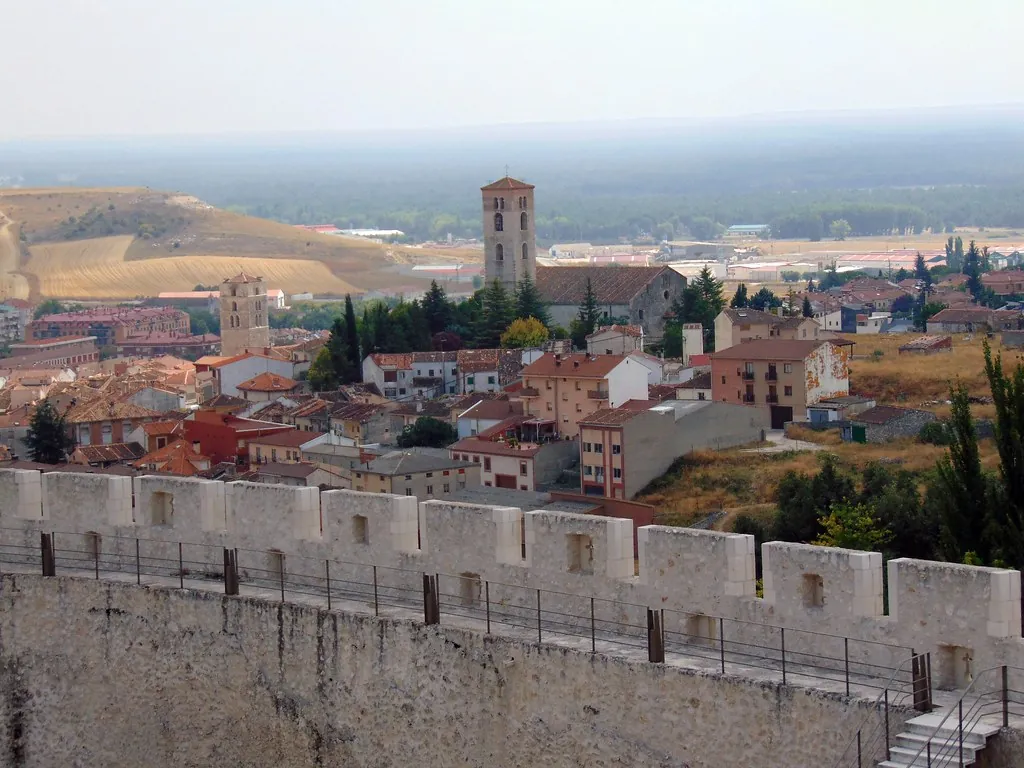
At the heart of the settlement stands the parish church, dedicated to the Santa Cruz. It occupies a central position among the houses and acts as a visual anchor for the village. The building is modest, constructed in masonry and topped with a simple bell gable. It does not aim for elaborate architectural detail, which is common in villages across this part of Spain, but it remains an important reference point in everyday life.
A few kilometres away lies the hermitage of San Blas. Its origins are traditionally placed in the early modern period, probably around the 16th century, although what can be seen today reflects later alterations. The hermitage continues to be linked to local religious celebrations, maintaining a role that connects past and present practices.
The pine forest and the resin trade
The landscape around Santa Cruz de Pinares is fairly uniform at first glance. Gentle hills stretch out in all directions, covered by resin pine. This type of forest helps explain everything from traditional economic activity to the layout of paths and tracks that cross the area.
Resin extraction was once a common occupation throughout the region. Workers would cut into the bark of the trees to collect sap, which was then processed for different uses. Even today, traces of that work remain visible. Many pines still bear the marks of those cuts, and there are remnants of old forestry structures scattered through the woodland. For anyone interested in the history of resin tapping, the landscape itself provides direct evidence, almost like an open record of the trade.
The forest is also home to wildlife typical of this environment. Roe deer are not unusual, and signs of wild boar can often be found on the ground. Overhead, birds of prey such as the goshawk or the red kite appear regularly, although spotting them depends on timing and how quiet the surroundings are.
Walking through working woodland
A network of forest tracks begins right at the edge of the village. These are not purpose-built tourist trails but working routes used to manage the woodland. Because of that, they tend to be wide and follow gentle gradients, making them accessible for walking or cycling without much difficulty.
The network extends over a large area and, in some sections, signage is limited. Anyone planning longer routes should take a map or GPS to avoid losing their way among the many intersecting paths.
Autumn brings a noticeable change in activity. The pine forest attracts people interested in mushrooms, searching for níscalos, setas de cardo and other species that grow in this environment. As in any mushroom-rich area, caution is essential. Only species that are clearly recognised should be collected.
Local celebrations and seasonal rhythms
The main festivities in Santa Cruz de Pinares take place at the beginning of September, in honour of the Santa Cruz. These are closely tied to the local community and to those who return to the village during those days. Religious events form part of the programme, along with processions and activities organised by local associations.
At other times of year, particularly in spring, small-scale initiatives are sometimes arranged around the forest or the history of the area. These are modest in size and strongly connected to the rhythms of local life rather than to large-scale tourism.
Practical notes for visiting
Santa Cruz de Pinares can be explored quickly if focusing only on the village itself. The main interest lies in heading out into the surrounding pine forest rather than staying within the built-up area.
Services within the village may be limited depending on the time of year, which is typical for a place of this size. Anyone planning to spend the day walking through the nearby woodland should come prepared. The area is extensive and generally quiet, and that quietness is part of what defines Santa Cruz de Pinares.