Full Article
about Tudela de Duero
A notable town encircled by a bend in the Duero; known for its asparagus and natural setting.
Hide article Read full article
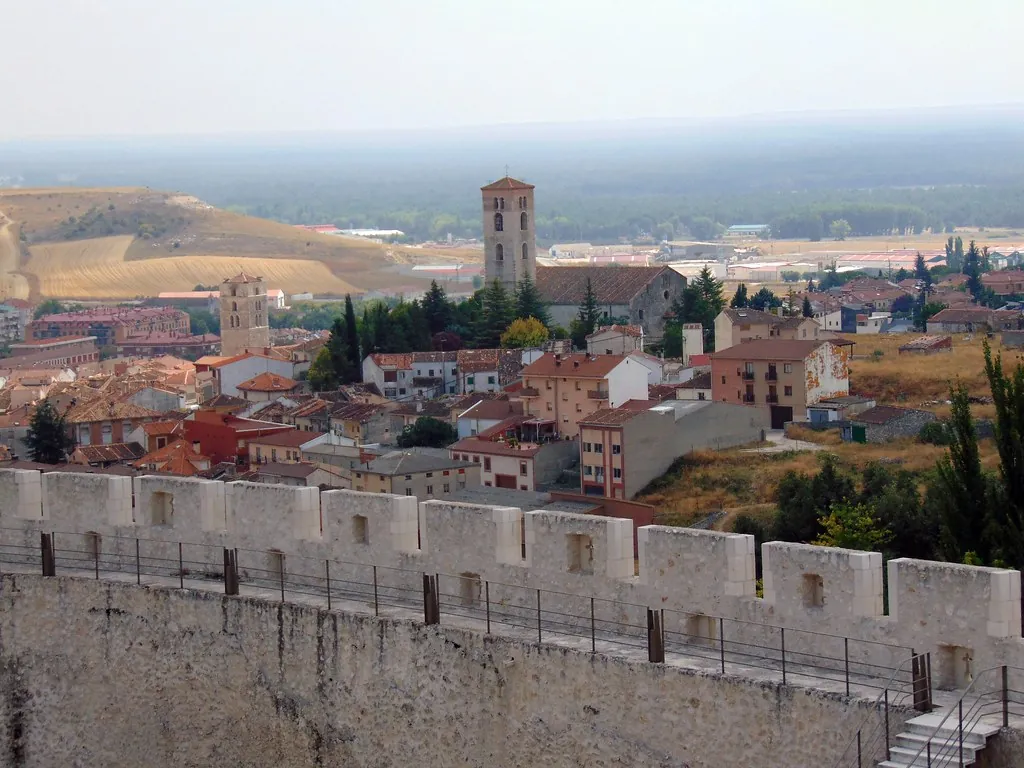
At seven in the evening, standing on the bridge over the Duero, the air carries the scent of damp soil and raw sugar. Below, in the wide bend of the river, reeds brush the surface with a steady murmur when the wind picks up. Now and then a lorry loaded with beetroot passes along the nearby road, leaving behind a sweet note that feels particular to this part of Valladolid in autumn. From this vantage point, the square, solid tower of the church rises above the rooftops, like a watchman that has spent centuries observing the same curve in the river.
The River That Turns the Corner
Tudela de Duero exists because the river chose to bend. Here the Duero draws a broad curve, creating a fertile strip of land almost encircled by water. The market gardens explain it better than any history book: dark soil, old irrigation channels, plots laid out according to the rhythm of the river.
On the nearby hills there were very early settlements. La Mambla, often mentioned, dates back to the Bronze Age. The settlement recognised today, however, took shape in the Middle Ages. Documents from the 13th century already refer to the town in connection with Valladolid. From that period remain the outlines of the old quarter and the church of Nuestra Señora de la Asunción, whose tower still defines the skyline.
It is not a slender spire built to impress. The tower is compact and austere, constructed in sober stone with durability in mind.
A Town Bound to the Water
In Tudela de Duero the Duero is more than a scenic backdrop. It sets the pace of daily life. Afternoon walks follow the riverbank. Anglers head down early with their rods. Poplar leaves rustle when the wind moves through the valley.
Older residents recall stories of floods and heavy storms that altered the course of the water for hours at a time. In river towns such events are spoken about as though they happened yesterday. What endures is the connection with the orchards and the damp earth that surrounds the built-up centre.
Walk towards the riverbank as the day begins to fade and the light slips between the trunks of the poplars. The water takes on a shifting tone somewhere between green and copper. The curve of the river becomes more apparent at that hour, as if the Duero were deliberately circling the town at an unhurried pace.
From certain points along the paths beside the water, the full meander is visible. Traffic from the distant motorway can still be heard at times, but so can birds returning to the riverside trees. The sense of proximity to Valladolid does not erase the slower rhythm imposed by the river’s bend.
September and the Sound of the Peñas
The atmosphere changes at the beginning of September. The patron saint festivities fill the streets with music, brightly coloured T‑shirts and charangas, the lively brass bands typical of Spanish celebrations, audible from almost any corner of town. Among the best-known events are the encierros taurinos, traditional bull runs that have been part of local life for generations.
Early in the morning, before the heat intensifies, people gather along the wooden barriers set up for the occasion. Small groups form as neighbours talk among themselves. The smell of freshly made coffee mingles with churros and the first wood fires being lit for grills.
Those who prefer to observe rather than step into the thick of it can find space in the Plaza Mayor. As daylight softens against the façade of the church of Nuestra Señora de la Asunción, the stone shifts from grey to gold within minutes. The square becomes a place to watch rather than participate, with the tower above acting as a fixed point while the noise of the peñas, the festive groups that animate the celebrations, ebbs and flows through the surrounding streets.
What the Land Provides
Food in Tudela de Duero reflects what the surrounding countryside yields. Lechazo, roast suckling lamb typical of Castilla y León, and cochinillo appear on tables alongside vegetables from the market gardens. Wine from the Ribera del Duero, produced in nearby vineyards, accompanies many meals. In the mornings, the smell of wood-fired ovens lingers in several streets.
Calle Real functions as a kind of backbone for the town. Early in the day, chairs scrape against terrace floors and conversation begins without hurry. Older residents discuss the newspaper. Teenagers cycle past on their way to secondary school. Someone is always talking about the year’s harvest, whether beetroot, cereals or vines. The agricultural cycle is present in everyday conversation, just as it is in the fields beyond the houses.
The presence of beetroot lorries on the roads in autumn is a reminder that this is an agricultural landscape as much as a residential one. The sweetness in the air is not imagined. It drifts in from the surrounding fields and processing plants that define this part of the province of Valladolid.
When to Come, Where to Walk
Autumn is often a good time to visit. The riverside groves along the Duero turn yellow. The grape harvest has recently taken place. The air carries the scent of must from wineries in the area. Summer can be intensely hot at midday, so it makes sense to move about early or later in the day.
For walking, the long-distance footpath GR‑14 passes close to the town, following the course of the Duero through vineyards, poplar groves and tracks of reddish earth. As distance from the urban centre increases, noise recedes. What remains is the wind in the leaves and the slow movement of water around the river’s bend.
From several stretches of the path the entire meander comes into view. Sit there towards sunset and the scene resolves into layers of sound and colour: faint traffic in the distance, birds settling in the trees, the steady presence of the river. The church tower continues to mark the same point in the sky where the sun drops behind the Duero.
Returning to the town as evening falls, the smell of warm bread and wood smoke often hangs in the air. From almost any street, the tower of Nuestra Señora de la Asunción remains visible. It has watched the river turn for centuries and still anchors the place as daylight fades.