Full Article
about Veganzones
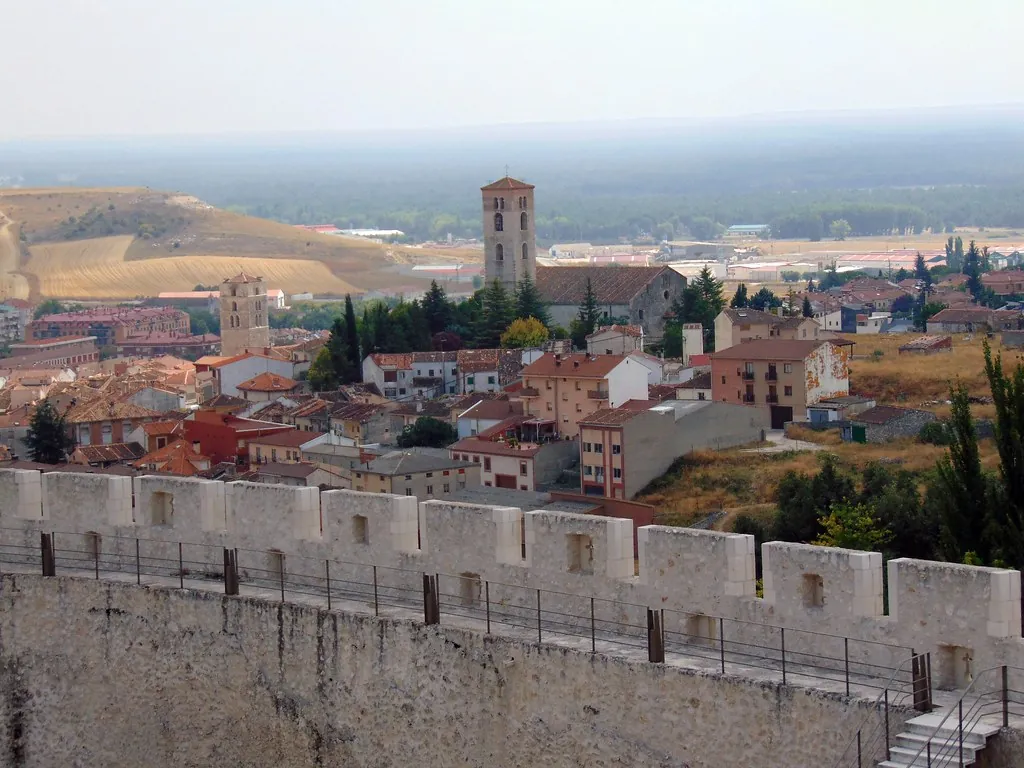
Town in the Cega valley; noted for its church and palace
Ocultar artículo Leer artículo completo
The church bell strikes noon, yet nobody hurries. A tractor idles outside the only bar, its driver sipping a caña while discussing rainfall figures with the barman. At 915 metres above sea level, Veganzones moves to a slower rhythm than the coastal resorts most British visitors know. The air carries the sharp scent of pine resin, and the temperature sits a good five degrees cooler than Madrid, just 88 kilometres south.
This is Tierra de Pinares, a high plateau where resin-tapped pines stretch to every horizon. The village itself takes five minutes to cross on foot—ten if you stop to read the faded election posters still taped to lampposts. What it lacks in size, it repays in clarity: night skies dark enough for Orion to shine, footpaths where your only company will be jays and the occasional deer, and a silence so complete you can hear the wind move through wheat stubble.
Walking Among Ghosts and Pines
No glossy brochures mark the way. Instead, dusty forest tracks lead north from the plaza, passing abandoned resin collectors' huts whose walls still ooze amber stains. During the 1940s these woods produced Spain's turpentine; today the scars on ancient trunks are the only museum you'll get. Follow any track for twenty minutes and mobile reception dies, a useful reminder to download an offline map before setting out.
Spring brings the best walking: daytime highs around 18 °C, wild marjoram underfoot, and enough birdsong to drown what little road noise exists. In summer the mercury can touch 30 °C, but shade is plentiful and the bar keeps ice creams for overheated hikers. Autumn belongs to mushroom hunters who appear at dawn with wicker baskets and guarded expressions; ask before photographing them—some treat productive spots like state secrets. Winter strips the landscape to its bones. Frost lingers until eleven, and north-westerlies whip across the plateau; bring a windproof layer even for short strolls.
The most straightforward loop (6 km, two hours) heads east to the ruins of Ermita de San Juan, a sixteenth-century chapel roofed only by ivy. A stiffer option (12 km, four hours) climbs gently to the Puerto de la Quesera, a pine saddle at 1,050 m where vultures ride thermals above your head. Neither route is way-marked; cairns appear sporadically, but count on your own navigation. Stout shoes suffice—boots are overkill outside midsummer when the ground bakes hard as brick.
What Passes for Civilisation
Veganzones' single plaza hosts the essentials: a stone church whose door is painted the same ox-blood red as half the farm buildings, a pharmacy open three mornings a week, and Bar Centro. The latter doubles as café, corner shop and gossip exchange. Coffee costs €1.20, tapas are handed over without asking if you look foreign, and the television murmurs bullfighting results whether anyone watches or not. Don't expect a menu; the options are whatever María has cooked today. If she's roasting a lamb shoulder, say yes. The meat arrives simply—no chimichurri, no spice rub, just salt, garlic and wood-smoke. Vegetarians should order the sopa castellana, a hearty bread-and-garlic soup closer to British broth than anything Andalusian.
There is no supermarket. A mobile grocer parks by the church on Tuesday and Thursday mornings; his van stocks UHT milk, tinned tuna and fruit that wouldn't pass muster in Waitrose. Plan ahead: the nearest proper shops are in Cuéllar, fifteen minutes down the CL-601. Fill your hire car there rather than gambling on the village's solitary pump, open erratically and card-only when it is.
Accommodation hasn't reached boutique levels. Most visitors base themselves in Cuéllar's Hotel ELE Acueducto (doubles €65, pool essential in July) or the converted palace Exe Casa de los Linajes (doubles €85, stone corridors echo like a cathedral). One rural cottage in Veganzones itself—Casa Rural El Pinar—sleeps four from €90 per night. The English-speaking owner leaves a bottle of local Ribera del Duero on the table and directions to the nearest walking trails. Book early for May and October; mushroom season pulls madrileños north at weekends.
Wine, Wheat and Weekend Woes
Bodegas Veganzones, two kilometres south of the village, offers tastings by appointment (€15, 24 h notice). Their 2018 Crianza scooped silver in Peñín, Spain's wine bible, yet the showroom is a barn with a trestle table. Expect big reds—14 % alcohol is entry level—and zero spittoons. The winemaker speaks fluent vineyard English learned during a harvest in Stellenbosch, so you'll get the technical low-down if you want it. Buy a case and they'll freight it to the UK for €45, cheaper than excess baggage and considerably more interesting.
Come August the population quadruples as emigrants return for the fiesta. Brass bands play until three in the morning, teenage cousins parade in matching T-shirts, and every balcony sprouts plastic bunting. It's the liveliest week of the year—and the noisiest. Light sleepers should book accommodation outside the village or join in and accept the consequences. Outside fiesta time, evenings revolve around the plaza bench circuit: pensioners on the north side, mothers with prams on the east, teenagers circling on scooters until the streetlights blink off at 1 a.m.
The Catch
Public transport is non-existent. A pre-booked taxi from Madrid-Barajas costs €130–150; car hire runs €35 per day plus fuel. In winter the CL-601 can ice over; carry chains December through February. English is rarely spoken—download Spanish offline. Phone signal is patchy in the woods, so tell someone your route. Finally, adjust aesthetic expectations: not every façade is restored. Some houses slump behind waist-high weeds, their timbers the colour of wet cardboard. These ruins aren't picturesque; they're evidence of rural decline. Yet they also explain why you can park for free, walk without crowds and hear nothing but your own breathing.
Leave before dawn on your final morning and you'll see Vega de la Cruz, the local hunting reserve, silhouetted against a sky gradually turning from ink to bruised purple. The village lights fade behind as the road drops towards the motorway, pine scent replaced by diesel and the impatient rush of the A-1. Madrid's ring road is an hour away; civilisation, in every sense, considerably closer.