Full Article
about Viana de Cega
A residential municipality surrounded by pine forests and bordered by the Cega River; ideal for living and enjoying nature.
Hide article Read full article
A village shaped by water and pine
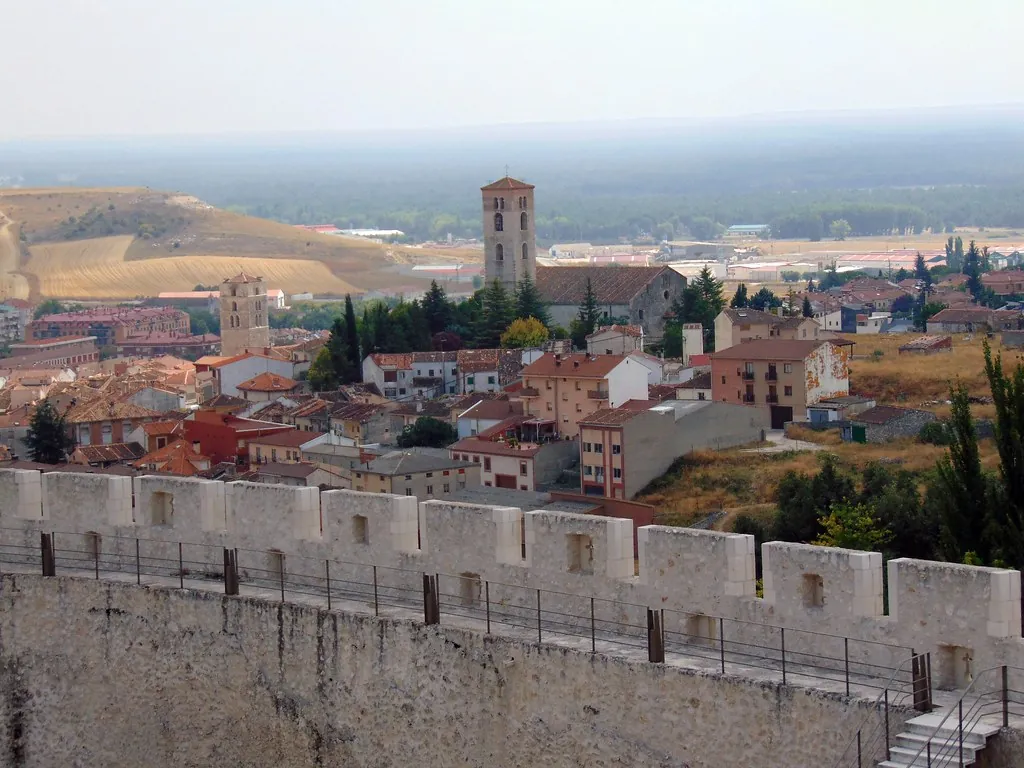
Any account of tourism in Viana de Cega begins with the river. The Cega flows down from the Segovian mountains and, on reaching this point, curves into a broad meander before continuing towards the Duero. The village grew along that edge, between water and pine forest, and still reflects that setting today.
With around 2,282 inhabitants, Viana de Cega keeps a low, horizontal profile. Most houses rise just one or two storeys, built in adobe and topped with curved roof tiles. This is not a place defined by grand monuments. It is, instead, a working agricultural village that has adapted over time to the rhythms of the river and the fertile floodplain, known locally as the vega.
The wider area, Tierra de Pinares, is easy to recognise. Sandy soil stretches beneath extensive pine woods, a landscape that has long shaped local life. For centuries, the economy combined farming with the use of pine resources: timber, resin and small plots cultivated near the riverbanks. That balance between field and forest still defines the approach to the municipality.
The river that gave it its name
The Cega is not a particularly large river, yet here it has always been enough. It determined where crops could grow, where livestock could graze, and where people chose to settle. The village centre sits slightly above the riverbank, a practical decision in a valley that can flood during winter months.
Old maps already show a fairly ordered layout. Straight streets converge towards the main square and the church. This was not the result of any grand urban plan, but of practical needs: carts moving through, livestock passing, and easy access to surrounding farmland.
The older houses still display the local style clearly. Walls made of rammed earth or adobe are often reinforced with brick, and narrow balconies overlook the streets. Whenever possible, façades are oriented to catch the sun. Winters here can be sharp, and every bit of warmth matters.
San Miguel and the life of the square
The church of San Miguel Arcángel occupies the most visible point in the village centre. The current building dates from the 16th century, likely built over an earlier structure. From the outside it is restrained: a single nave and a tower rising above the rooftops.
Inside, several devotional sculptures are preserved. Among them is a figure of Christ known locally as Cristo de la Misericordia, traditionally carried in procession during Lent. It is sometimes linked to workshops associated with 16th-century Castilian sculpture, although that attribution is not always clearly documented.
More than its size or decoration, the church matters for its role in daily life. The square and main streets are organised around it, and for centuries it served as a focal point for announcements. Decisions affecting the village, upcoming festivities or changes in agricultural work were all communicated here, making it a central meeting point as much as a religious space.
A solitary building among the pines
On the outskirts, surrounded by pine woods, stands a large building that many locals still refer to as the sanatorio. It was constructed in the mid-20th century, at a time when such centres were often placed in areas with dry air and distance from urban centres.
For years it operated as a healthcare facility linked to respiratory illnesses. As medical treatments evolved, it lost its original purpose and its use has shifted over time. The structure remains, slightly apart from the village, marking a lesser-known chapter in the area’s history.
Its presence adds a different layer to the landscape, one that contrasts with the agricultural and forestry traditions that otherwise dominate.
Food tied to the land
The cooking in Viana de Cega follows the traditions of the Valladolid countryside. Dishes are built around what the land and livestock provide. Lechazo asado, roast suckling lamb, is a staple, along with embutidos from the annual pig slaughter and aged sheep’s milk cheeses.
These foods are closely tied to farming life and the use of wood-fired ovens, which remain common in villages across the province. During local celebrations and family gatherings, the memory of the matanza, the traditional pig slaughter, still plays a role. It is not unusual to hear mention of freshly made pringue or homemade morcillas.
Meals here tend to reflect the season and the immediate surroundings rather than elaborate preparation. The emphasis is on continuity with local practices rather than reinvention.
Walking the banks of the Cega
One of the most common walks follows the riverbank. The path runs through poplars, sandy stretches and sections of pine forest. The terrain is flat and easy to cover, making it accessible without much effort. In spring, vegetation grows quickly, and the sound of the river accompanies much of the route.
Across the wider municipal area, there are also old livestock routes linked to transhumance, the seasonal movement of animals between grazing grounds. Some still retain the characteristic width of the traditional cañadas, even if they are not always clearly signposted. They remain part of the historical landscape of this part of Valladolid.
Festivities in Viana de Cega revolve around local traditions. San Miguel, celebrated at the end of September, marks the main annual event. There is also usually a romería in spring, connected to a nearby hermitage. These occasions are centred on the square and on gatherings among residents, keeping a strongly local character.
Winter brings a quieter atmosphere. The air over the vega turns cold and clear, and the riverbank is often nearly empty. Anyone walking along the Cega at that time will notice how easily sand and mud cling to footwear, a small but practical detail in a landscape shaped as much by soil as by water.
Viana de Cega lies a short distance from Valladolid and is reached by road in a matter of minutes. There is no train station, so most visitors arrive by car. Its proximity to the city contrasts with the steady, grounded pace of village life, where the river, the fields and the pines continue to set the tone.