Full Article
about Viloria
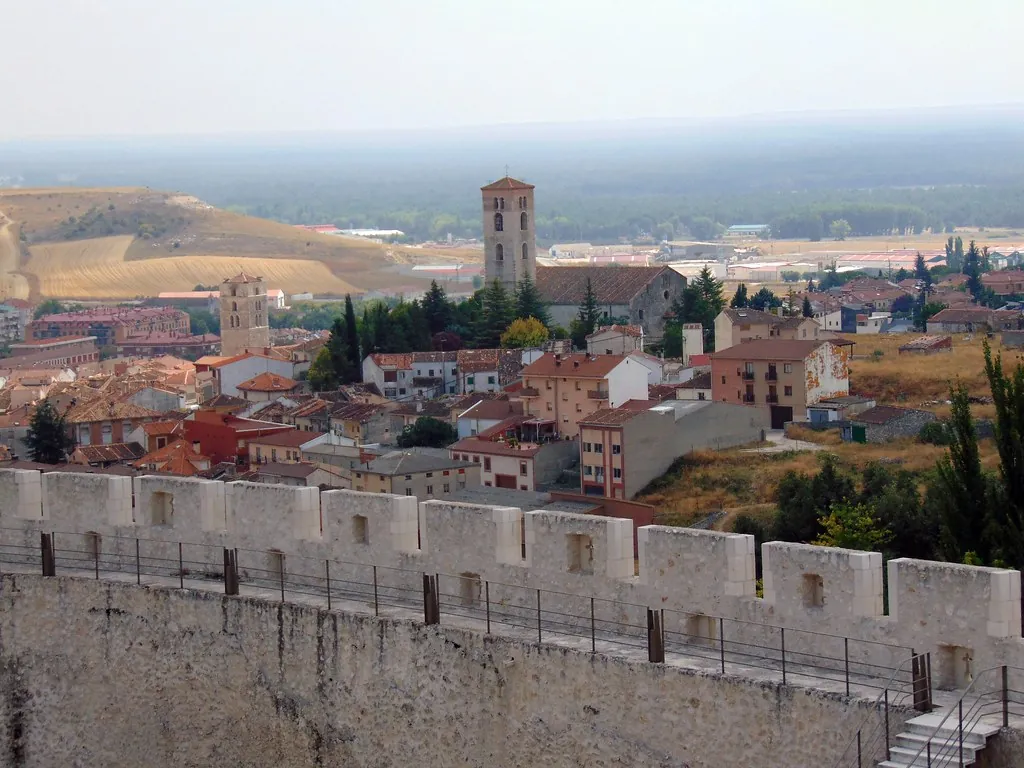
Town set on a hill with views; noted for its church and the ruins of an old castle.
Hide article Read full article
A place that explains itself quickly
Some villages take no time at all to understand. You park, walk around the square, and within minutes you have a clear sense of how things work. Tourism in Viloria feels much the same. That is not because it lacks substance, but because the village presents itself plainly, without layers or effort.
What appears here is straightforward: straight streets, houses built from stone and adobe, and the quiet typical of small settlements that settles in as soon as you move a couple of corners away from the main square. There is no attempt at staging or decoration. Instead, the impression is of seeing how many villages in the Tierra de Pinares have functioned for decades.
Viloria has just over 300 inhabitants and sits at around 860 metres above sea level. Pine forest surrounds it on nearly all sides. The parish church of San Pedro continues to anchor the centre of the village, with the usual houses gathered around it, mostly restrained in style. Many of them conceal underground cellars. In the past, these spaces were used to store wine, potatoes, or whatever the harvest provided.
Where the pine forest takes over
A glance at a map shows how closely the pinewoods wrap around Viloria. Resin pine dominates, with stone pine appearing in some areas. This landscape shapes more than it might seem at first.
Resin extraction was once an important part of local work. Some residents still continue the practice today, cutting into the trunks and placing containers to collect the resin. It is not something visible at every turn, yet a walk through the nearby woods often reveals marked trees that point to this long-standing activity.
The forest itself shifts with the seasons. Summer dries the ground, leaving it dusty underfoot. Spring changes the tone completely, bringing greener surroundings and making walks more pleasant.
Walking out from the village
The paths that lead out of Viloria are simple and unpretentious. Forest tracks, sandy stretches, and narrow routes weave between the pines. There are no major climbs or demanding terrain. This is ground suited to slow walking rather than ambitious routes.
Encounters along the way are rare. It is the sort of place where a car might pass only occasionally, sometimes not for quite a while. Early hours of the day or the approach of evening can bring small moments of wildlife. Roe deer sometimes move quietly through the open spaces between the trees, especially if the surroundings remain undisturbed.
Signposting is limited, and the routes are not laid out as formal trails. These are paths shaped by local use, the kind that have existed for years without needing adaptation.
From the pinewoods to the table
The surrounding forest also finds its way into local food. Pine nuts have long played a role in the area’s economy, particularly in years when the harvest is good. They appear in sweets and in traditional dishes from the region.
Rain brings another seasonal element: wild mushrooms. Saffron milk caps are among the most sought after here, although knowing what to pick matters. In villages across this comarca, mushroom knowledge tends to pass through families rather than through books.
Food more broadly follows the patterns of traditional Castilian cooking. These are substantial dishes, originally shaped by the needs of long working days in the countryside.
San Pedro and village life
The main celebrations in Viloria revolve around San Pedro, the village’s patron saint. They are traditionally held towards the end of June.
These are small-scale village festivities. A procession takes place, and people gather in the square. Shared meals bring together residents and those who return to the village for these days. Summer can also bring additional activities, particularly when families who live elsewhere come back for a period.
The calendar is not extensive, yet it maintains the sense of community that still defines many villages in this part of the region.
Before setting off
Viloria lies around 40 kilometres from Valladolid. The journey by road is straightforward, although the final stretches follow quieter local roads.
It helps to arrive with the right expectations. The village is small, and services remain limited throughout much of the year. That is part of its character. There is little constant activity and few organised plans.
In return, Viloria offers something that still holds firm in the Tierra de Pinares: places where daily life continues to follow the rhythms of the countryside and the surrounding forest.
Viloria does not try to impress. It is better understood through a short walk, the sound of wind moving through the pines, and the steady pace of everyday life in this part of Castilla y León.