Full Article
about Zarzuela del Pinar
In the heart of the pinelands; resin and timber tradition
Hide article Read full article
A Village That Doesn’t Try to Impress
Some places make a point of showing off. Zarzuela del Pinar is not one of them.
If you come looking for tourism in Zarzuela del Pinar, the first thing you notice is not a grand monument or an impressive main square. It is the scent of pine and the quiet of a small village where, in the morning, the loudest sounds are usually a door opening or a car passing slowly down the street.
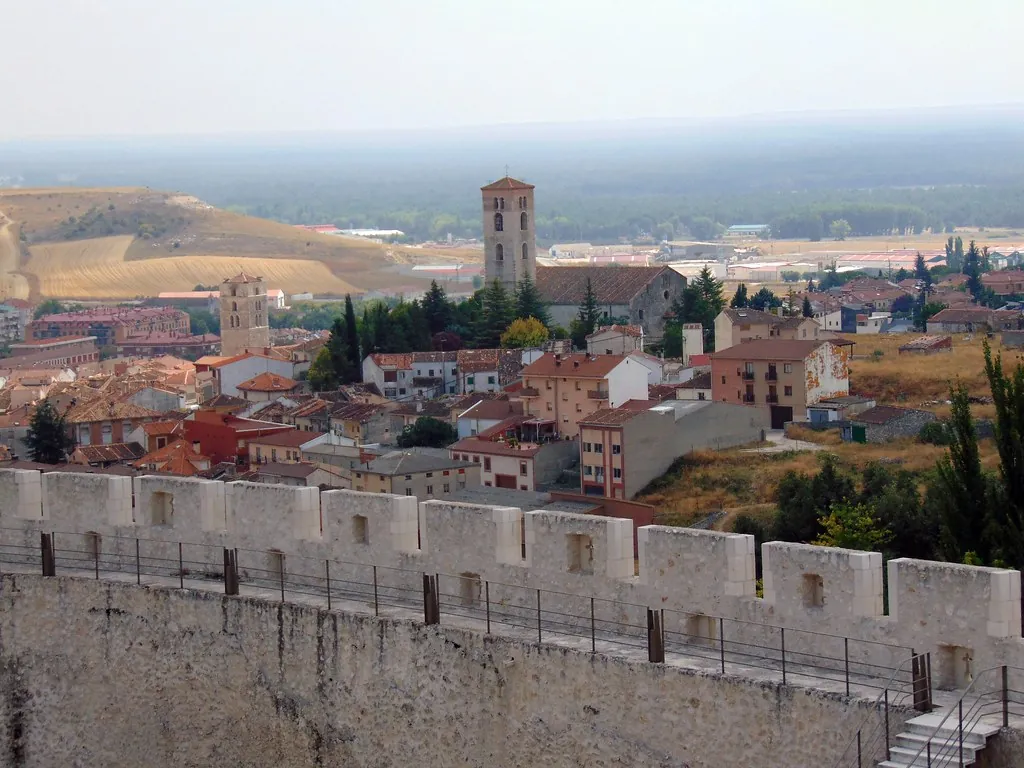
The village lies around 35 kilometres from Segovia, in the heart of the Tierra de Pinares, and has roughly 400 inhabitants. From the first walk through its streets, one thing is clear: there is more forest than urban planning. Pinewoods almost encircle the built-up area and are part of daily life rather than just a scenic backdrop.
Zarzuela del Pinar does not compete with monumental towns. There are no great palaces and no postcard-perfect Plaza Mayor. What it does offer is continuity with its surroundings. Stone, adobe and timber houses sit alongside small corrals attached to homes and modest vegetable plots. These details are a reminder that the relationship with the land remains very present here.
Marked by the Pinewoods
A glance around is enough to understand why this area is called the Tierra de Pinares, literally the Land of Pines. The forests are extensive and remarkably straight, as though laid out with ruler and set square. For centuries they have played an important role in the local economy.
The pinewoods are still used today for resin tapping and for collecting pine nuts, activities closely tied to this part of the province. At certain times of year, mushroom foragers appear in large numbers. In autumn it is common to see cars parked along rural tracks while people head off among the trees with baskets in hand. As in any mushroom-growing region, it is important to know what you are picking and to do so responsibly.
Walking through these forests is simple and quietly rewarding. There are no major slopes, so many of the tracks can be covered without much difficulty, whether on foot or by bicycle. At first the landscape may seem repetitive, tree after tree in long lines. Look more closely and details begin to emerge: open pine cones scattered on the ground, deeply textured bark, pale sandy soil between the trunks, the occasional fresh footprint after rain.
The experience changes with the light. On misty mornings the trunks line up like columns fading into the distance. Towards evening the light turns redder and the forest takes on a different tone. For anyone interested in nature photography, there is plenty to work with: winter fog, strong summer contrasts, or the ground carpeted in pine needles after a spell of wind.
The Church and Everyday Streets
Within the village itself, the most recognisable building is the parish church of the Exaltación de la Santa Cruz. It is sober in style, in keeping with many rural churches in the province of Segovia. Built in stone and largely unadorned on the outside, it does not dominate through ornament but through presence. Inside, there is a 16th-century altarpiece along with several older religious pieces that still form part of parish life.
Around it stand traditional houses, some with wooden galleries typical of this area of Segovia. These are not streets designed for sightseeing but for everyday routines. People step out to sweep their doorways, a tractor passes slowly, neighbours stop to talk on the pavement.
A slow walk also reveals small corrals, former agricultural storehouses and vegetable plots pressed up against homes. This is not a staged rural scene created for visitors. It reflects how villages like this have functioned for generations, where work, home and land have always been closely linked.
The Best Plan: Step into the Forest
If there is one clear answer to what to do in Zarzuela del Pinar, it is straightforward: head into the pinewoods.
There is no need to plan a major hiking route. Often it is enough to follow one of the tracks that leave the village and walk for a while. The terrain makes it accessible without demanding much effort, and the sense of space comes quickly.
In the early hours, when mist lingers, the trees appear one behind another in soft layers. Later in the day, as the sun lowers, the colour shifts and the atmosphere changes again. The forest feels constant yet never entirely the same.
Because the surroundings are so central to life here, the pinewood is not a side attraction. It shapes the rhythm of the place, from resin tapping to pine nut gathering and mushroom season. Spending time among the trees offers a clearer understanding of Zarzuela del Pinar than any single building could.
From Forest and Field to the Table
Local cooking makes it clear where you are. The food is based on what the surrounding land provides: lamb, pulses, traditional cured meats and, in season, pine nuts from the very same pinewoods.
There is no expectation of elaborate cuisine or unusual dishes. This is straightforward, hearty food, closely tied to what has been produced in the area over many years.
Mushroom gathering also forms part of local culture once autumn arrives. Níscalos, known in English as saffron milk caps, are probably the most sought after, although other species grow in these woods. As in any region known for mushrooms, there are usually rules and some level of oversight to prevent problems linked to over-collecting or unsafe picking.
Festivals and the Agricultural Calendar
The village calendar follows the agricultural year quite closely. In May, San Isidro is usually celebrated. As in many parts of Spain, this saint is associated with farming and the countryside. There are also patronal festivities linked to the Virgen del Pino.
These are small-scale celebrations that combine religious services, music, shared meals and plenty of conversation in the street. They reflect the size of the community and its ties to the land.
In some years, activities connected to the pinewoods or pine nut harvesting are organised, which is hardly surprising given the importance of the forest to life in the area.
A Quiet Stop in the Tierra de Pinares
Zarzuela del Pinar makes most sense when seen as a calm stop within the wider Tierra de Pinares. It is not a destination for monumental sightseeing or grand landmarks. Its appeal lies in something more understated: the steady presence of the pinewoods, the continuity of rural life and the feeling that the landscape and the village still belong closely to one another.
For travellers interested in understanding a less showy side of Castilla León, where daily life continues at an unhurried pace and the forest is part of the routine rather than an attraction, Zarzuela del Pinar offers exactly that.