Full Article
about Andavías
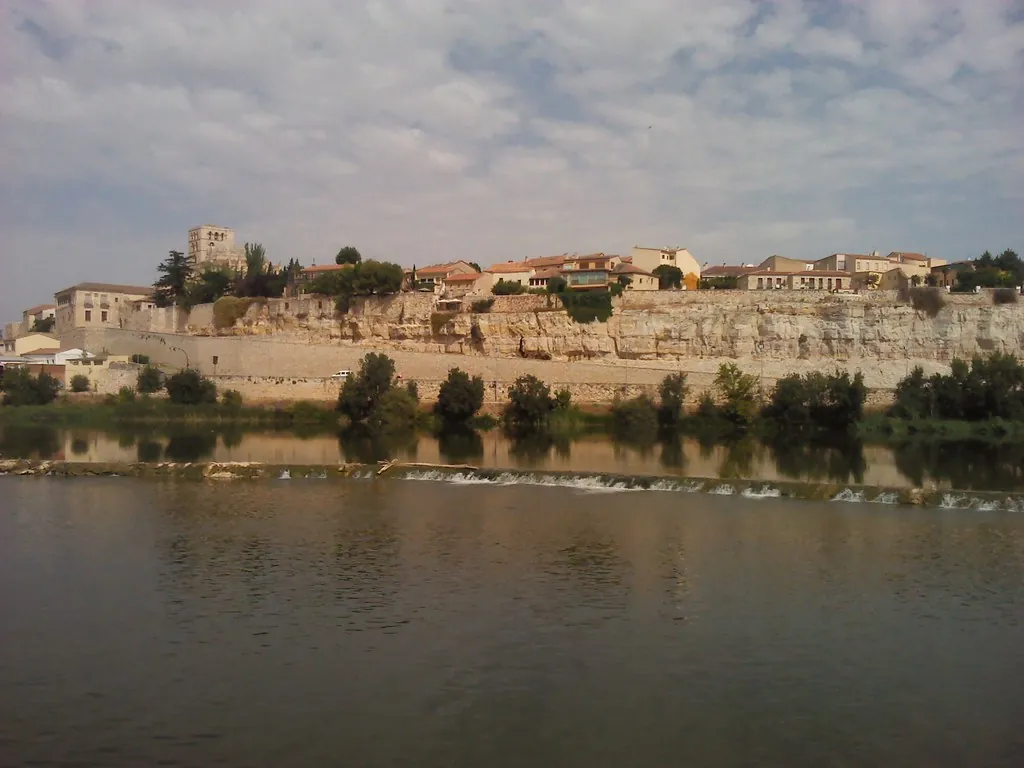
A village near the Esla reservoir with farming and livestock traditions; its proximity to the water offers riverside scenery and outdoor activities in a quiet setting.
Ocultar artículo Leer artículo completo
The combine harvester idles at the edge of a wheat field, its driver leaning out to watch a pair of Montagu's harriers circle overhead. It's late July, and the cereal sea surrounding Andavías has turned the colour of burnished brass. At 693 metres above sea level, this Castilian village sits high enough that the air carries neither the weight of the Duero valley nor the harsh bite of the northern meseta. Just the dry scent of straw and the distant rumble of machinery that hasn't changed much since the 1950s.
Most visitors race past on the A-52, bound for better-known Zamoran towns. Those who turn off at kilometre 243 find a place that refuses to perform its rural identity. The stone houses aren't renovated into holiday lets; the bodegas dug into hillsides still store wine rather than Instagram props. Even the church tower, visible from three kilometres out, shows its patchwork of medieval foundations and 18th-century repairs without apology.
The Architecture of Work
Andavías won't impress anyone hunting for architectural showpieces. The parish church of San Miguel stands at the village centre, its tower rebuilt after lightning struck in 1847, leaving a faint scorch mark still visible on the eastern stones. Inside, the altarpiece retains its original polychrome despite a botched restoration attempt in the 1970s – the gold leaf applied too thickly, now cracking like dried river mud. More interesting are the smaller details: a Romanesque capital repurposed as a holy water font, medieval graffiti of wheat sheaves carved by bored shepherds during centuries of Sunday mass.
Wander beyond the main square and the real architectural heritage emerges. Palomares – cylindrical dovecotes built from mud and straw – punctuate the fields like oversized beehives. Half stand roofless, their internal nesting shelves exposed to weather, yet colonies of rock doves still return each evening. Better preserved examples sit beside farmhouses, their entrance holes precisely sized to admit pigeons while excluding birds of prey. These weren't romantic additions but working buildings, their droppings collected for fertilizer and their young birds destined for the pot.
The village's bodegas tell a similar story of function over form. Dug horizontally into south-facing hillsides, these underground cellars maintain 14-15°C year-round – perfect for storing the robust reds once produced from local tempranillo. Most lie abandoned now, their wooden doors warped and ironwork rusted. Peer through the gaps and you'll see stone presses blackened by decades of grape skins, the air still faintly alcoholic despite twenty years of disuse.
Walking the Agricultural Calendar
The camino that circles Andavías measures exactly 7.3 kilometres, traced by agricultural tracks wide enough for tractors. Start early, before the sun clears the eastern ridge, and you'll share the path with farmers checking irrigation ditches and the occasional dog fox returning from night's hunting. The route climbs gently to 720 metres before dropping into a shallow valley where stone walls divide wheat from barley fields – subtle differences visible only during June's flowering.
Spring brings the most dramatic transformation. By late April, green shoots push through brown earth in perfect geometric rows, creating an optical illusion of higher ground where crops meet sky. Rainfall averages just 450mm annually here, making each shower a village event. Watch locals pause in the street to sniff the air, predicting duration and intensity with accuracy that shames the Met Office. Their forecasts matter – too much rain during May and the wheat develops rust fungus; too little and kernels shrivel before filling.
Summer walking requires strategy. Temperatures regularly exceed 35°C by 11am, and shade exists only where poplars grow beside seasonal streams. The solution mirrors local practice: start at 6am, rest between noon and 4pm, resume as shadows lengthen. Evening walks reward with spectacular light shows – the low sun sets wheat heads glowing like filament bulbs, while cloud formations build over the distant Portuguese mountains, visible on clear days 80 kilometres west.
What Ends Up on the Table
Food here follows the agricultural year with stubborn precision. Visit during February's pig slaughter and you'll find kitchens dominated by massive cauldrons where every fragment of a 150-kilo animal transforms into sustenance. The morcilla includes local onions grown specifically for their sweetness; chorizo gets its distinctive smokiness from oak pruned from vineyard supports. These aren't artisanal products but household provisions, made in batches large enough to last families through winter.
The village's two bars serve food that would bankrupt most British pubs at €8-12 per plate. Try the potaje de trigo – wheat berries simmered with chickpeas, spinach and the end of last year's morcilla. It tastes of earth and smoke, thickened with bread that's spent thirty seconds too long in the toaster. During autumn mushroom season, locals forage for níscalos in pine plantations ten kilometres north. The golden trumpets appear in revueltos (scrambles) that cost €6 despite requiring two hours of forest walking per handful.
Bread matters here more than wine. The village panadería produces 400 loaves daily from wheat grown within sight of the shop door. The baker, third-generation, still shapes dough at 3am using techniques his grandfather learned from French refugees during the Civil War. Buy a loaf at 7am and it crackles like autumn leaves, the crust thick enough to require serious dental work. By evening it's perfect for sopping up bean stews – timing that isn't accidental.
When the Village Wakes Up
August's fiesta transforms Andavías from working village to temporary metropolis. The population triples as emigrants return from Bilbao, Barcelona, even Birmingham. Streets fill with children who speak perfect Castilian peppered with Basque suffixes, while grandparents distribute coins for fairground rides that arrive on lorries from Zamora. The highlight isn't religious processions but the Saturday paella – 800 portions cooked in a pan three metres wide, stirred with oars repurposed from fishing boats on the Esla river.
September brings the cereal harvest festival, more subdued but equally telling. Modern combines work through the night, their headlights creating UFO-like formations across darkened fields. The village maintains an ancient tradition: the last sheaf of wheat gets tied with red ribbon and placed above the church door, ensuring next year's crop through superstition rather than science. It's replaced each harvest, the previous year's bundle distributed to the oldest resident – currently 94-year-old Dolores who remembers when threshing involved twenty mules and an entire village.
Winter visits reveal a different rhythm. January fog frequently blanks the valley, reducing visibility to metres and creating acoustic oddities – conversations carry from invisible neighbours, tractor engines sound like they're operating inside your skull. The village bar fills with farmers debating EU subsidy reforms over cards, while television bullfights flicker unwatched above the bar. It's monotonous, occasionally claustrophobic, utterly authentic.
The nearest accommodation sits 18 kilometres away in Benavente – Hotel Posada de las Misas, converted from a 16th-century priests' residence at €65 per night. Andavías offers no hotels, no rental cottages, no tourist office. Come prepared with Spanish sufficient to order beer and explain you're walking the caminos. Stay long enough to watch weather cross the valley, to understand why locals check wind direction before hanging washing, to recognise that real places don't need marketing departments. Just don't expect anyone to thank you for visiting. They're too busy getting on with living.