Full Article
about Zamora
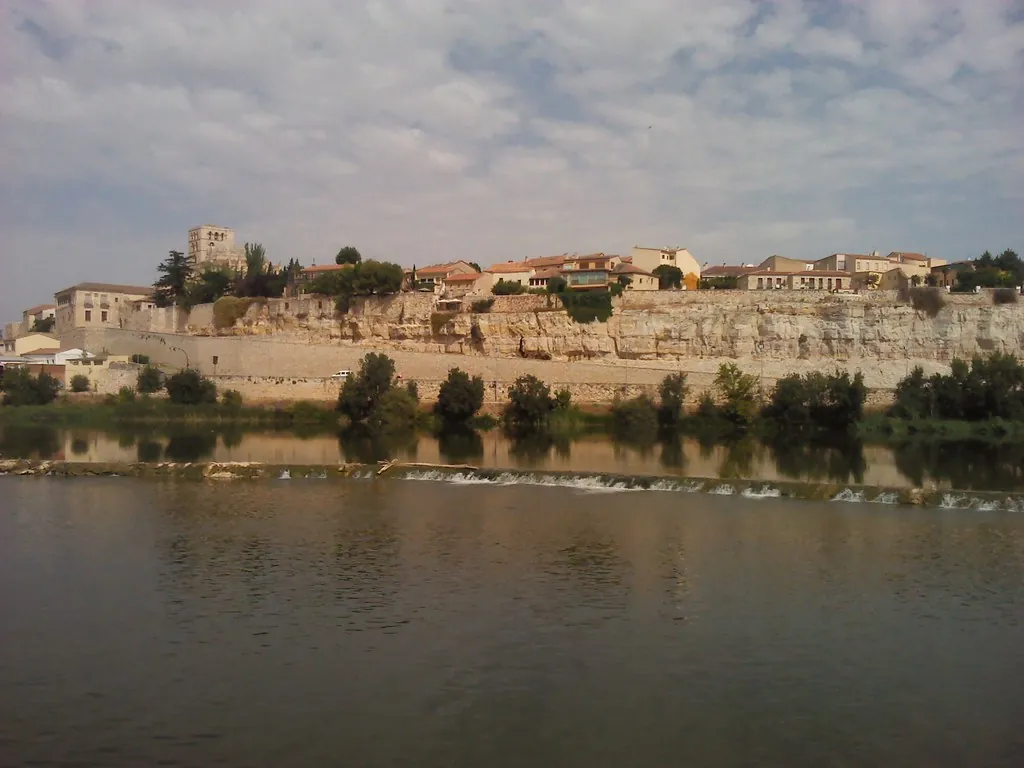
Capital of the province, known as the ultimate Romanesque city; its cathedral stands out, and the Duero River skirts the historic center, filled with medieval churches and a quiet atmosphere.
Ocultar artículo Leer artículo completo
Dawn over the Duero
At seven o’clock the river is a sheet of pewter, the surface broken only by a lone heron lifting off the old stone bridge. From the parapet you can count the sixteen arches that have carried the Madrid–Porto road since the twelfth century; the downstream side still bears grooves where medieval mill-wheels once turned. Upstream, the city’s Romanesque towers rise in a jagged line, each one a slightly different shade of biscuit-brown after eight centuries of sun and frost. Zamora wakes slowly: shutters clack open, espresso machines hiss, and the smell of toasting bread drifts across the narrow lanes of the casco histórico. By eight the light has turned honey-coloured and photographers are already jostling for position on the river walk—though “jostling” here means three retired blokes with tripods and a polite nod.
A church for every week of the year
The tourist office claims twenty-four Romanesque churches within the medieval walls; locals insist the true figure is closer to thirty if you count the chapels tucked behind carpenters’ yards. Either way, the density is absurd. Stand in the Plaza de San Ildefonso and you can spin through 180 degrees to spot five separate twelfth-century portals, each carved with writhing serpents, foliage and the odd bishop looking grumpy about centuries of weather.
Start with Santa María Magdalena, whose south doorway is the textbook example of Spanish Romanesque: three archivolts, twenty-four voussoirs, every one carved in such deep relief that the shadows look black even at midday. The keyholder is usually Doña Pilar from the house opposite; ring the bell and she’ll shuffle over with a canvas bag of enormous iron keys. Inside, the air smells of wax and damp stone; the single nave is so narrow that six people constitute a crowd. Don’t miss the little wooden gallery—added in the sixteenth century so that nuns could hear Mass without being gawped at by soldiers from the castle.
San Cipriano, five minutes away, keeps stranger hours. The door is locked unless you catch the caretaker after the 10 a.m. Mass; if you do, he’ll show you a Visigothic pillar reused as a holy-water stoup and tell you, in rapid Castilian, how Wellington’s troops stabled horses here during the Peninsular War. Whether you follow every word or not, the acoustics are marvellous: a whisper at the font reaches the apse like a stage whisper at the Globe.
Castle hill and the frontier wind
The Parque del Castillo is less a park than a rocky prow fortified by the Moors, rebuilt by Christian kings, then turned into an open-air belvedere. What remains of the fortress is basically a curtain wall, but the location still explains the city’s reason for being: to the north the broad valley of the Duero, cereal fields stretching to Valladolid; to the south a sudden ridge of granite that funnels the wind straight up the river. Climb the ramp just before sunset and you’ll understand why medieval chronicles called Zamora “the key to the plateau”. The breeze is sharp even in May; in January locals claim it can slice bacon.
Below the walls the Calle de los Herreros narrows into a tunnel of wrought-iron balconies and overhanging eaves. This is tapas territory. Order pinchos morunos (cumin-scented pork skewers) at Bar Juani and they arrive sizzling on a terracotta dish; the barman will ask “¿pica?”—accept the chilli only if you’ve got a glass of the local rosado handy. Prices hover round €2 a pincho, so a filling crawl comes in under twenty quid even with the weak pound. Vegetarians do better two doors down at La Higuera, where roasted piquillo peppers are stuffed with goat’s cheese from nearby Villalpando.
Holy Week drums and summer silence
If you arrive during Semana Santa (dates vary, usually March or April) expect 30,000 extra bodies in a town built for 60,000. Hooded cofradías march through the night to the beat of bass drums that you feel in your ribcage; the air tastes of candle-wax and orange-blossom. Rooms triple in price and the best balconies are rented by the hour—book a year ahead or stay in neighbouring Toro and catch the last train back at 22:30.
Come in July and the place feels half-abandoned. Daytime temperatures brush 38 °C, stone radiates heat like a pizza oven, and sensible locals siesta behind thick walls. The compensation is the Noche de los Fuegos: on the second Saturday bonfires are lit on every street corner, and the council hands out free migas (fried breadcrumbs with garlic and grapes) until midnight. British families tend to love it—children are issued with paper lanterns and allowed to stay up well past Spanish bedtime.
Wine, wheat and the train that matters
Zamora sits on the Ruta del Vino del Duero, but you don’t need a car to taste. The Bodega Viñas del Cen is ten minutes’ walk from the station; ring ahead and Elena will talk you through Tinta de Toro (the local Tempranillo on steroids) while swifts dive over the courtyard tank. A basic tasting runs €12 including a plate of queso zamorano so sharp it makes Cheddar taste like butter.
Speaking of trains, the AVE from Madrid Chamartin is the real game-changer for British visitors. Fly in before lunch, clear customs, and you can be checking into your Zamora hotel by mid-afternoon—no motorway tolls, no petrol station bocadillos. Return fares booked in advance start at £22 each way; the only irritation is that the last train back to Madrid is 20:48, so you can’t linger over dinner unless you add a night.
Where to lay your head
Hotel Doña Urraca occupies a 1950s corner mansion facing the river; rooms at the back overlook the cathedral’s dome and start at €85 including a coffee-and-churros breakfast that will keep you going until late afternoon. If you’d rather be inside the walls, NH Palacio del Duero is a converted grain warehouse with exposed stone and underfloor heating—welcome in winter when night temperatures drop below zero. Both hotels have parking, but you won’t need a car until you head for the vineyards.
When to go, when to stay away
Spring brings storks clacking on every chimney pot and the surrounding wheat luminous green. Autumn smells of crushed grapes and wood-smoke; mornings can be misty, but by 11 a.m. the sun burns through and the stone turns gold. August is simply too hot for comfortable sightseeing; many restaurants close for the month and the river path is deserted at midday. November is quiet, cheap and moody—perfect for photographers who like pewter skies, but pack a raincoat: Atlantic weather systems queue up over the plateau.
Last orders by the river
Zamora doesn’t shout. It has no Gaudí curves, no beach, no flamenco tablaos. What it offers is density: every stone has a century count, every tavern has a house wine better than most London wine-bar lists, and every horizon reminds you how close Spain once came to being two countries instead of one. Stay a night and you’ll leave feeling you’ve skim-read a small, perfectly illustrated medieval manuscript. Stay two and you start noticing the details: the way swifts stitch the sky above the cathedral, the exact echo-point in San Pedro, the moment at dusk when the Duero reflects the walls the colour of burnt toast. After that the A-road to Porto just feels like a long, dull mistake.

