Full Article
about Castrejón de Trabancos
Town on the Trabancos river plain, noted for its Baroque church and traditional brick architecture.
Hide article Read full article
A Quiet Corner of the Meseta
Tourism in Castrejón de Trabancos feels a bit like stepping into an elderly relative’s house in a Spanish village. At first everything seems calm, even too quiet, yet after a while small details start to stand out. An old door, a cart left by a wall, storks making a racket high up on the bell tower. Not much happens at once, but what does happen is easy to notice.
Around 171 people live here, and the pace is clear as soon as you arrive. There is no rush. The Meseta sets the rhythm. At roughly 736 metres above sea level, the landscape is dry and open, very much Castilla: cereal fields on one side, vineyards on the other, and a horizon so flat it resembles a long table.
The village name points to ancient defensive settlements, though that past is now more present in books than in the landscape itself. What remains firmly in place is agricultural life. The seasons still shape the calendar. When the fields change, so does the village.
Everyday Heritage in Plain Sight
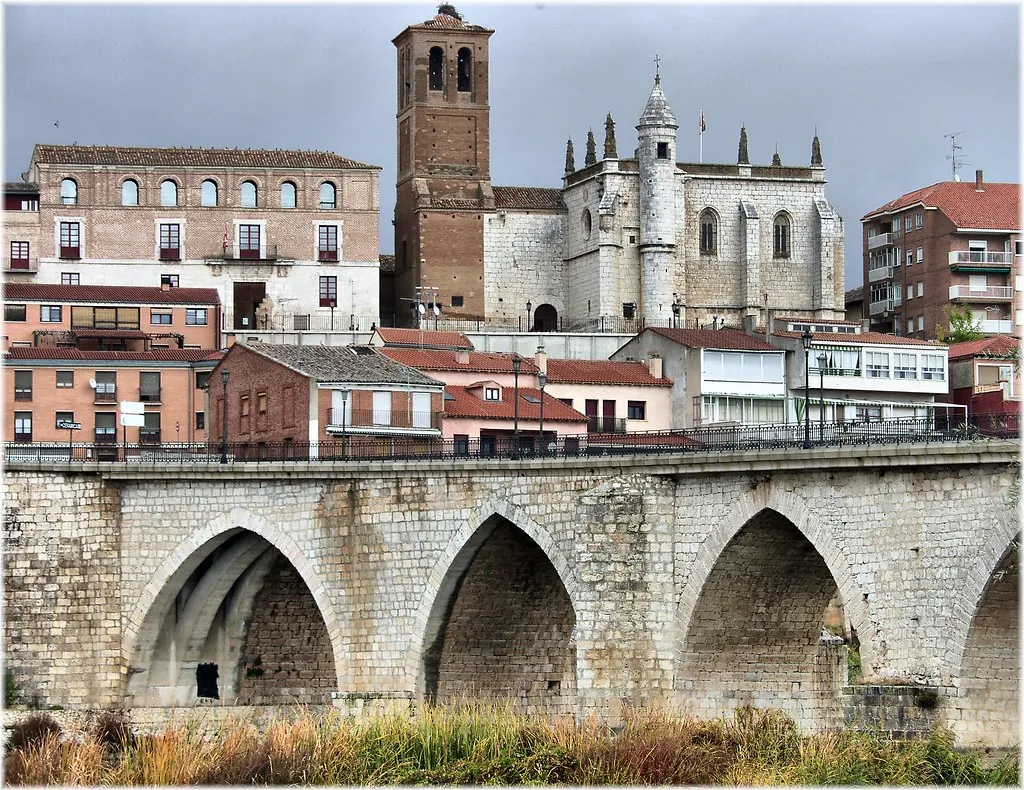
The church of San Andrés stands over the main square like a quiet elder who commands respect without needing to say much. It is neither vast nor heavily decorated. Different periods have left their mark, visible in the materials and in the way sections of wall meet each other.
Spending a little time in front of the façade reveals these details. Carefully worked stone here, an older arch there. It has the feel of a well-worn jacket with patches, each one telling part of its history.
The streets follow a simple logic. Low houses, many built from adobe or rammed earth, line the way. Wooden gates have seen decades pass, and enclosed yards recall a time when animals outnumbered cars. Some traditional wine cellars appear half-buried in the ground, a common feature in this part of Valladolid.
Getting around is straightforward. Within a morning, it is easy to know where everything is. It has the familiarity of villages visited as a child, where orientation comes quickly and without effort.
Beyond the last houses, everything opens up. Flat fields stretch out alongside vineyards and farm tracks. As evening arrives, the light shifts and the crops turn to shades of gold and brown. It is not a dramatic, postcard-style landscape. It feels more like a wide blanket laid across the land, with subtle variations that only emerge if you pause and look.
Easy Walks Through Open Land
One of the most rewarding aspects of Castrejón de Trabancos is walking along its agricultural paths. There is nothing technical about them, and no need to check a map every few minutes. These are flat routes linking plots of land, small streams and nearby villages.
A walk here often unfolds without a clear goal. It resembles a long, unhurried stroll after a family meal, where time passes almost without notice among the fields.
These paths also suit cycling. In summer, though, the sun is strong and there is little shade, so it makes sense to head out earlier in the day or wait until late afternoon.
The wider area, known as Tierra del Vino, has been tied to vineyards for generations. In Castrejón, that connection continues in a modest, domestic way. This is not a place of large wineries or modern tasting rooms. Wine tends to remain within a more familiar setting, with traditional cellars dug into the earth and small-scale production.
For those interested in photography, the village offers quiet subjects. Doors with layers of worn paint, tools resting against a wall, mud on the tracks after rain, or stork nests perched on chimneys. These are simple scenes, the kind that echo old family albums.
Traditions That Mark the Year
Festivities in Castrejón de Trabancos usually take place in summer, when many people who live elsewhere return for a few days. The atmosphere shifts noticeably. Streets that are normally quiet fill with conversation, chairs appear outside front doors, and long gatherings form around shared meals.
Celebrations tend to combine religious events with communal food and time spent among neighbours. Roast lamb and legume stews are still common on many tables, continuing a pattern that has lasted for generations.
During these days, the village feels like a house full of relatives who only meet once a year. There are many greetings, familiar stories told again, and a strong sense of community that remains intact in small places like this.
A Place to Observe, Not Rush
Castrejón de Trabancos is not about major monuments or tightly packed plans. It works better as a calm stop, a way to understand how Tierra del Vino moves when there is no audience.
Those who enjoy watching daily life unfold at its own pace will find plenty to notice. Each detail may seem ordinary at first glance, yet most carry years behind them. This is a village where time is not filled with events, but with small, steady moments that reveal themselves gradually.