Full Article
about Entrala
A municipality just outside Zamora, known for its farming; it keeps traditional wine cellars and a village feel despite being so close to the city.
Ocultar artículo Leer artículo completo
The tractors start at seven, long before the church bell tolls. By then the air above Entrala is already warm enough to carry the smell of diesel and damp earth halfway down the lane to the cemetery, where the stone wall gives a straight-line view over vines and wheat all the way to the Portuguese border. This is alarm-clock country: no traffic lights, no cafés with Wi-Fi passwords taped to the till, just 110 souls and a working calendar dictated by cereal, grape and the price of diesel.
A Plateau that Breathes
Entrala sits at 693 m on the southern edge of Spain’s high plateau, far enough from any motorway to keep the decibel count low and near enough to Zamora city—28 km north—to make a hospital run or a big-shop day feasible. The altitude matters. Summer nights drop to 14 °C even after a 34 °C afternoon, so thick walls and shuttered windows still outperform air-conditioning. In January the thermometer can flirt with –8 °C; frost burns the rosemary grey and the village water pump occasionally gives up until midday. Snow is rare but not unheard of—when it arrives the single access road is cleared by the same tractor that spreads fertiliser in April.
What you see from the ridge is a patchwork rather than a picture postcard. Vines interrupt wheat, wheat interrupts barley, and every third field lies fallow, its soil turned to chocolate-brown corduroy. The mosaic is deliberate: dry-farming on non-irrigated land means rotation is survival. Mono-culture vineyards do exist, yet most holdings are under two hectares, worked by owners whose surnames have appeared on the same plot maps since the 1870s.
Stone, Adobe and the Sound of Missing Mortar
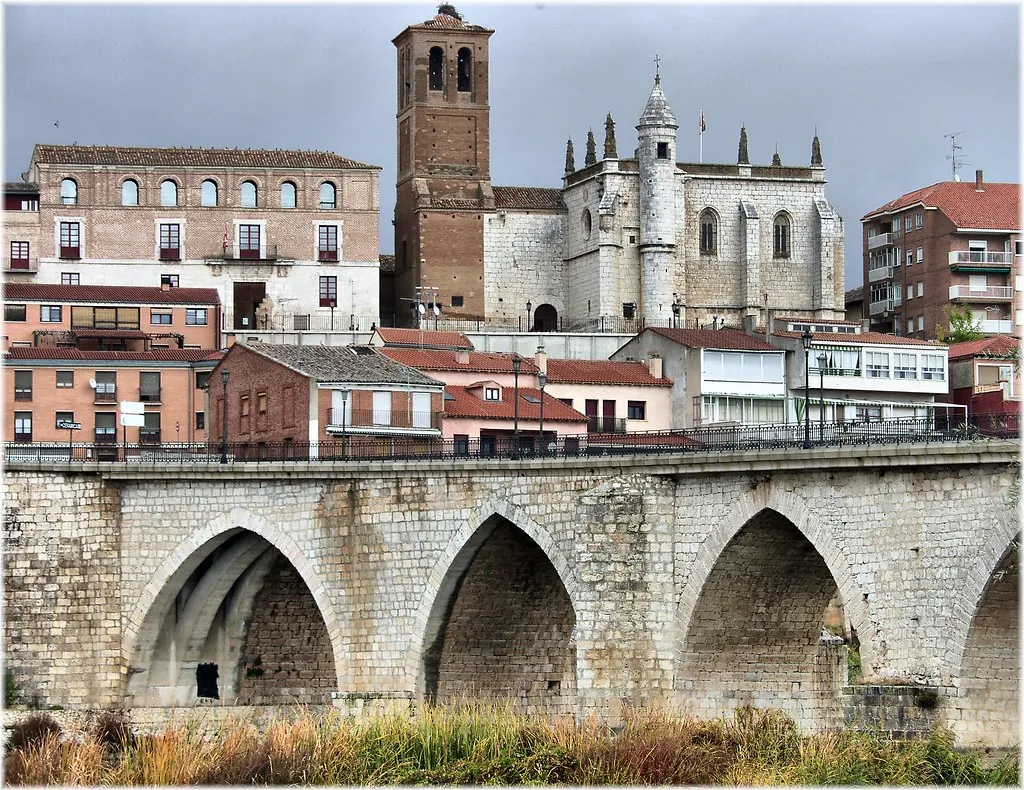
Houses are built from what lay underneath them. Granite blocks form the lower courses, then the walls switch to adobe brick the colour of digestive biscuits. Rooflines sag like well-used sofas and many of the timber doors have warped so far that you can see straight into the corral where a calf, two chickens and a heap of vine prunings share the shade. Some façades have fresh cement pointing; the neighbour’s is dissolving back into sand. Entrala has never been prettified for visitors, which means you get the whole story—abandonment, refurbishment and the slow-motion negotiation between the two.
The parish church of San Esteban keeps watch from the highest knuckle of rock. Its tower is more landmark than masterpiece: sixteenth-century base, eighteenth-century belfry, twentieth-century mobile-phone aerial poking out like an embarrassed flagpole. Inside, the nave is cool and smells of candle wax and mouse. There is no ticket desk, no donation box nailed to the wall; the door is simply open because someone trusts you to close it on the way out.
Walking Without Waymarks
Farm tracks radiate from the village in four directions, graded by the Junta de Castilla y León as “caminos rurales” rather than hiking trails. That means no paint flashes, no mileage boards, just the occasional concrete post numbered for the subsidy office. The easiest circuit heads south-east towards the ruined cortijo of Las Hubas: 5 km out, 5 km back, almost flat. You share the path with a farmer on a quad bike checking irrigation hoses; his dog barks once, then falls in behind you as if it has been hired for the morning.
Take water. There are no bars, no fountains and only one reliably shaded spot—the tunnel of poplars by the dry creek at kilometre three. If you prefer distance to drama, the loop west to the wind turbines gives 12 km of tractor-width track with 360-degree views. On a clear day you can pick out the cathedral spire in Zamora and, to the south, the blue smudge of the Duero gorge that marks the frontier with Portugal.
Darkness returns the favour the landscape takes from daylight. Light pollution is measured locally at 0.35 mcd/m²—darker than most UK national parks. Park just outside the village on the CL-527, switch off the headlights and allow 15 minutes for retina adjustment. The Milky Way becomes a highway you could walk along, and satellites outnumber shooting stars.
Wine that Doesn’t Shout
Entrala itself has no commercial bodega, yet wine presses are still carved into basements under living-room floors. To taste the region you need to drive ten minutes to Figueroa del Vino or twenty to Villanueva de Campeán, where family wineries will open if you ring a day ahead. Expect 3-4 € a bottle for young Tempranillo called “clarete” locally—light enough for lunch yet dark enough to stain the cork. Labels are basic, often handwritten; the denomination “Tierra del Vino” predates the more famous nearby DOs but spends nothing on marketing. Bring cash and a boot box; most producers dispatch a maximum of 15,000 bottles a year and have never heard of export.
What You Won’t Find
There is nowhere to stay in Entrala. The last guest room closed when the primary school shrank to four pupils and the teacher left in 2011. Nearest accommodation is in Morales del Vino (15 km, Hostal Paraíso, doubles €45, breakfast €4) or Zamora’s old town where boutique options start at €70. Lunch is similarly DIY. The village shop closed in 2019; the nearest supermarket is a Carrefour Express in Fontanillas de Castro, 11 km west. Bring picnic gear or plan to eat in Zamora before you arrive.
Mobile coverage is patchy. Vodafone gives one bar on the church steps; Movistar works in the square but not inside houses with 80 cm thick walls. Treat the place as an analogue detox and tell someone where you are walking.
Calendar versus Clock
If you must pick a moment, come in the second half of September when the vendimia (grape harvest) turns the lanes into slow-motion traffic jams of tractors towing tubs of fruit. Farmers work until the light goes, then gather in the square to argue about sugar grades while passing around a plastic litre of last year’s wine. Visitors are welcome to help—payment is a sandwich of morcilla and a bottle of water—but you need to ask; no one will advertise.
Spring works too, especially May when the stone terraces sprout poppies and the night temperature finally stays above 8 °C. Avoid August if you dislike solitude; half the houses are shuttered while families head to the coast and the only sound is the irrigation pump throbbing like a distant disco.
Leave the phrase book open at “¿Puedo aparcar aquí?” and close it on “hidden gem.” Entrala is not hidden; it is simply doing its job without you. Treat it like a neighbour’s kitchen: look, listen, wipe your feet and remember that the real production schedule involves wheat, not wanderers. If the tractors stop for you to cross the lane, lift a hand in thanks. That is the review that counts here.