Full Article
about Gema
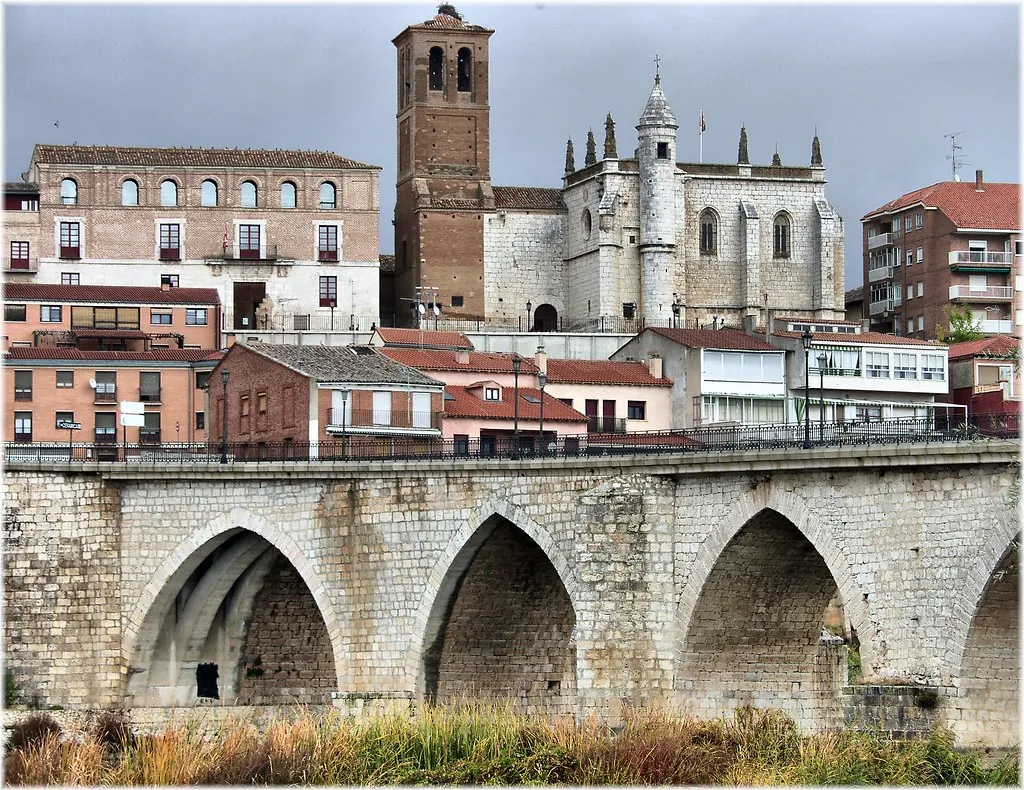
A town near Zamora with a historic bridge over the Duero; irrigated and dry farmland in a rural setting close to the capital.
Ocultar artículo Leer artículo completo
The chimneys rise like stone periscopes from the earth, marking the spot where families have made wine for three centuries. These ventilation stacks, scattered across the scrubland outside Gema, hint at the village's real treasure: a honeycomb of subterranean cellars carved into the clay, where barrels of dark red wine mature at a constant twelve degrees year-round.
At 700 metres above sea level, Gema sits high enough to escape the worst of Castilla y León's summer furnace, yet low enough to avoid the snow blockades that isolate mountain villages further north. The altitude creates a curious climate phenomenon: morning mists that roll across the Duero basin, burning off by ten o'clock to reveal a landscape that shifts from silver-grey to burnt umber. British visitors often remark how the light here resembles the softer tones of East Anglia, though the mercury tells a different story.
The Village That Forgot to Modernise
Three hours north-west of Madrid, past the industrial estates of Valladolid and the wheat silos of Zamora, the A-52 motorway spits you onto a two-lane road that winds through vineyards. Gema appears suddenly: a cluster of sandstone houses with terracotta roofs, no petrol station, no supermarket chain, not even a cash machine. The 200-odd inhabitants like it that way. They've watched neighbouring villages court tourism with boutique hotels and tasting menus, only to lose their soul to coach parties and Instagram queues.
The church tower, built in 1734 after the previous one collapsed in a storm, still serves as the village clock. Its bells mark the rhythm of days that revolve around harvests, not deadlines. Inside, the temperature drops ten degrees; the stone floor bears grooves where centuries of worshippers have knelt. There's no admission charge, no audio guide, just a printed notice requesting visitors respect the siesta hours between two and four.
Walk the single main street at 7 pm and you'll understand Gema's social structure. The bar, really someone's front room with three tables and a coffee machine, fills with men discussing rainfall statistics. Women gather outside the bakery, which opens sporadically when the owner feels like baking. Children play in the plaza where the water fountain has run since 1921, though now it's filtered through modern pipes rather than the original lead.
Walking Through Someone's Workplace
The footpaths around Gema aren't designed for recreation. They're working tracks that connect fields, used by tractors and farmers long before walking boots arrived. This means mud in winter, dust in summer, and the occasional territorial dog. It also means authenticity: you're walking through someone's livelihood, not a sanitised nature trail.
A thirty-minute stroll south brings you to the Cerro del Castillo, an Iron Age settlement whose stone walls predate the Romans. Nobody charges entry, nobody sells postcards, and the interpretation consists of a weathered plaque erected in 1987. The views stretch forty kilometres across the Tierra del Vino, where geometric vineyards give way to the wilder Sierra de la Culebra, home to Spain's largest wolf population. Bring binoculars: griffon vultures ride the thermals overhead, and if you're exceptionally lucky, you might spot a Spanish imperial eagle.
The wine cellars lie a kilometre east of the village, down a track that becomes impassable after heavy rain. Thirty-three chimneys punctuate the landscape, each marking a bodega dug horizontally into the hillside. Most remain locked, family treasures passed through generations, though local protocol suggests asking at the bar if anyone's willing to show theirs. Don't expect polished oak barrels and tasting notes. These are functional spaces: rough-hewn chambers where wine ages in 500-litre clay tinajas, exactly as it did when your host's great-grandfather dug the first chamber in 1870.
What to Eat When There's No Menu
Gema's culinary offerings reflect a village where grandmothers still outnumber chefs. The bar serves whatever María has cooked that morning: perhaps cocido maragato, the hearty stew eaten backwards starting with meat and finishing with soup, or pimientos del piquillo stuffed with salt cod. A plate costs €8, wine included, though the wine arrives in a plain glass bottle refilled from the family cellar. Vegetarians face limited options beyond tortilla española and the occasional vegetable stew.
The nearest restaurant sits eight kilometres away in Villanueva de Campeán, where Restaurante Gema (no relation to the village) occupies a former railway station. Here, €25 buys a three-course menu del día featuring local specialities: morcilla de Burgos, lechazo (roast suckling lamb), and quesada pasiega for pudding. Book ahead: they close Tuesdays and whenever the owner's mother-in-law visits from Santander.
Self-caterers should stock up in Zamora before arrival. The village shop opens three mornings weekly, stocking basics like milk, tinned tuna and the local Queso Zamorano, a sheep's milk cheese with DOP status that pairs surprisingly well with the robust local wines. Fresh bread appears at 9 am sharp; by 10:30 it's usually sold out.
When the Village Comes Alive
August transforms Gema. The population quadruples as descendants return from Madrid, Barcelona, even Manchester and Geneva. The fiestas patronales honour the Assumption with three days of religious processions, brass bands, and dancing that continues until the church bells chime 4 am. The bar extends onto the street, serving tapas of grilled pork cheek and wine that flows faster than the fountain. For visitors, it's either magical or unbearable, depending on your tolerance for fireworks at dawn and teenage flirtations conducted at maximum volume.
The romería on August 14th sees the village walk three kilometres to the ermita de la Virgen, carrying the statue through wheat stubble and vineyard rows. Even non-believers participate; it's less about religion, more about community. The procession returns at sunset, everyone carrying sprigs of rosemary for luck. That night, the square hosts a paella cooked in a pan two metres wide, feeding the entire village plus curious outsiders. Nobody checks tickets or asks for payment; it's understood you'll contribute something to the collection buckets circulating like communion plates.
Winter brings a different energy. When Atlantic storms sweep across the plateau, Gema becomes an island. The access road floods at the Arroya Gema crossing; locals know to park on higher ground and walk the final kilometre. Temperatures drop to minus eight; the bodegas provide refuge, their underground chambers maintaining perfect wine-storage conditions. This is when the village reveals its true character: neighbours sharing generator power during blackouts, delivering bread to elderly residents, checking that the English couple in the rented cottage haven't frozen solid.
Getting There, Getting By
The practicalities require planning. Gema has no public transport; the nearest bus stop sits 12 kilometres away in Muelas del Pan, served twice daily from Zamora. Car rental becomes essential, though Google Maps occasionally directs unsuspecting drivers onto tractor tracks. Approach from the N-630 rather than trusting the shorter route through Villaralbo, which dissolves into gravel after rain.
Accommodation means renting. Three cottages have been restored for visitors, booked through the regional tourism office in Zamora. Casa Rural Los Árboles sleeps four, costs €80 nightly, and includes a wood-burning stove plus basic kitchen. Bring slippers: stone floors get cold even in May. The owners, who moved to Valladolid in 1998, return monthly to check supplies and collect rent in cash.
Mobile reception remains patchy. Vodafone works on the church steps; Orange requires walking to the cemetery for one bar of signal. This isn't marketed as a digital detox retreat, just infrastructure reality. The bar offers WiFi between 6 pm and 10 pm, when the router gets switched off to save electricity.
Come prepared for silence. Night-time noise means owls, not traffic. The nearest streetlight sits 30 kilometres away in Zamora, so star-gazing requires merely looking up. On clear nights, the Milky Way appears so bright that returning from the bodegas without a torch seems less foolish than it should.
Gema won't suit everyone. Those seeking boutique experiences, curated activities, or even reliable hot water should look elsewhere. But for travellers content to slow down, to walk through working landscapes, to drink wine in cellars older than their home country, this village offers something increasingly rare: the chance to witness rural Spain continuing exactly as it has for centuries, with or without visitors.