Full Article
about Madridanos
A town near Zamora with farming and wine-growing roots; it has services and a lively rural vibe, plus well-attended local fiestas.
Hide article Read full article
A village shaped by early mornings
Morning in Madridanos begins before most people appear on the streets. Windows remain closed, and the air carries the scent of damp earth. This small village in the province of Zamora sits just over eight kilometres from the provincial capital and has fewer than 500 residents spread across its streets. Daily life still follows an older rhythm, guided less by clocks and more by tractors heading out and the steady demands of agricultural work.
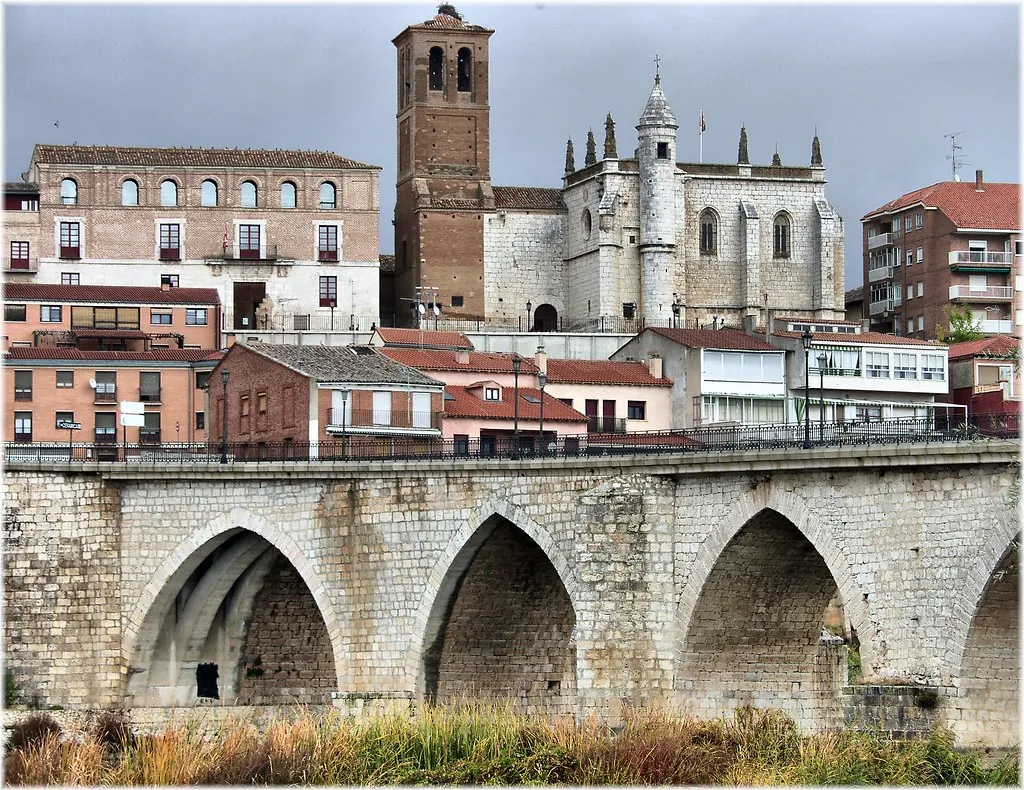
Madridanos does not try to present itself as anything other than what it is. There is no attempt to dress up its identity for visitors. Its layout reflects a straightforward rural style: narrow streets winding between masonry houses, weathered wooden doors, and small enclosures close to the main homes. The parish church of San Esteban stands out as a long-standing reference point. Built in stone and topped with a simple bell tower, it has served as a constant in village life beyond religious celebrations. Reaching it involves walking through the main square, where neighbours often greet each other as they pass.
Open land and long views
The surrounding landscape defines much of what Madridanos is. Fields of cereal stretch out across flat terrain, broken up by plots of vineyards. Many of these are marked by old vines that suggest decades, perhaps even centuries, of cultivation. The openness of the land allows views across to nearby villages such as Moraleja del Vino or Villalba de los Alcores.
Sound carries easily here. In summer, the persistent song of cicadas fills the air, joined by the calls of birds. There is little to interrupt the horizon, which reinforces a sense of space that feels continuous rather than contained.
At certain times of the year, especially when the grape harvest reaches its busiest point, local festivities bring a change of pace. These include processions in honour of the Virgen del Rosario and fairs dedicated to traditional products such as cheese and cured meats. These moments offer a clearer view of the stories and customs that have shaped the area over time.
Paths, vineyards and quiet routes
Madridanos connects to nearby villages through a network of marked rural paths. These routes are simple and mostly flat, making them suitable for walking or cycling without much effort. The terrain does not demand steep climbs, but the open exposure means preparation matters, particularly in warmer months.
The village’s position near Zamora makes it a useful base for exploring a wider agricultural landscape. Large-scale crops dominate the area, though small family-run wineries also form part of the local economy. Many of these continue to use traditional methods to produce robust red wines and fresh whites. Visits can offer a glimpse into processes that maintain a direct link between land and final product, without elaborate presentation or marketing.
Within the village itself, quieter details emerge for those willing to take time. Corners of the streets and the light at sunset over olive groves and vineyards create moments worth noticing. The architecture follows practical principles suited to the climate of the central plateau: thick adobe walls reinforced with brick, worn yet solid façades, and doors built from durable wood. In some open courtyards, old tools remain in place, such as rusted hoes or faded wooden carts. These objects speak silently of earlier ways of working the land.
Food, wine and the pace of the day
Food in Madridanos reflects the same grounded character as its landscape. Hearty dishes appear regularly, including partridge stew prepared in traditional pots and pulses served with homemade cured meats. Wine holds a steady presence as well. Small producers continue their work without much emphasis on branding or commercial polish, and it is sometimes possible to arrange a visit to see how older grape varieties are fermented.
A day here tends to end without fuss. A quiet terrace, a simple drink, and an open view are often enough. The setting does not rely on spectacle. Instead, it offers a sense of continuity, where daily life remains closely tied to the land and its cycles. Generations have lived this way, maintaining a connection that feels intact rather than reconstructed.
Madridanos does not aim to impress through scale or variety. Its appeal lies in consistency: fields that stretch outward, routines that begin early, and a landscape that reveals itself gradually to those who move through it without hurry.