Full Article
about Morales del Vino
The most populous municipality in the alfoz of Zamora; a residential area with services and a winemaking tradition that blends modernity with rural roots.
Ocultar artículo Leer artículo completo
A Village that Clocks in at Two Speeds
Seven kilometres south of Zamora, the A-66 motorway slips beneath a concrete overpass and Morales del Vino suddenly appears: rows of brick houses, a petrol station, and a supermarket that could belong to any Spanish commuter belt. Then the road climbs. At 700 metres the vines start, neat cordons staking out the plateau until the horizon blurs into wheat-coloured steppe. The dual personality is immediate—part satellite dormitory, part wine-growing parish—and it never quite settles.
Locals do the maths without thinking: twelve minutes to the office in Zamora, twelve weeks until the tempranillo is ready to pick. Estate agents advertise “urbanización tranquila” on hoardings opposite century-old bodegas dug into the clay. Even the church bell of San Juan Bautista seems to ring in two time signatures: one for the traffic heading north, another for the tractors crawling home at dusk.
The Underground Coolness that Predates Air-Conditioning
Walk the older lanes at siesta hour and you will notice stone grilles set into the pavement. They are breathing holes for the calados, family cellars tunnelled under the houses before electricity made temperature control a bill rather than a fact. Lift one of the iron lids and a draught of 14-degree air floats up, carrying the scent of oak and fermenting skins. Most are still private; polite knocking may earn a nod from an owner who keeps the key on the same ring as the garage fob.
During the fiestas of San Juan in late June a handful open officially. Visitors descend a spiral of rough steps to find clay tinajas the height of a teenager, their mouths sealed with hessian and brick. Someone pours a 2020 crianza straight from the barrel; the first sip tastes of black cherry and graphite, the second of family pride. Entry is free but you will be expected to buy a bottle—about €8, cash only.
A Plateau that Feels the Seasons Early
At this altitude winter arrives with a crack. Night frosts can dip to –6 °C even in April, which is why the vines are pruned low to the ground, hugging warmth. Come July the same elevation offers relief: while the Duero basin shimmers at 38 °C, Morales averages a breathable 32 °C. The difference matters if you plan to walk the caminos that thread through the vineyards towards the hamlet of Cazurra. Setting off at 9 a.m. is pleasant; by noon the clay track reflects heat like a kiln, and there is no bar until you loop back.
Spring and autumn behave themselves. In late April the buds look like green candle flames; by mid-September the leaves turn ochre and farmers judge the harvest by chewing a single grape. British half-term weeks—October and late May—coincide with the prettiest palettes and the least risk of either frost or furnace.
What Passes for a Sight, and What Doesn’t
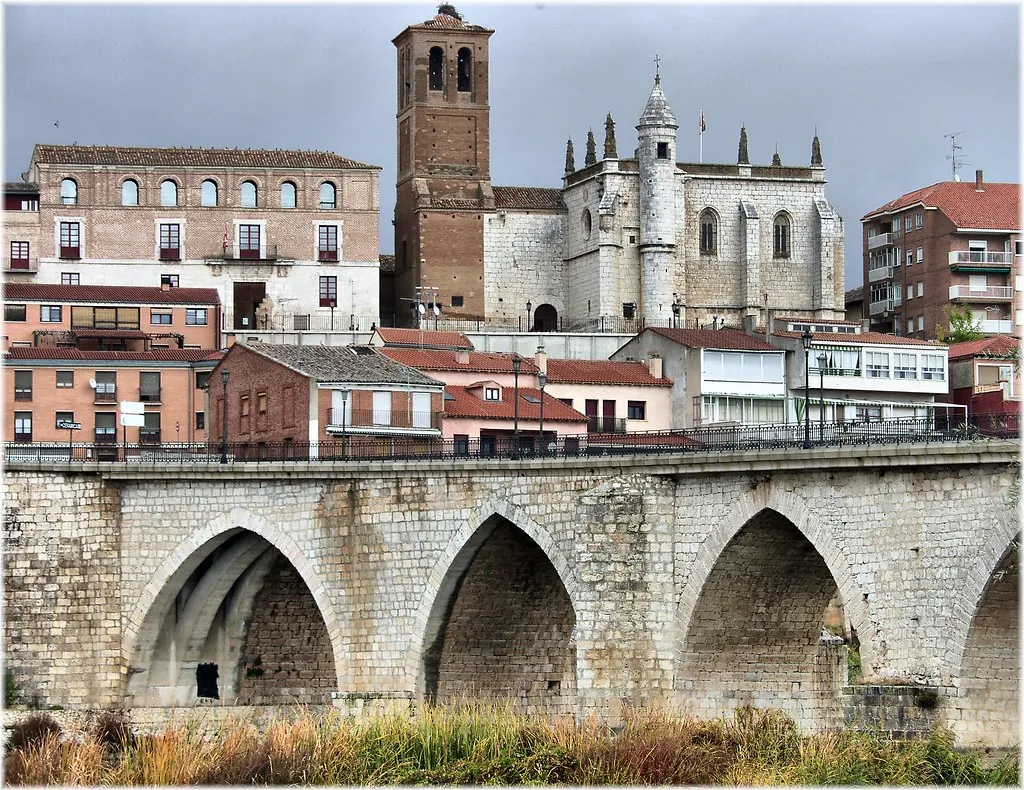
Guidebooks struggle here. The parish church is handsome enough, its tower a sandstone lighthouse above the rooftops, but inside you will find more votive candles than art. The plaza mayor is really a widening of the main street; the café terraces spill onto the tarmac, so every coffee comes with a soundtrack of delivery vans squeezing past. Expect no postcard arcades or geranium balconies—Morales grew out, not up, and the 1970s left their mark in pebble-dash and aluminium shutters.
The compensation is authenticity. Order a cortado in Bar California and the owner will ask which vineyard you are visiting, assuming you must have one. Lunch at the only asador means sharing a dining room with teachers from the local primary school who still have chalk on their cuffs. The menu changes once a week: sopa de ajo thick enough to hold a spoon upright, then arroz a la zamorana—a pork-and-chowder rice closer to risotto than paella. A quarter-litre of house Toro costs €2; stronger than Rioja, it will make the afternoon disappear.
How to Arrive Without a Car (and Why You Might Still Hire One)
From Madrid-Chamartín the Alvia train reaches Zamora in 75 minutes; a single ticket booked ahead is €22. From Zamora bus station, line 5 to Morales del Vino runs hourly on weekdays, half-hourly at weekends, and the ride is twelve minutes for €1.20. Taxis charge a flat €12—worth it if you are carrying wine purchases on the return leg.
Public transport will dump you on the modern edge. The vineyards lie a kilometre south-west, signposted only by the occasional hand-painted plank. Without wheels you will be walking the agricultural tracks, which are dusty in summer and muddy after October rains. Car hire desks sit inside Zamora railway station; a compact for 24 h starts around €35 including the rural insurance waiver.
Where to Lay Your Head (Hint: Not Here)
Morales del Vino has no hotels, only a pair of empty-looking guest rooms above a bar whose opening hours depend on the owner’s grandchildren. Most visitors base themselves in Zamora, where the parador occupies a 15th-century palace overlooking the river (doubles from €120). Ten kilometres west, the Valbusenda resort offers spa rooms amid its own vines (from €180), handy if you want a hot-stone massage between tastings.
The sensible schedule is half a day: morning bus in, circle the old core, descend a calado, eat lamb, buy two bottles more than you think you can carry, and be back in Zamora for the cathedral’s 6 p.m. illumination. Stay overnight only if you enjoy the hush of provincial Spain at 11 p.m., when the last beer is pulled and even the dogs stop barking.
Take-Home or Leave-It
Morales del Vino will not dazzle; it will not even try. What it offers is a slice of everyday wine Spain, where the stuff in your glass comes from the field you just walked past and the person pouring it can name the grandfather who planted the vines. If that sounds like enough, go. If you need postcard perfection, stay on the train to Salamanca and spare yourself the modern roundabouts.