Full Article
about Pedrosa del Rey
Historic village where Queen Doña Urraca was born; noted for its church and vineyard landscape.
Hide article Read full article
Pedrosa del Rey: un pueblo de la llanura cerealista
A poco más de sesenta kilómetros de Valladolid, en la comarca de Tierra del Vino, Pedrosa del Rey se extiende sobre una llanura agrícola a unos setecientos metros de altitud. El pueblo, con alrededor de ciento cincuenta habitantes, tiene una disposición clara: calles anchas, casas de adobe y ladrillo, y el campo comenzando casi en las últimas viviendas. La vida aquí sigue el ritmo de las labores del campo.
El topónimo sugiere un origen medieval, vinculado a la repoblación bajo la Corona de Castilla. No hay monumentos destacados, algo habitual en muchos pueblos pequeños de la provincia. Lo que importa es la estructura del lugar, cómo se ha mantenido el uso de la tierra y cómo este paisaje agrícola ha cambiado poco en lo esencial.
Tierra del Vino hace referencia a la importancia que el viñedo tuvo antaño. Hoy, las cepas comparten el terreno con extensiones mucho mayores de cereal. El trigo y la cebada dominan, creando un paisaje abierto que se transforma con las estaciones. En días despejados, el horizonte se pierde sin apenas interrupciones.
El río Guareña discurre a cierta distancia del casco urbano, marcando parte del límite natural de la comarca. No es un cauce grande, pero mantiene una franja de vegetación con álamos y carrizos que proporciona algo de sombra en verano.
Arquitectura sin ornamento
Lo que más llama la atención en Pedrosa del Rey son sus construcciones tradicionales. Quedan algunas casas de adobe, con basamento de piedra y fachadas lisas. Estos edificios se hicieron para durar en un clima duro, no para decorar. Sus materiales y proporciones responden a necesidades prácticas.
En los alrededores se ven varios palomares, muchos en estado de ruina. Estas estructuras circulares o poligonales eran parte del sistema agrícola tradicional. Proporcionaban carne, pero sobre todo fertilizante para los campos. Aún en ruina, se aprecia el cuidado de su diseño: los nichos para anidar y la distribución interior estaban adaptados a su función.
En las afueras también hay pequeñas bodegas excavadas en el suelo. Son un indicio de que el cultivo de la vid tuvo más presencia de la que parece hoy. Muchas están cerradas o en desuso, pero la forma del terreno delata aún sus entradas y respiraderos.
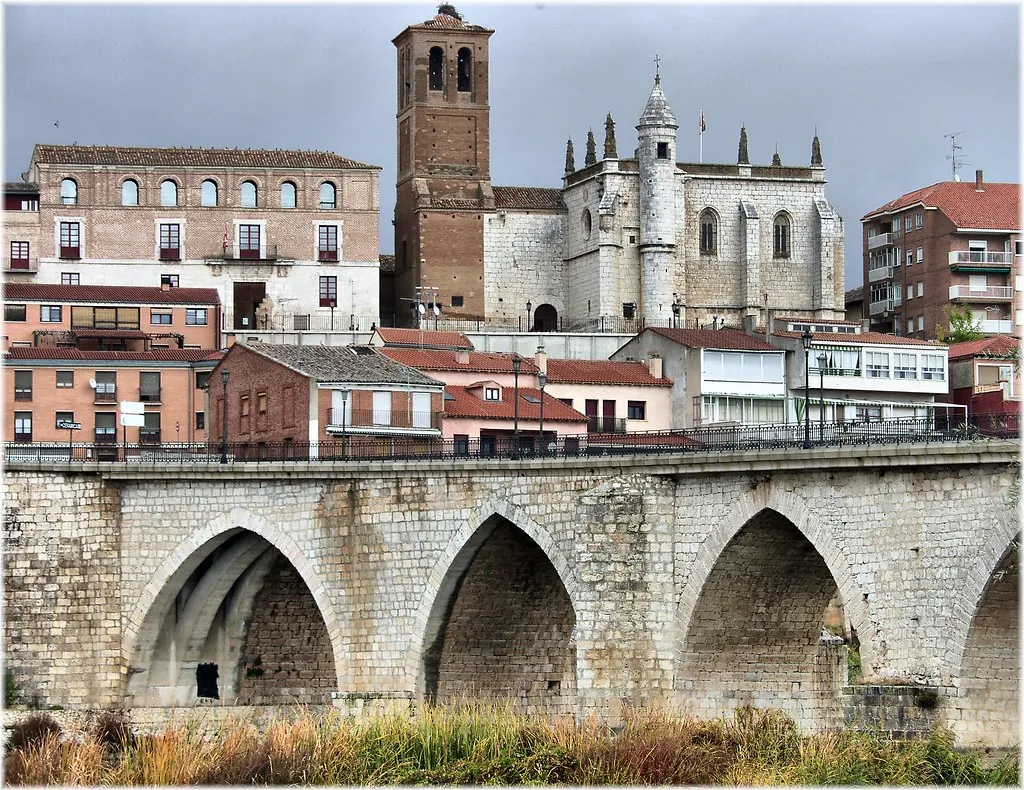
La iglesia parroquial preside el pueblo. Es un edificio modesto, como es habitual en núcleos de este tamaño, probablemente construido o reformado entre la Edad Moderna y la Contemporánea. Su valor no es tanto artístico como social: durante generaciones ha sido el escenario de la vida comunal, desde celebraciones religiosas hasta festividades locales.
Pasadas las últimas casas, el paisaje agrícola lo ocupa todo. En primavera, los campos de cereal se ponen verdes; en verano, la tierra se vuelve dorada y más expuesta al sol. Los árboles son escasos. La sensación de amplitud define la zona.
Recorrer el entorno
La mejor forma de explorar los alrededores de Pedrosa del Rey es por los caminos agrícolas que lo unen con pueblos vecinos. Son pistas anchas, usadas por maquinaria, por lo que conviene apartarse si pasa un tractor. A pie o en bicicleta, permiten entender la escala del terreno y cómo se distribuyen los cultivos.
Si te interesa la arquitectura rural, los palomares dispersos por la llanura merecen atención. Muchos están semiderruidos, pero su estructura sigue siendo legible. Se ven las pequeñas aperturas donde anidaban las palomas y la lógica constructiva general, que explica cómo funcionaban estos edificios dentro de la economía agraria.
El río Guareña queda alejado del casco urbano. No hay equipamientos ni zonas acondicionadas, pero el cambio de vegetación es inmediato. Comparado con los campos abiertos, hay más sombra y un ligero aumento de humedad, lo que crea un contraste sutil en el paisaje.
Respecto a servicios, Pedrosa del Rey es un pueblo pequeño. Para comer o pernoctar suele ser más práctico mirar hacia localidades cercanas y tratar el pueblo como una parada dentro de una ruta más amplia por la comarca.
El ciclo anual
Las fiestas locales siguen el patrón habitual de muchos pueblos de la región. Las celebraciones, ligadas a los santos patrones, se concentran sobre todo en los meses de verano, cuando regresa la gente que vive fuera. Son eventos comunitarios, con raíces en costumbres antiguas.
Suelen incluir bailes al aire libre, comidas compartidas y actos religiosos. Más que nada, reflejan la continuidad de una comunidad pequeña con vínculos fuertes a su entorno. Aun con una población reducida, estas ocasiones reúnen a la gente y refuerzan un sentido de pertenencia que sigue ligado al pueblo y a su tierra.